leadwork Yorkshire

THE LEAD LADS® / FEATURED PROJECT

Selby Station
Footbridge

Specialist Code 5 lead roofing to the pedestrian footbridge at Selby Railway Station — a large-scale infrastructure project combining curved geometry, stepped bays, bespoke interfaces and traditional hand-formed leadwork.

SELBY · NORTH YORKSHIRE · RAIL INFRASTRUCTURE · SPECIALIST LEADWORK

View the Project

01 — FEATURED PROJECT

Traditional leadwork at infrastructure scale

Selby Station Footbridge is one of the largest and most geometrically complex leadwork projects within The Lead Lads® archive.

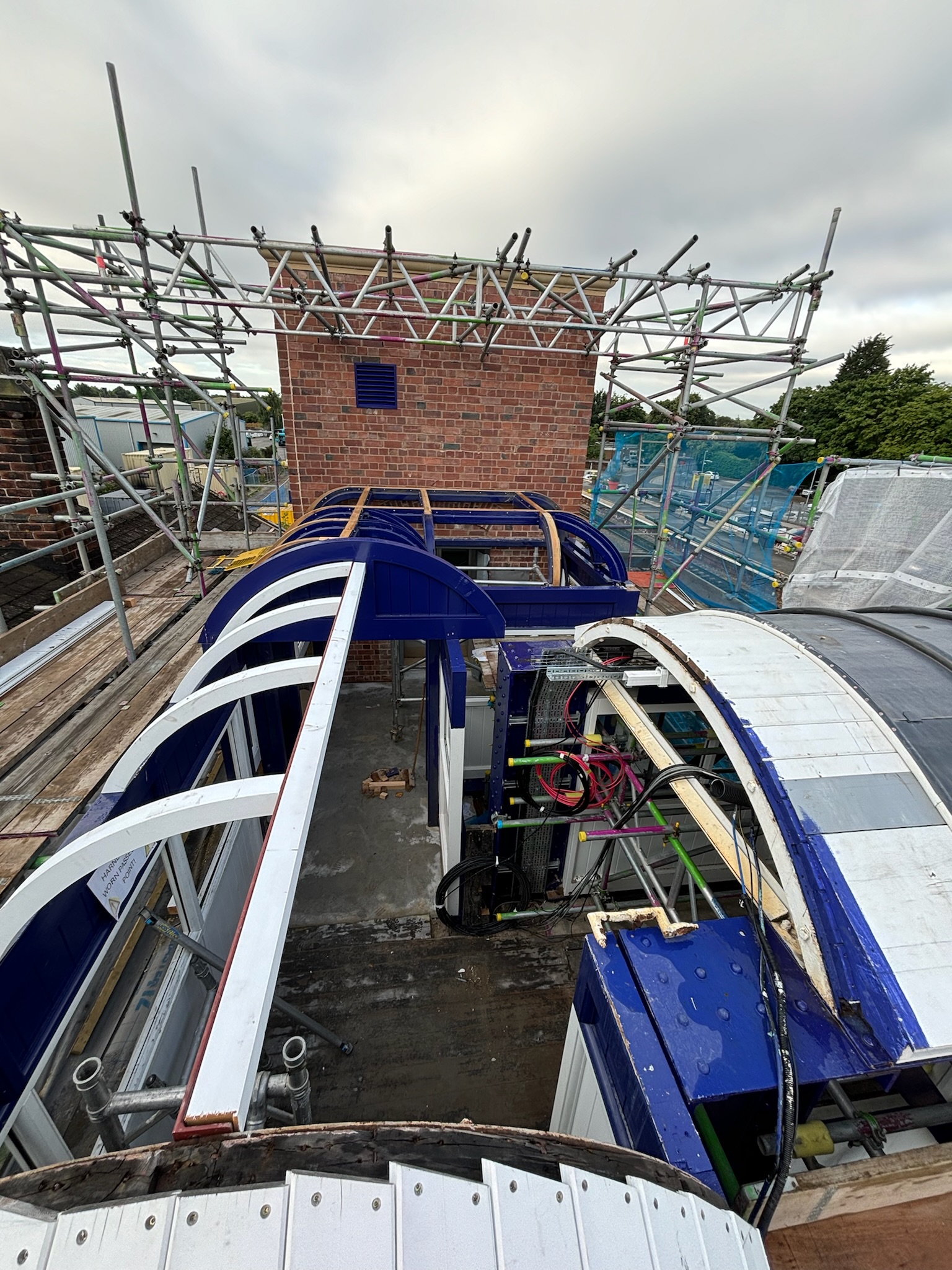
The renewed bridge structure provided a timber-supported background over which the new lead covering was formed.

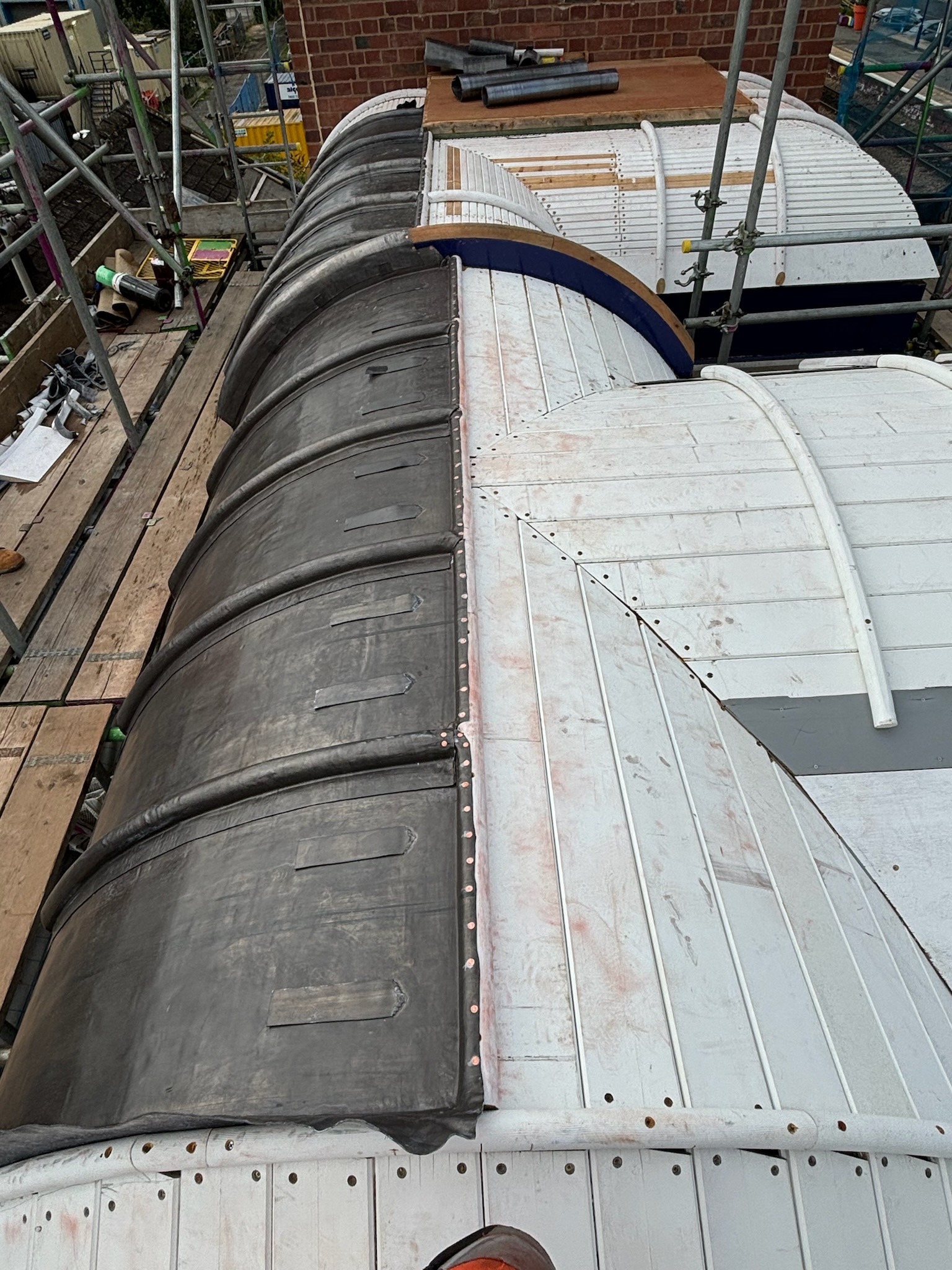
Across the bridge, the sheet lead responds to changing slopes, stair structures, rolls, apex junctions and numerous interfaces. Rather than a conventional repetitive roof, the project required individual interpretation of each section while maintaining continuity across the complete structure.

View Full Technical Case Study

LOCATION

Selby

PROGRAMME

Approx. 60 Days

MATERIAL

Code 5 Lead

SECTOR

Rail Infrastructure

02 — WHY IT IS DIFFERENT

A structure made up of hundreds of individual decisions

Selby demonstrates what happens when traditional sheet-lead principles are taken far beyond the scale of a normal domestic roof.

The fundamental rules remain familiar — full support, controlled sheet dimensions, movement allowance, laps, rolls and compatible restraint — but every change in the bridge geometry creates another detail that has to be resolved.

The stair sections are particularly distinctive, with lead bays stepping progressively through changes in level before reconnecting with the principal bridge covering.

Lead Roofing

Bridge Covering

Large-scale sheet lead formed across the principal pedestrian bridge structure.

Selby Train Station

Stepped Bays

The leadwork changes level with the stair structure beneath.

Selby Train Station

Interfaces

Changes in geometry produce bespoke junctions rather than standard repeated details.

Leadwork Guides

Hand Formed

Individual sections were set out and formed for their particular position on the bridge.

lead roof substrate

Supporting Structure

The finished leadwork follows the geometry established by the structural and timber build-up beneath.

Selby train station

Apex Detail

The opposing roof planes are resolved through carefully formed upper cappings and interfaces.

03 — LEADWORK AT SCALE

The principles remain the same

Despite the scale of the project, the fundamentals remain recognisable from traditional lead roofing.

  • Sound continuous support
  • Appropriate sheet dimensions
  • Timber core-roll joints
  • Allowance for thermal movement
  • Compatible fixings and clips
  • Correct lap sequencing
  • Careful dressing and bossing
  • Purpose-formed cappings and interfaces

04 — TECHNICAL CASE STUDY

Go behind the finished surface

The full Selby Station technical case study documents the project in substantially greater detail, including the supporting structure, sheet arrangement, stair-tower interfaces, apex cappings, movement detailing and installation sequence.

FULL SELBY CASE STUDY →
BS 6915 →
LSTA GUIDELINES →
TECHNICAL STANDARDS →

05 — MATERIALS

The system behind the sheet

Code 5 rolled lead formed the principal weathering material, supported by the substrate, timber roll details, underlay and compatible restraint required to create the finished bridge covering.

This is where the project archive connects directly into the Lead Lads Shop: completed work demonstrates how individual materials actually come together on site.

06 — PROJECT ARCHIVE

Explore #properleadwork

Selby Station sits alongside a growing archive of completed lead roofs, gutters, dormers, canopies, heritage masonry details and specialist architectural leadwork.

THE LEAD LADS® / FEATURED PROJECT

Infrastructure scale. Traditional material. Proper leadwork.

Selby Station demonstrates how traditional sheet-lead workmanship can be applied to an engineered structure without losing the precision of individual hand-formed details.