The Lead Lads
LSTA Guidelines
A practical guide to LSTA Guidelines, leadwork standards, correct detailing, lead code selection and best practice in rolled lead sheet roofing.


A practical guide to LSTA Guidelines, leadwork standards, correct detailing, lead code selection and best practice in rolled lead sheet roofing.
The LSTA Guidelines sit at the heart of proper leadwork. They bring together practical knowledge on rolled lead sheet selection, detailing, fixing, movement control and installation standards across a wide range of lead roofing applications.
At The Lead Lads, we use these guidelines as a working reference point across our projects. In turn, that helps us move from good intentions to sound detailing, better workmanship and longer-lasting leadwork.
Whether you are a homeowner, contractor, roofer, surveyor, architect or specifier, this page is designed to help you understand what the LSTA Guidelines cover, why they matter and how they relate to British Standards such as BS 6915, BS EN 12588 and BS 6229.
Alongside this page, you can also explore our Lead Roofing Guides, The Lead Handbook, lead chart, lead weight calculator and rolled lead sheet categories for broader technical support, product guidance and buying routes.
Send Your Enquiry

Leadwork guidance for commercial contractors, developers and larger project teams.

Conservation-led leadwork for listed, historic and sensitive buildings.

Ecclesiastical leadwork, traditional roof coverings and complex weathering details.
If you are new to the LSTA Guidelines, begin with rolled lead sheet codes, bay sizing, movement control and fixing principles. If you are specifying work, move next to BS 6915, BS EN 12588 and substrate guidance. If you need materials, browse the shop, guides and handbook. If you need installation support, contact The Lead Lads directly.
New to leadwork?
Start with codes, detailing, fixings and movement control.
Specifying work?
Review LSTA guidance alongside BS 6915, BS EN 12588 and BS 6229.
Buying materials?
Browse rolled lead sheet, fixings, guides and handbook resources.
Need a contractor?
Send your enquiry to The Lead Lads for project-specific advice.
The Lead Sheet Training Academy carries forward decades of industry knowledge and practical training in rolled lead sheet. Its guidance grew from the long-established technical standards historically associated with the Lead Sheet Association and remains one of the clearest reference points for proper leadwork today.
Across the industry, these guidelines are widely used by contractors, architects, surveyors, conservation specialists and specifiers. As a result, they now sit alongside core British Standards as a recognised framework for sound design, installation and workmanship.
The LSTA Guidelines provide practical direction on a wide range of leadwork issues. In particular, they help with material selection, code choice, bay sizing, detailing, fixing methods and the control of thermal movement.
In short, the guidelines aim to improve not only appearance, but also performance, longevity and durability.
The LSTA Guidelines work best when read alongside the relevant British Standards. For example, BS 6915 remains central to the design and installation of fully supported lead sheet roofing and cladding, while BS EN 12588 sets the material standard for rolled lead sheet itself.
Meanwhile, BS 6229 becomes relevant where flat roof build-ups, moisture strategy and substrate performance need careful thought. Together, these documents help form a much stronger basis for proper leadwork.
Clients looking for a wider overview should also visit our Leadwork Standards hub, which connects BS 6915, BS 6229, BS EN 12588 and LSTA guidance into one standards-led resource.
Leadwork is a specialist craft. When it is detailed and installed properly, it can last for many decades. However, poor bay sizing, weak support, bad fixing methods or ignored movement allowance can shorten its life dramatically.
Good leadwork relies on more than sheet material alone. The correct lead roll, leadwork fixings, underlay, substrate and detailing method all affect the final result.
For planning and material support, use our lead chart, lead weight calculator, lead roofing guides and The Lead Handbook.
At The Lead Lads, we do not treat the LSTA Guidelines as a box-ticking exercise. Instead, we use them as part of a wider standards-led approach to leadwork across commercial, heritage, ecclesiastical and domestic projects.
We provide project-specific advice, detailed leadwork specifications, site consultations and leadwork services aligned with recognised best practice. That means clients get more than installation alone — they get a practical route toward proper leadwork from the outset.
Whether you are preserving the past or building for the future, the LSTA Guidelines remain one of the clearest routes to better leadwork. With the right detailing, materials and workmanship, lead can continue to protect buildings for generations.

This final support section brings together useful follow-on resources from the page, including FAQs, a practical checklist and direct links to standards, services, shop resources and technical references.
Book a site visit or request a standards-led project review aligned with LSTA Guidelines and BS 6915.
Send Your Enquiry Recent ProjectsThe LSTA Guidelines are a practical body of guidance for the design, detailing and installation of rolled lead sheet. They help contractors, specifiers and clients understand best practice across a wide range of leadwork situations.
The LSTA Guidelines work alongside BS 6915 rather than replacing it. In practice, they help translate recognised standards into real-world detailing, workmanship and installation decisions.
Yes. They help users understand where different lead codes may be appropriate, depending on the application, exposure, bay size and detail being formed.
Lead expands and contracts with temperature change. Without correct bay sizing, fixing and detailing, that movement can cause fatigue, buckling, splitting and premature failure.
Yes. BS EN 12588 relates to the rolled lead sheet material itself, while LSTA guidance helps with practical detailing, code selection, fixing and installation. The two work together.
Yes. LSTA guidance is highly relevant to heritage leadwork, churches, traditional buildings and modern lead roofing because it deals with practical detailing, movement and workmanship.
| LSTA Guidelines | Practical guidance for rolled lead sheet design, detailing and installation. |
| BS 6915 | Code of practice for fully supported lead sheet roofing and cladding. |
| BS EN 12588 | Material standard for rolled lead sheet. |
| BS 6229 | Guidance relevant to flat roof build-ups, substrates and moisture control. |

The Lead Lads ® Lead Roof Guide Summer Maintenance Summer Lead Roof Maintenance Guide Summer [...]
Latest News The Lead Lads® Launch UK Franchise Model A controlled expansion designed to professionalise [...]
The Lead Lads ® Lead Roof Guide Spring Inspection Spring Lead Roof Inspections — How [...]
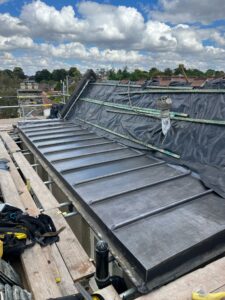
#Proper Leadwork: Lead Ventilation & Condensation—Warm vs Cold Roof Strategies Interstitial condensation is one of [...]

#Proper Leadwork: Edge-to-Edge Detailing—Ridges, Verges & Abutments without Stress Ridges and verges frame the roofline. [...]
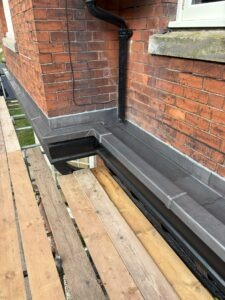
#Proper Leadwork (2026): Upstands & Drips—Heights, Throatings & Edge Geometry Welcome to the New Year [...]

#Proper Leadwork: Lead Soakers—Sizing, Gauges & Interfaces with Slate and Tile Discreet but essential, lead [...]
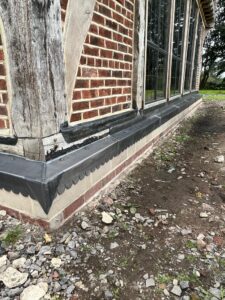
#Proper Leadwork: Cornices, Cappings & Cills—Fixing to Masonry without Cracks Beautiful façades deserve durable lead [...]
Providing proper leadwork services to trade and public.
Our mission is simple: provide high quality services across a range of sectors in rolled lead sheet at a price that is fair, reasonable and proportionate to the skill, detailing and care involved.
Our work is guided by LSTA principles, BS 6915, BS EN 12588 and practical experience. From commercial leadwork to heritage roofs, churches, bay roofs, gutters and flashings, we focus on proper detailing from the outset.
Get a Quote