The Lead Lads® | Leadwork Standards
BS 6915:2001+A1:2014
The code of practice for fully supported rolled lead sheet roof and wall coverings, proper leadwork detailing and long-term leadwork performance.


The code of practice for fully supported rolled lead sheet roof and wall coverings, proper leadwork detailing and long-term leadwork performance.
BS 6915:2001+A1:2014 is the recognised code of practice for the design and installation of fully supported rolled lead sheet roof and wall coverings manufactured to BS EN 12588.
The code is supported and reinforced by The Complete Manual, published by the Lead Sheet Training Academy, which expands on the principles of correct detailing, fixing, bay sizing, thermal movement and workmanship.
Together, these documents form the backbone of compliant leadwork in roofing and cladding applications. They should also be read alongside BS 6229 leadwork substrate principles where flat roof build-ups, moisture control, ventilation and supporting decks are relevant.
For wider practical guidance, see our Leadwork Standards hub, LSTA Guidelines guide, lead roofing guides and The Lead Handbook.
The Complete Manual

Correct fixing methods and patterns are fundamental to compliant leadwork installation.
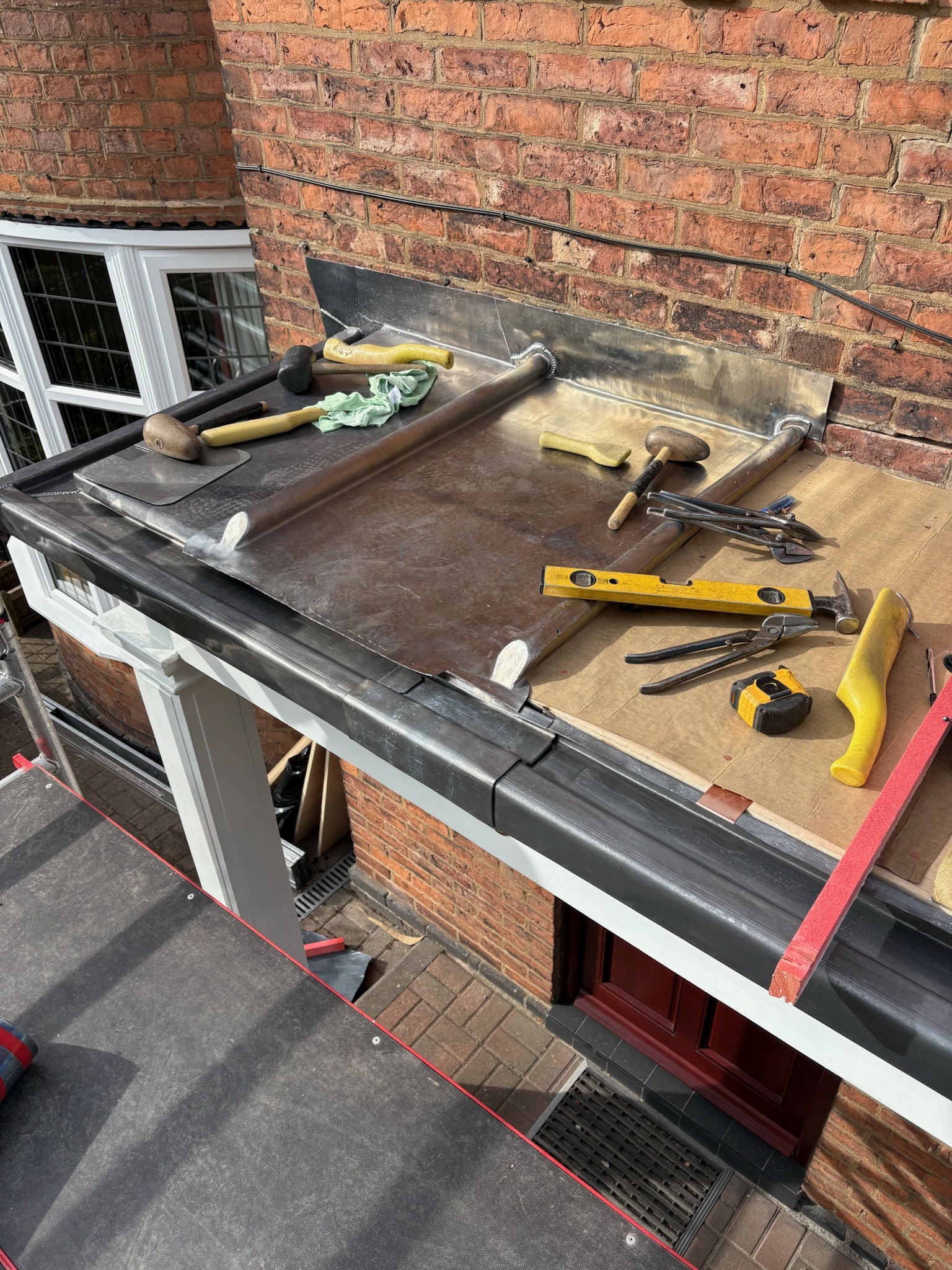
Fully supported lead relies on suitable preparation beneath the finished covering.

Provision for thermal movement is essential if lead is to perform over time.
Lead is one of the most versatile and durable materials used in the construction sector. It can be formed into a wide range of roofing, cladding, flashing, guttering and interface details while also offering strong sustainability credentials through recyclability and longevity.
At The Lead Lads®, we use lead sheet of the appropriate code and detailing method in accordance with BS 6915:2001+A1:2014 so that the finished work performs as intended.
Good leadwork depends on the relationship between material quality, correct support, suitable fixings, movement allowance, proper bay sizing and practical workmanship. BS 6915 helps bring these considerations together.
Our approach is simple: use the right material, detail it correctly, and install it in line with the code of practice and supporting guidance.
That means considering BS EN 12588 rolled lead sheet, BS 6229 substrate principles, LSTA guidance, suitable leadwork fixings and the specific exposure and design of the project.
Learn more about our quality standardsAt The Lead Lads®, every project is approached with the same level of care and discipline, irrespective of its size or monetary value. Proper leadwork is not reserved for flagship schemes alone — it should be standard across all jobs.
All of our work is carried out to a high standard and in accordance with BS 6915:2001+A1:2014, with additional attention given to the practical guidance set out within The Complete Manual and LSTA principles.
The result is leadwork designed to last, perform and weather properly over time, whether the project involves a chimney flashing, lead gutter, bay roof, lead dormer, heritage roof or complete lead roof covering.
The Ultimate Guide | Lead Roofing
Explore the standards, guidance and technical references that shape our approach to proper leadwork.

BS 6915 addresses the practical requirements for the proper design and installation of fully supported lead roof and wall coverings. This includes the fixings used, the patterns in which they are set out, the nature of the substrate and the methods by which lead is clipped, restrained and allowed to move.
The code also addresses the need to resist wind uplift, accommodate thermal movement and adapt detailing to suit exposure, application and the geographic location of the project.
In practical terms, this affects how lead flashings, gutters, roof coverings, cladding details, dormers, parapets, aprons, soakers and interfaces are formed and installed.
For material planning and support, clients and contractors can also use our lead chart, rolled lead sheet categories, lead weight calculator and leadwork fixings.
Below are some of the common questions clients, specifiers and contractors ask about BS 6915 and proper leadwork.
BS 6915:2001+A1:2014 is the British Standard code of practice for the design and installation of fully supported rolled lead sheet roof and wall coverings.
BS EN 12588 relates to the rolled lead sheet material itself, while BS 6915 deals with how that material is designed and installed as a fully supported roof or wall covering.
BS 6915 is relevant to fully supported lead sheet roofing and cladding and helps inform the principles behind lead flashings, gutters, laps, drips, fixings, movement joints and weathering details.
Lead expands and contracts with temperature change. If the lead is restrained incorrectly or formed in bays that are too large, fatigue, buckling, distortion and splitting can occur.
Yes. BS 6915 is concerned with the leadwork design and installation, while BS 6229 becomes important where the supporting roof build-up, moisture control, drainage and substrate performance need to be considered.
Yes. The Lead Lads approach leadwork with reference to BS 6915, LSTA guidance, BS EN 12588 material standards and the practical requirements of the project.
Whether you are planning a repair, replacement or a new leadwork installation, our team is ready to assist with specification, pricing and delivery.
#properleadwork — designed, detailed and installed correctly.