The Lead Lads | Sandcast Lead Specialists
Sandcast Lead
Traditional sandcast lead roofing, heritage restoration and specialist leadwork where historic authenticity, material character and correct specification matter.

Traditional sandcast lead roofing, heritage restoration and specialist leadwork where historic authenticity, material character and correct specification matter.
Sandcast lead is a traditional, hand-crafted lead sheet used primarily in heritage roofing and specialist restoration work.
Unlike modern milled lead, sandcast lead is created by pouring molten lead onto a prepared sand bed. This gives the sheet a distinctive texture, greater visual character and a more traditional appearance, making it particularly well suited to historic buildings where modern uniformity would look out of place.
Because of its method of manufacture and its visual qualities, sandcast lead is often specified where architectural authenticity, durability and conservation sensitivity are all important. It remains one of the most appropriate materials for churches, listed buildings, estate properties and historically significant structures.
For architects, conservation contractors and specialist roofers, The Lead Shop provides a dedicated sandcast lead ordering route for project-specific material requirements.
Order Sandcast Lead Get a Quote
The key difference between sandcast and milled lead lies in how the material is made, and in the appearance and character that result from that process.
Manufacturing:
Because sandcast lead is produced in a more traditional way, it is often more expensive and more specialist in its use. That cost is justified where historic character and authenticity are essential to the success of the project.
Applications:
Both materials have their place. Sandcast lead is typically chosen when the roof must not only perform well, but also look right in the context of an older or important building.
Leadwork ProjectsSandcast lead is not usually an off-the-shelf commodity product. It is often ordered around the project, the building, the conservation requirement and the required sheet dimensions.
The Lead Shop supports sandcast lead enquiries for contractors, architects, surveyors, conservation professionals and property owners planning heritage leadwork.
Use The Lead Shop when you need the material supply route before the installation route. Use The Lead Lads when you need specialist installation, survey, repair or project delivery.
Sandcast lead is especially well suited to restoration and architectural applications where durability, weather resistance and traditional aesthetics are all important. Common uses include:
In short, sandcast lead is not usually a default material for everyday roofing. It is chosen where the project demands a more traditional finish and where the building deserves that level of care.
Order Sandcast Lead
Sandcast lead roofing can provide a distinctive and historically appropriate roof finish.
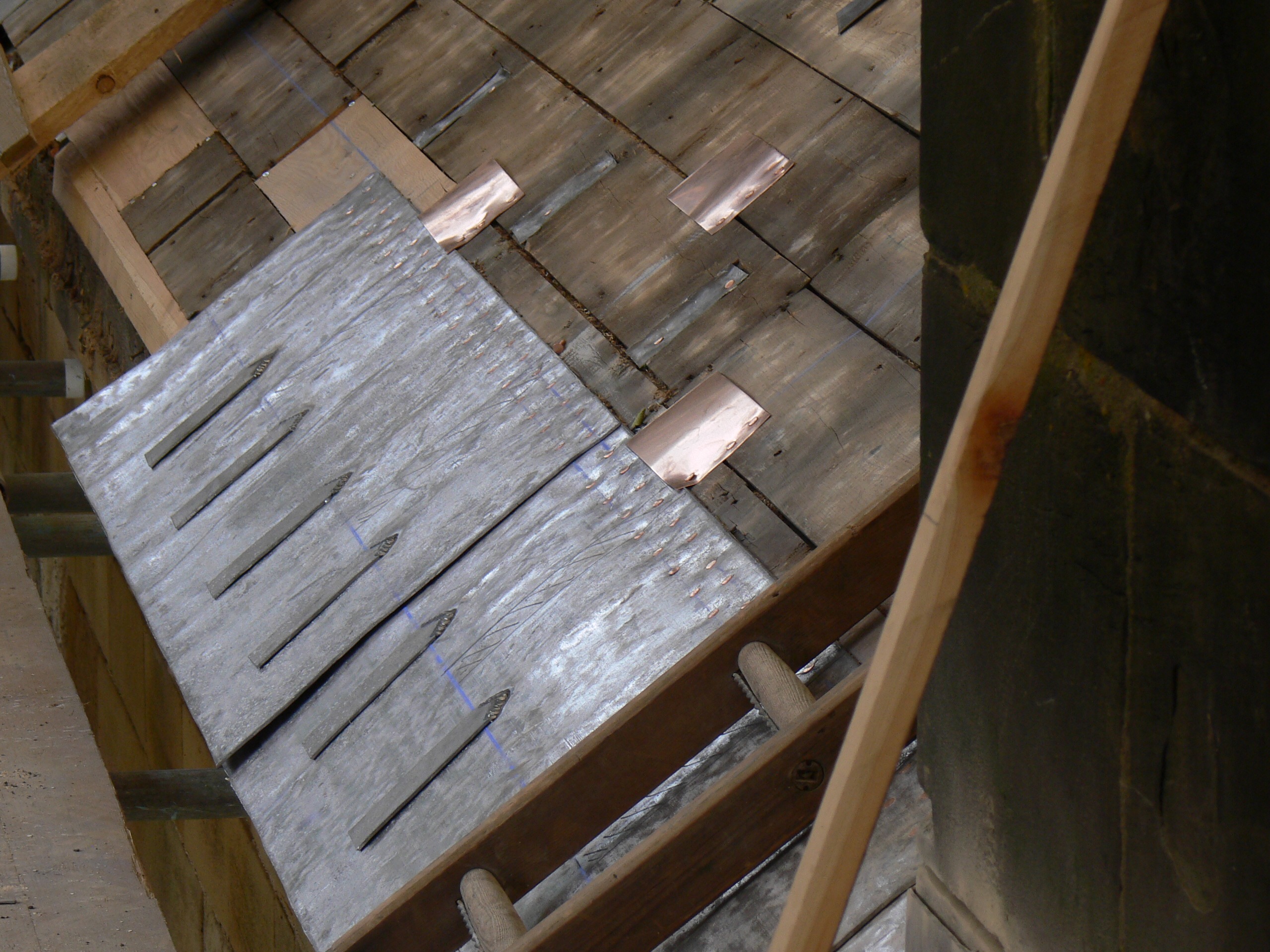
Installation should still be considered in the context of BS 6915 and proper leadwork principles.

Order sandcast lead through The Lead Shop for suitable heritage and restoration projects.
The production of sandcast lead is a manual, labour-intensive process, and each sheet is effectively made to order. That makes it particularly valuable on restoration projects where exacting visual or historic requirements apply.
This process is one of the reasons sandcast lead looks and feels different from modern milled sheet. It is not simply another lead product; it is a more traditional material with a different visual and practical role.
Leadwork VideosSandcast lead is mainly used for heritage roofing, conservation projects, listed buildings, churches, traditional gutters, flashings and restoration work where historic character and visual authenticity are important.
Not always. Sandcast lead is better suited to certain heritage and conservation projects because of its traditional appearance. Milled lead is usually more practical and economical for standard roofing, flashings, gutters and modern leadwork details.
Yes. You can make a sandcast lead enquiry through The Lead Shop sandcast lead ordering page. Because sandcast lead is specialist, requirements are usually reviewed around the project and sheet specification.
It can be very suitable, especially where the visible finish needs to match or respect historic leadwork. However, the final material choice should consider the building, the specification, the conservation approach and the detail being formed.
Sandcast lead remains a highly valued material for specific roofing and building applications, particularly within heritage restoration.
Its traditional production process gives it an appearance and character that modern milled lead cannot fully replicate. For that reason, it remains important where the architectural integrity of a historic building must be preserved rather than merely imitated.
At The Lead Lads, we understand where sandcast lead is appropriate, where milled lead may be the better choice, and how both materials sit within the wider world of lead roofing, lead detailing and specialist restoration work.
Order Sandcast Lead Get a Heritage Leadwork Quote