The Lead Lads | Lead Gutter Specialists
Lead Gutter Linings
Lead gutter linings, box gutters, secret gutters, back gutters, outlets, sumps and specialist rainwater detailing in rolled lead sheet.


Lead gutter linings, box gutters, secret gutters, back gutters, outlets, sumps and specialist rainwater detailing in rolled lead sheet.
Lead gutter linings are used where a durable, formed and fully weathered rainwater detail is required. They are commonly found in box gutters, valley gutters, back gutters, parapet gutters, secret gutters and other concealed drainage details.
At The Lead Lads, we install lead gutter linings across traditional, heritage, ecclesiastical and specialist roofing projects. These details require more than good lead sheet. The substrate, falls, outlets, sumps, welding, movement joints and discharge strategy all need to be considered properly.
The phrase “lead guttering” can be misleading. In most cases, we are not talking about a standard external domestic gutter. We are usually referring to a lead lining installed into a prepared timber or masonry-supported gutter structure.
We can provide quotations for lead box gutters, secret gutters, back gutters, valley gutters, outlets, sumps and associated rainwater details. We also supply materials through The Lead Shop, including rolled lead sheet, fixings, patination oil and The Lead Handbook.
Send a Gutter Enquiry
A lead gutter is usually a formed gutter lining installed within a prepared substrate to collect and discharge rainwater from a roof area. Unlike standard plastic or aluminium guttering, these details are often concealed within the roof or integrated into the building fabric.
Lead gutter linings are commonly found on older and more complex buildings, including parapet gutters, box gutters, secret gutters, valley gutters and back gutters. They are used where a robust, adaptable and long-lasting rainwater detail is needed.
A typical lead gutter detail may include:
Installing a lead gutter lining is a skilled and detail-sensitive process. The timber substrate is just as important as the lead above it, and long-term performance depends on correct falls, movement allowance, welding quality and rainwater discharge.
Traditional rainwater goods remain important on heritage and landmark buildings.

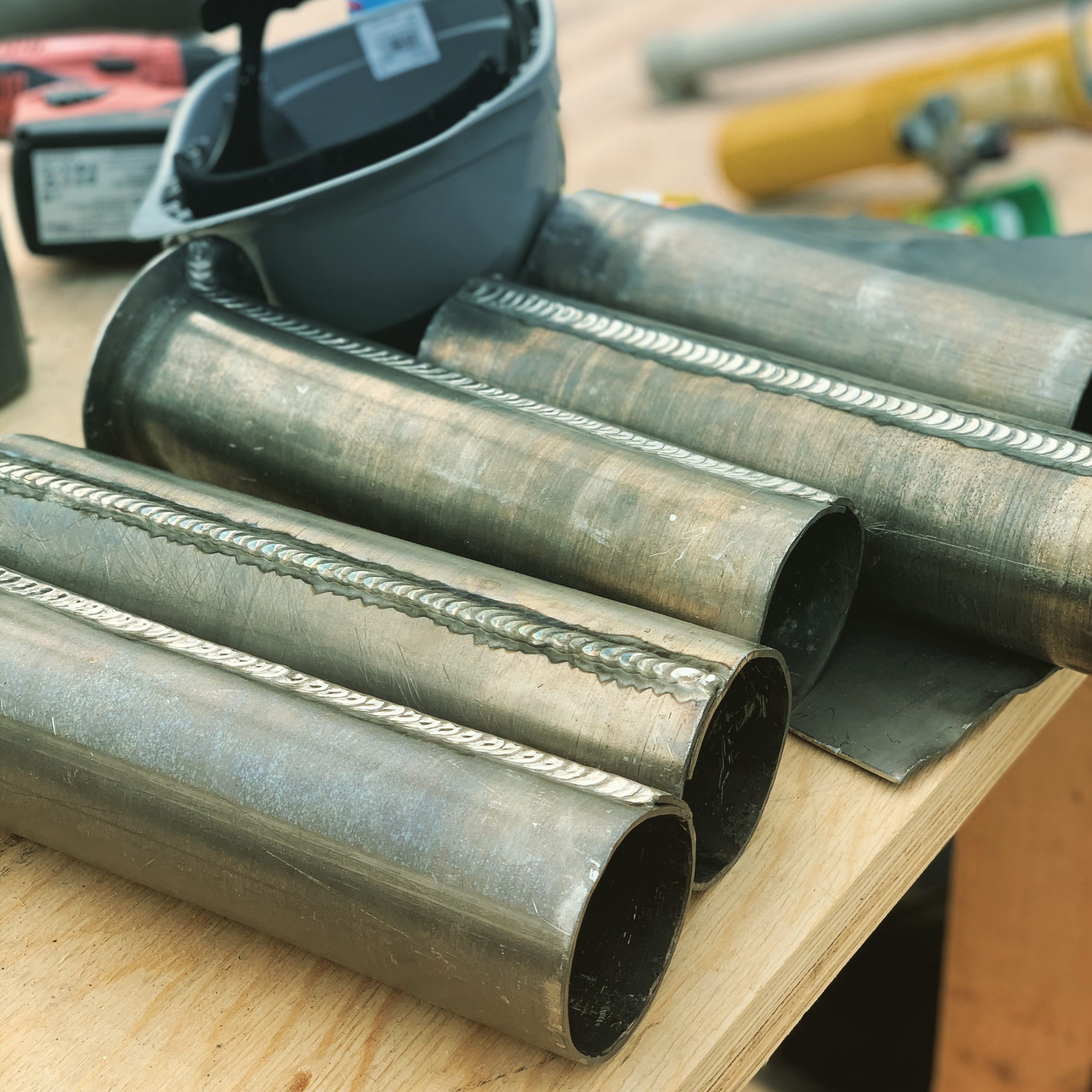
Lead can be welded and formed into precise rainwater discharge details.

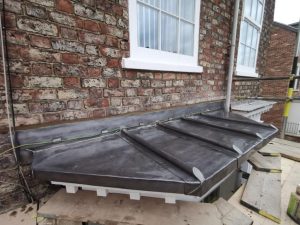
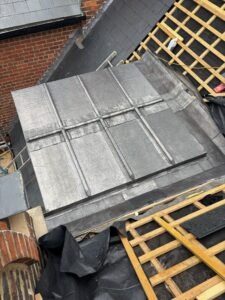
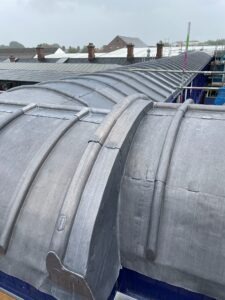
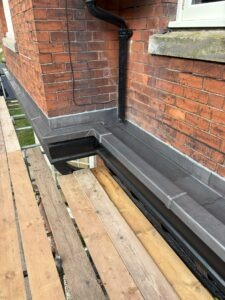
Box gutters and concealed gutters lined in lead for durable rainwater management.
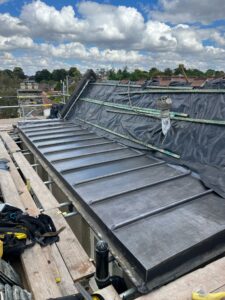
We form and install specialist rainwater details in rolled lead sheet, including box gutters, back gutters, valley gutters, secret gutters, outlets and sumps.
Lead box gutters are particularly useful on traditional and specialist buildings where conventional external guttering is visually inappropriate or technically unsuitable. They are commonly found behind parapet walls, within formed timber gutters and in concealed roof drainage arrangements.
Because lead moves with temperature change, box gutters must be designed to accommodate that movement. This usually means setting the lining out in appropriate bay lengths, using stepped joints or welded expansion details, and fixing the material without restraining it.
It depends on the building and detail. A standard domestic roof may be better served by a conventional rainwater system. However, on larger, older, high-value or architecturally sensitive buildings, lead gutter linings can provide a durable, repairable and discreet solution.
Proper leadwork is always about using the right material in the right context. Lead is not necessary everywhere, but where it is appropriate, it remains one of the most adaptable rainwater lining materials available.
The substrate is as important as the lead itself. A lead box gutter should usually be formed in timber, often plywood, with falls, bay lengths, outlets and expansion details designed around the lead lining above.
The substrate should allow the gutter to be lined in bay lengths suitable for the chosen lead code. Provision should also be made for sumps, outlets, underlay, expansion joints and, where necessary, ventilation or a warm roof build-up to reduce long-term corrosion risk.
Where lead is used to form a valley gutter, Code 5 lead is generally considered a practical minimum. Lap sizes, fixing points, support details and maximum lengths should all be considered in relation to roof pitch and expected movement.
Without suitable fixing and movement allowance, a lead valley can fatigue and split prematurely.
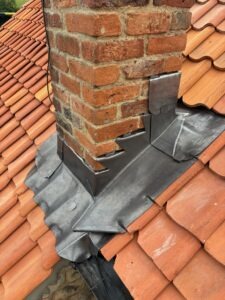
A lead back gutter is usually formed where a pitched roof meets an upstand such as a chimney stack. It is designed to weather the rear of that interface and should be installed independently of the cover flashing above it.
Back gutters require proper underlap beneath the roof covering above and adequate upstand height at the vertical interface. These details matter where driven rain, snow and long-term weather exposure are likely.
Lead can also be used to form rainwater management components such as downpipes, hoppers, sumps and outlets. On historic buildings, lead downpipes are still found in service and often need skilled repair or local replacement.
We are frequently asked to form custom outlets and sumps as part of wider gutter projects, particularly where standard off-the-shelf products cannot suit the geometry or character of the building.
Secret gutters are used where a roof abuts a parapet or coping and a concealed drainage line must be formed between different areas of construction. These details can be highly effective, but must be designed carefully because they are often difficult to inspect once complete.
When detailed properly, a secret gutter can provide a durable and discreet weathering solution, particularly on stone, slate and traditional masonry buildings.
The Lead Shop supports clients and trade professionals with rolled lead sheet, leadwork fixings, patination oil, lead weight calculations and technical guidance.
Get a QuoteLead rainwater details should always be considered in context. The code of lead, joint type, outlet design, support beneath the lining and movement allowance all influence long-term performance.
Concealed details such as soakers are often formed in Code 3, while flashings are commonly formed in Code 4. Gutter work, valley work and demanding exposed details often require Code 5 lead or another specification suited to the application.
Where lead is used for rainwater management, it must be installed with proper joints, suitable clips, careful detailing and correctly formed discharge points. Rainwater does not forgive poor workmanship, and weaknesses in a gutter system can become apparent quickly in heavy weather.
Successful installation is not only about the visible lining. It is also about hidden geometry, support, outlet design and movement provision.
Request a Gutter QuoteBelow are common questions about lead gutters, box gutters, back gutters and rainwater detailing.
Lead gutters are appropriate for certain buildings and details. On a standard domestic roof, plastic or another conventional system may be more suitable. On traditional, heritage and architecturally sensitive buildings, lead gutter linings can provide a durable and effective rainwater solution.
A lead box gutter begins with a correctly formed timber substrate, usually in plywood or a similar material. The geometry, falls, bay lengths, underlay, outlets and expansion details must all be designed with the lead lining in mind.
For lead valley gutters, Code 5 lead is generally considered the practical minimum. Lengths, laps and fixing patterns must be designed to accommodate movement, roof pitch and long-term performance.
A lead back gutter is a weathering detail usually installed behind a chimney or similar upstand where a pitched roof meets a vertical obstruction. It must be formed independently of the cover flashing and needs correct underlap and upstand dimensions.
In many cases, yes. Lead welding is important when forming outlets, sumps, expansion details and specialist gutter components. Some mechanical joints may also be appropriate, depending on the detail.
We undertake specialist lead gutter lining works and supply lead materials online for box gutters, valleys, flashings and wider leadwork projects.
Shop Lead Materials Request a QuoteProviding proper leadwork services to trade and public. Our mission is simple: deliver high-quality leadwork across a range of sectors in rolled lead sheet at a price that is fair, reasonable and proportionate to the skill, detailing and care involved.
Lead gutter linings should always be assessed in context. If you need advice on a box gutter, secret gutter, outlet, back gutter or wider rainwater detail, contact us and we will review your enquiry.
Get In Touch
Lead Lads® Wakefield
Operated by Penman Leadwork & Roofing Ltd
12 Woodside, Wrenthorpe
Wakefield, WF2 0LE
United Kingdom
All rights reserved

The Lead Lads ® Lead Roof Guide Summer Maintenance Summer Lead Roof Maintenance Guide Summer [...]
Latest News The Lead Lads® Launch UK Franchise Model A controlled expansion designed to professionalise [...]
The Lead Lads ® Lead Roof Guide Spring Inspection Spring Lead Roof Inspections — How [...]
#Proper Leadwork: Lead Ventilation & Condensation—Warm vs Cold Roof Strategies Interstitial condensation is one of [...]
#Proper Leadwork: Edge-to-Edge Detailing—Ridges, Verges & Abutments without Stress Ridges and verges frame the roofline. [...]
#Proper Leadwork (2026): Upstands & Drips—Heights, Throatings & Edge Geometry Welcome to the New Year [...]

#Proper Leadwork: Lead Soakers—Sizing, Gauges & Interfaces with Slate and Tile Discreet but essential, lead [...]
#Proper Leadwork: Cornices, Cappings & Cills—Fixing to Masonry without Cracks Beautiful façades deserve durable lead [...]