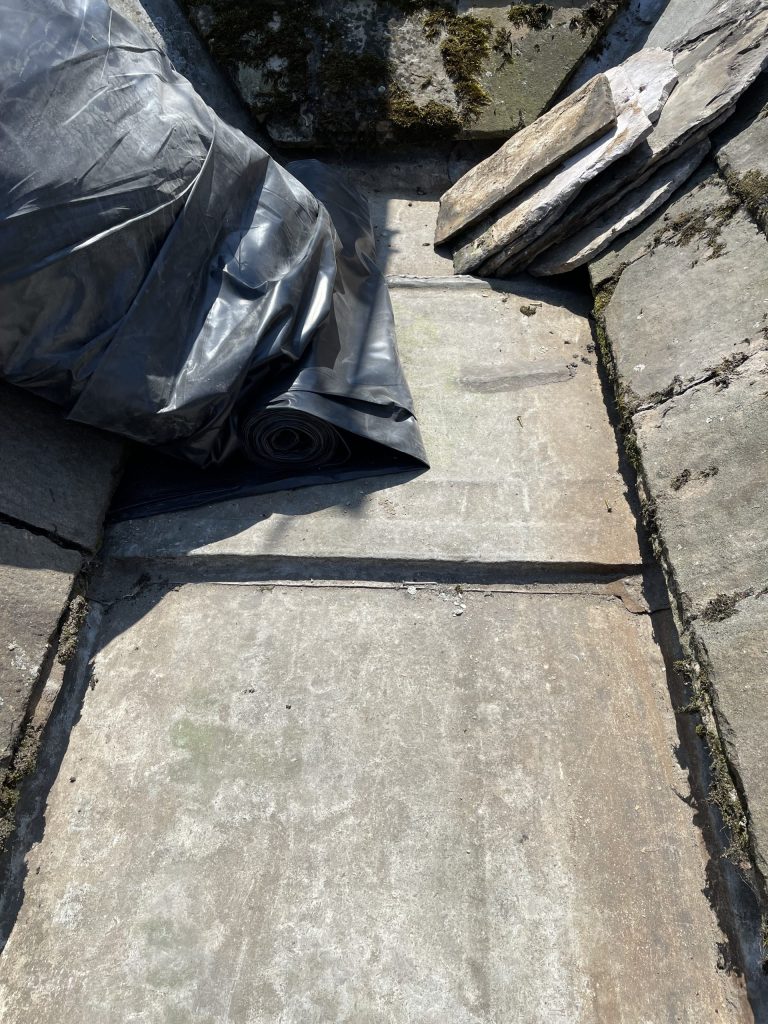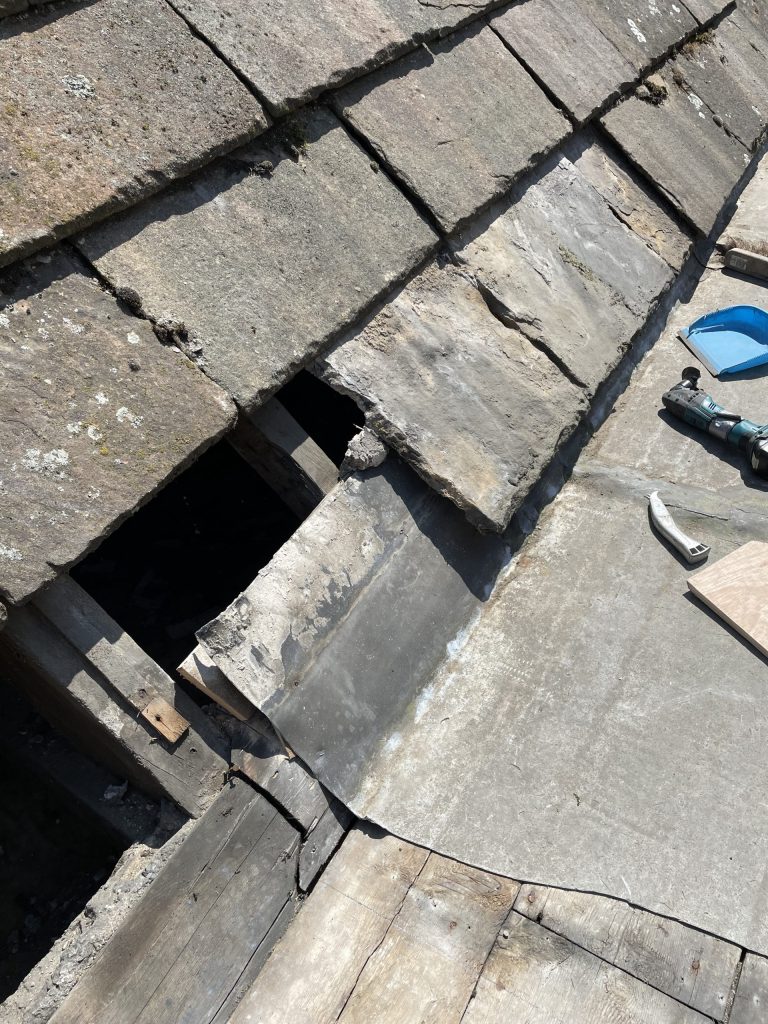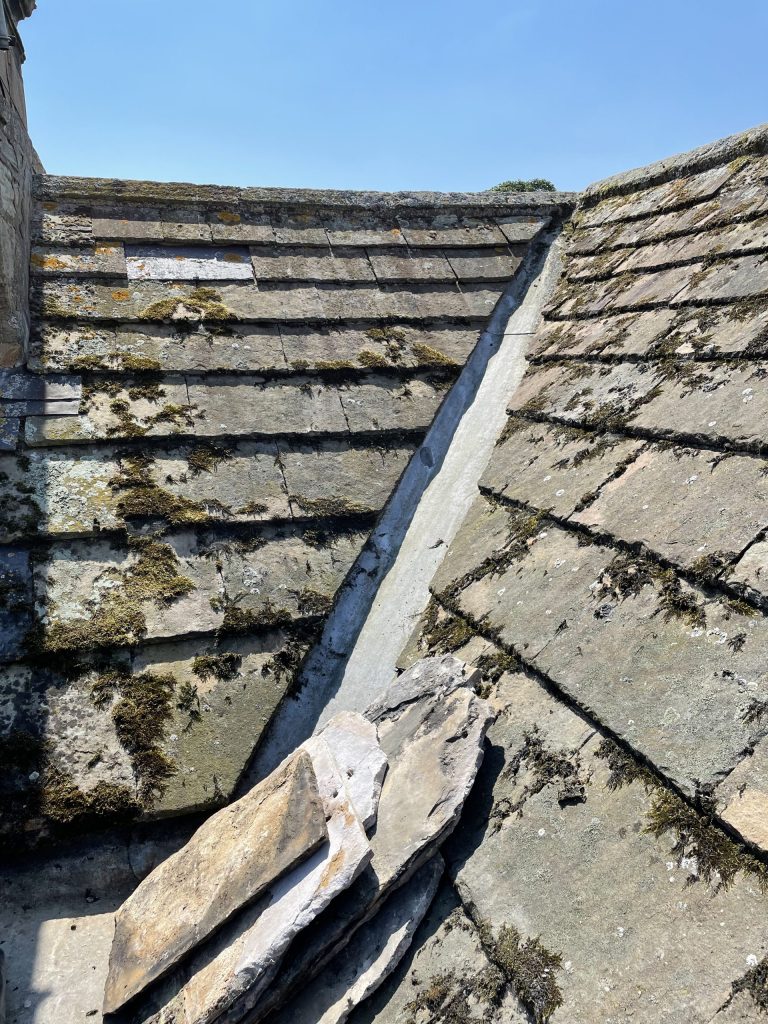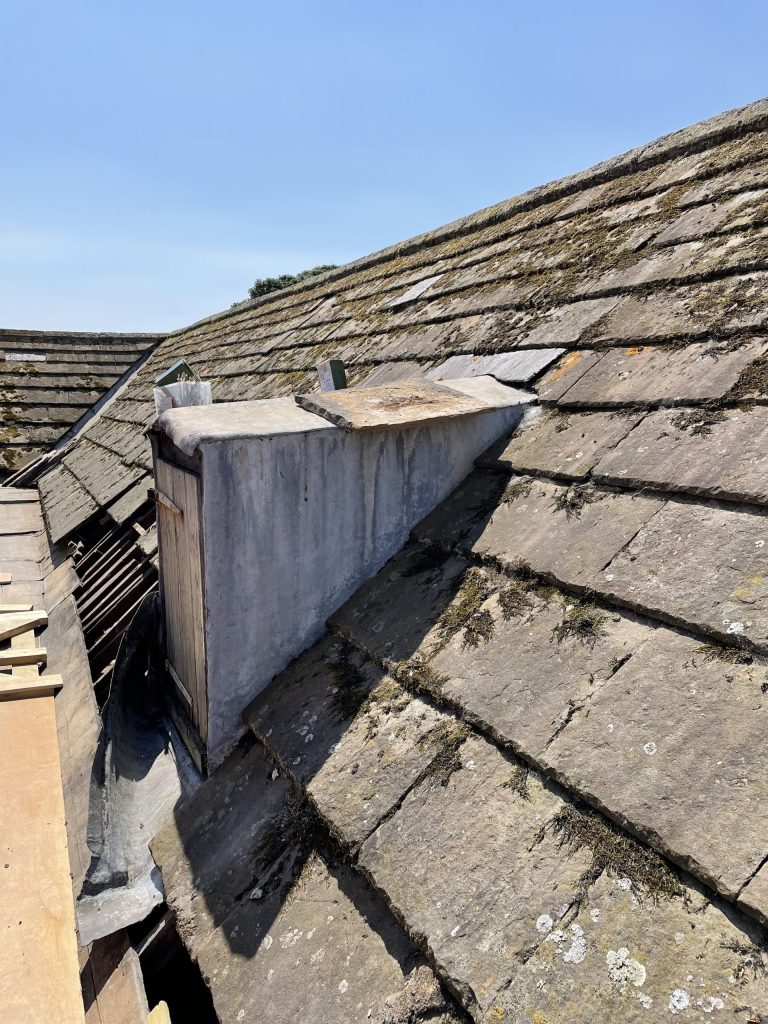

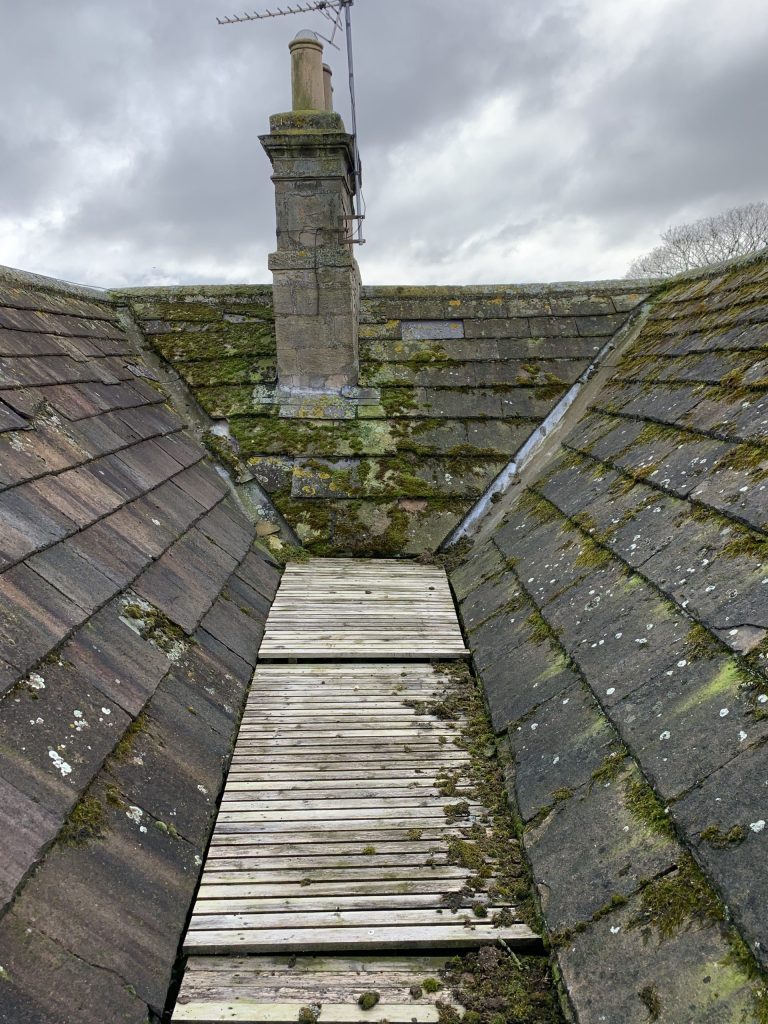
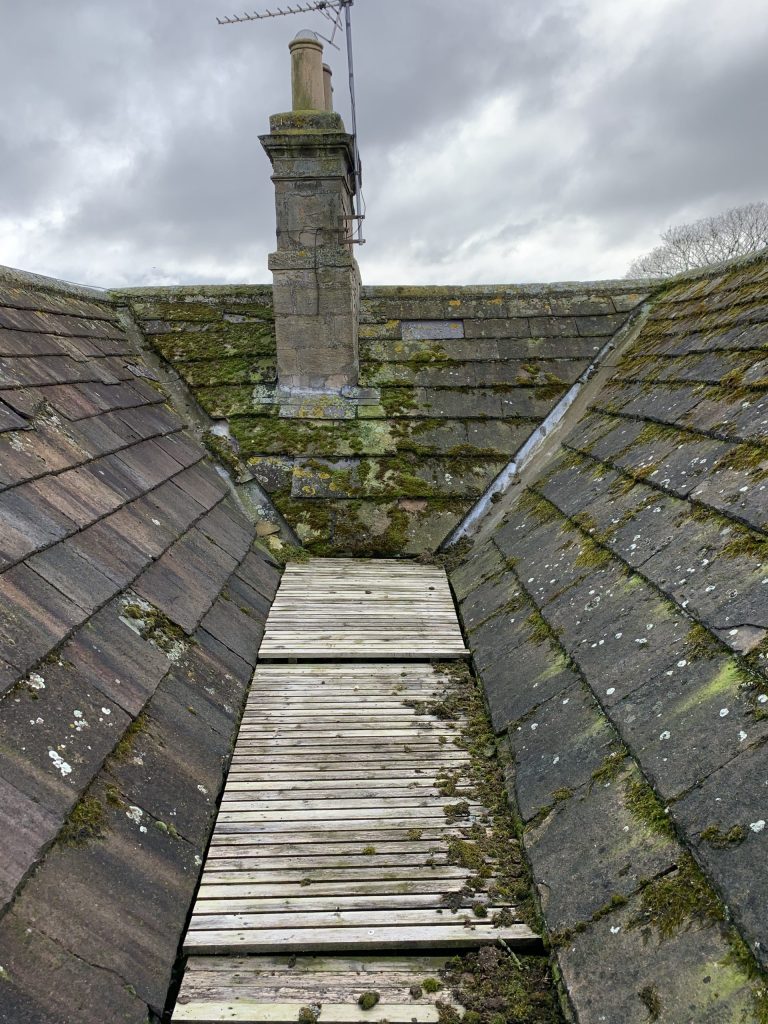

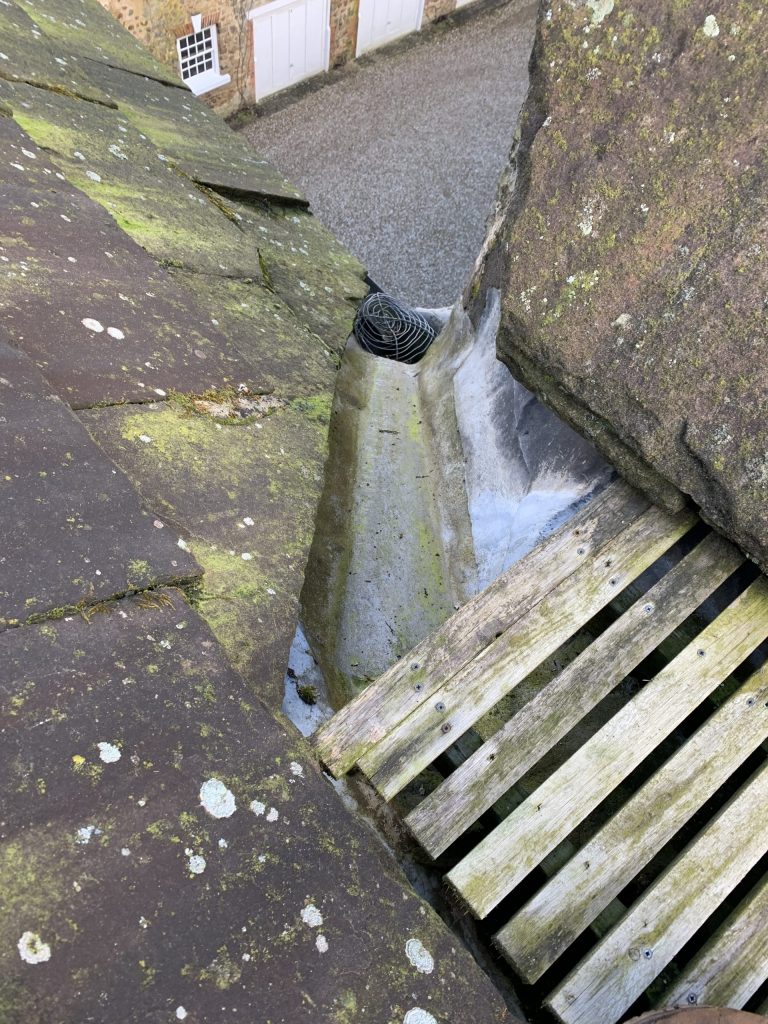
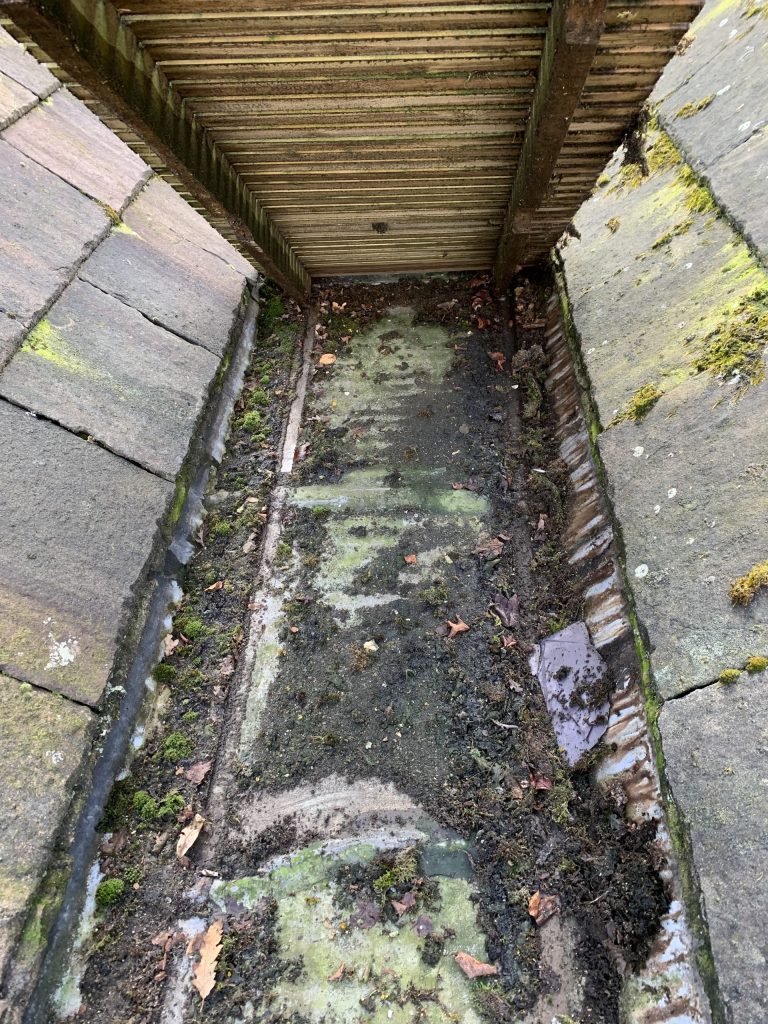


This large lead gutter lining project was completed in around 20 days.


The Lead Lads provide specialist leadwork services for gutter linings, valleys, flashings, hoppers and heritage roof details.
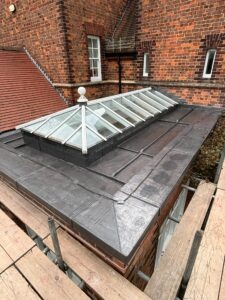
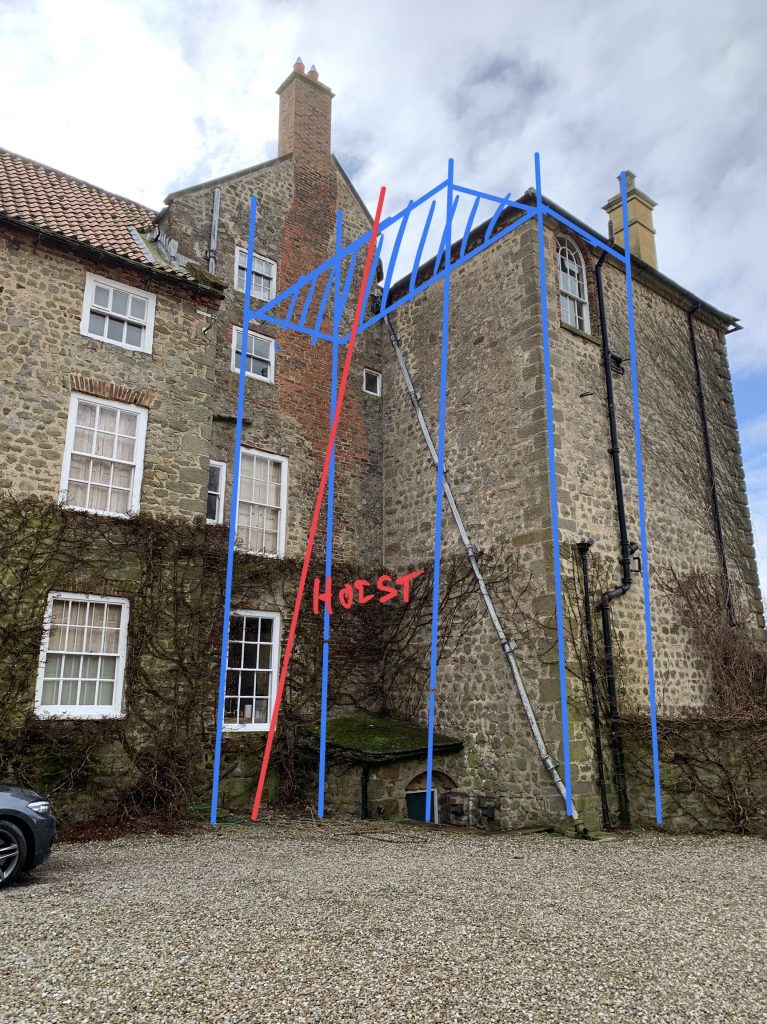
This project involved the replacement of a large central lead gutter lining at Crakehall Hall, a listed building near Bedale in North Yorkshire. The property is a substantial hall with traditional stone slate roof coverings, large chimney stacks and a prominent position facing the village green.
The central gutter forms an important interface between roof slopes. Over time, the existing lining had decayed and failure had resulted in significant water ingress. On a building of this scale, a failed gutter can quickly affect roof timbers, internal finishes and the wider building fabric.
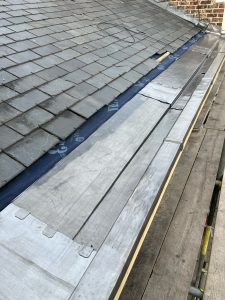
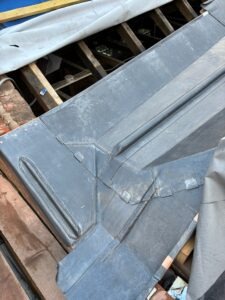
The works were designed to provide a fully weatherproof central gutter lining, improve rainwater discharge and protect the property from further decay. The project also included associated stone slating, hopper repairs, valley linings, chimney flashing and replacement coverings to the dormer access into the gutter area.
The existing central gutter lining had reached the end of its serviceable life. Large lead gutters are highly exposed to standing water, thermal movement and debris build-up. Once the lead begins to fatigue or the substrate below deteriorates, water can quickly penetrate the roof structure.
At Crakehall Hall, the size of the gutter and its location between roof slopes made proper replacement essential. A patch repair would not have addressed the underlying substrate condition, outlet performance or movement requirements. The gutter needed to be stripped back, re-supported and relined using Code 6 lead to suit the scale and exposure of the detail.
This project was completed using a standards-led approach focused on durable substrate preparation, correct bay sizing, controlled movement and reliable rainwater discharge.
The key principle was to rebuild the gutter as a complete system. This meant new treated timber support, 18mm exterior-grade plywood, Code 6 lead, timber roll joints, improved outlet detailing and compatible copper and stainless steel clips.
Contact us about leadwork More leadwork resources and guides The leadwork LinkThis project used robust materials selected for a large historic gutter on a listed building.
If you are trying to understand which code of lead is right for a similar detail, our shoppable lead chart is a useful starting point. For broader product learning, see The Lead Handbook and our lead roofing guides.
The Lead & Materials Used By Us 🛒 Lead Weight Calculator
Large central gutters are some of the most important details on historic roof structures. They collect water from adjoining slopes and often sit above sensitive internal areas. If the lining, outlet or substrate fails, water ingress can become serious very quickly.
This project shows why large lead gutters should be treated as complete systems. Code selection, timber support, bay sizing, roll joints, outlet design, hopper performance and slate reinstatement all affect the success of the finished detail.
Code 6 lead is often used for larger gutter linings, depending on the bay size, exposure and design.
Common causes include age, thermal movement, failed joints, poor falls, blocked outlets and deteriorated timber support.
Timber rolls divide the gutter into controlled bays and allow the lead to move naturally.
Minor defects can sometimes be repaired, but widespread deterioration usually requires full replacement.
A poor outlet can cause water to back up, increasing the risk of leaks and premature lead failure.
You can explore lead roll, fixings, underlay and guides through the Lead Lads Shop.