

This lead gutter and dormer project was completed by our team in around 12 days.


The Lead Lads provide specialist leadwork services for gutter linings, dormers, flashings, outlets and heritage roof details.
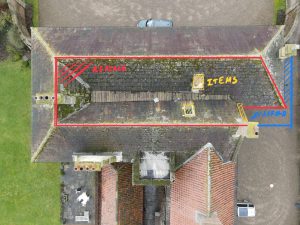
This project involved the installation of new lead gutter linings, dormer leadwork and associated roof details as part of a refurbishment project at Ampleforth Abbey in North Yorkshire. The Lead Lads were engaged by a main contractor to carry out specialist leadwork across a number of roof areas on this important heritage site.
Working on a large and historically significant building requires a careful approach. The leadwork had to be integrated with existing roof coverings, masonry interfaces and traditional architectural details while maintaining a watertight finish across the gutter runs, dormer roof and outlet positions.
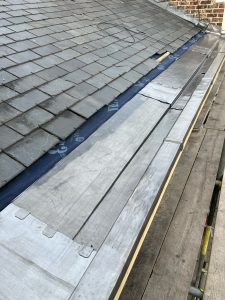
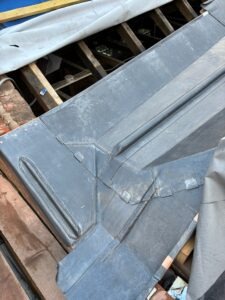
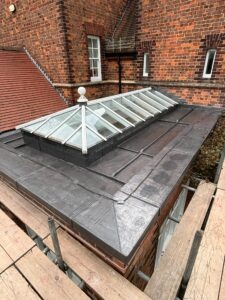
The work included Code 5 lead gutter linings, a new Code 5 lead roof and cheeks to a large access dormer, stepped lead flashings, outlet spitters and carefully dressed details around timber rolls and abutments.
The refurbishment required several gutter linings and lead details to be brought back to a reliable watertight standard. On heritage roof areas, gutters are often hidden, difficult to access and responsible for collecting significant volumes of water. If the lead linings fail, water can quickly affect roof timbers, masonry, ceilings and adjoining internal areas.
Integration with the existing roof coverings was one of the main challenges. The new leadwork had to connect neatly with the surrounding roof structure, provide suitable falls and ensure water was directed into the correct outlet positions without creating weak points at interfaces, corners or stepped flashing details.
This project was completed using a standards-led approach focused on durable lead gutter linings, correct material selection and careful detailing on a heritage building.
The key principle on a project like this is that every gutter lining and outlet detail must work as part of the wider rainwater system. Code 5 lead was used to provide durability, while careful dressing, welding and roll detailing helped maintain a watertight finish across the complex roof layout.
Contact us about leadwork More leadwork resources and guides The leadwork LinkThis project relied mainly on Code 5 lead, selected for its suitability across gutter linings, dormer roof details, cheeks, outlets and stepped flashings.
If you are trying to understand which code of lead is right for a similar detail, our shoppable lead chart is a useful starting point. For broader product learning, see The Lead Handbook and our lead roofing guides.
The Lead & Materials Used By Us 🛒 Lead Weight Calculator
Lead gutters on heritage buildings need careful planning because they are often hidden, difficult to maintain and responsible for managing large volumes of water. The finished detail must provide reliable falls, well-formed outlets and properly dressed junctions where the gutter meets the surrounding roof coverings.
This project also shows the importance of skilled integration. Gutter linings, dormer cheeks, roof access details, outlet spitters and stepped flashings all had to work together. On a building like Ampleforth Abbey, neat workmanship and correct lead detailing are essential to protect the structure while respecting its character.
Code 5 lead is commonly used for many gutter lining applications, depending on bay size, exposure and design.
They manage large volumes of water and help protect roof timbers, masonry and internal finishes from leaks.
A lead spitter is a formed outlet detail that helps discharge water safely from a gutter or roof area.
Stepped flashings help weather the junction between roof coverings and masonry or vertical abutments.
Yes. Lead is well suited to dormer roofs and cheeks when correctly supported, fixed and detailed.
You can explore lead roll, fixings, flashings and guides through the Lead Lads Shop.