
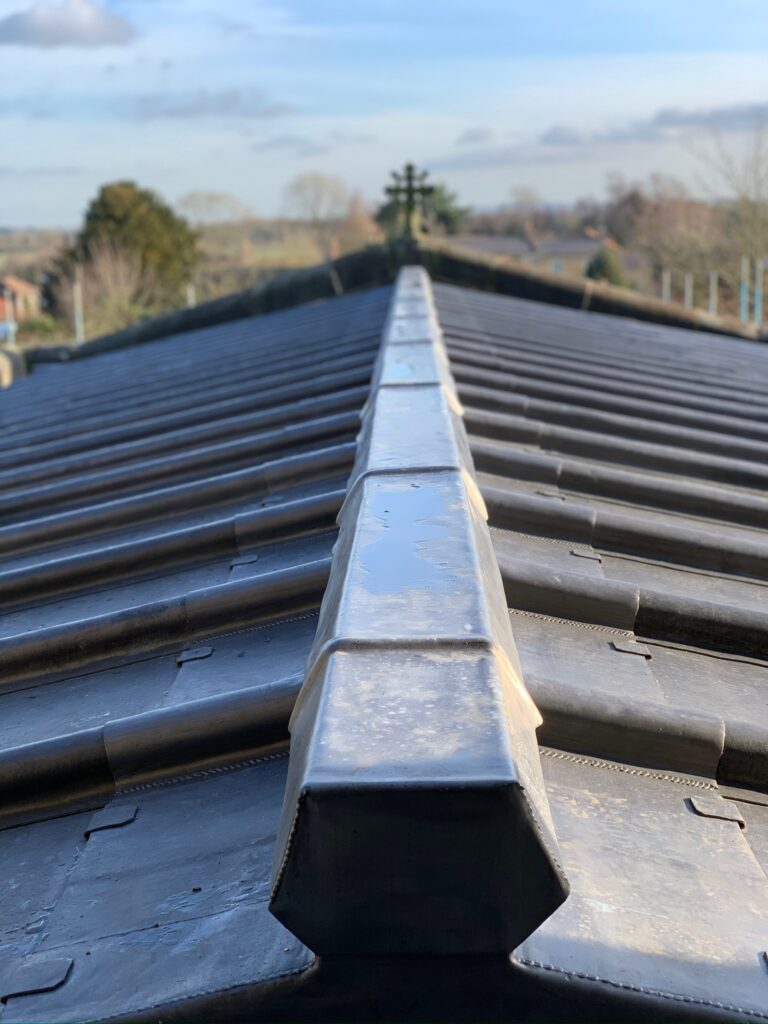
Lead Roof Guide
Summer Maintenance
Summer Lead Roof Maintenance Guide
Summer lead roof maintenance is one of the most important parts of protecting lead flashings, gutters, bays and parapet details. As temperatures rise through May and summer approaches, lead roofing expands and contracts more aggressively, exposing weaknesses in poorly restrained or ageing details.
This guide from The Lead Lads® explains how to inspect lead roofs properly before summer heat, heavy rain and thermal movement create larger roofing defects.
Read The Lead Handbook
Explore Lead Roofing Guides
Order Lead Flashing
Open Trade Account
This summer lead roof maintenance guide focuses on thermal movement, lead flashing maintenance, gutter inspections and seasonal roofing defects affecting traditional leadwork.
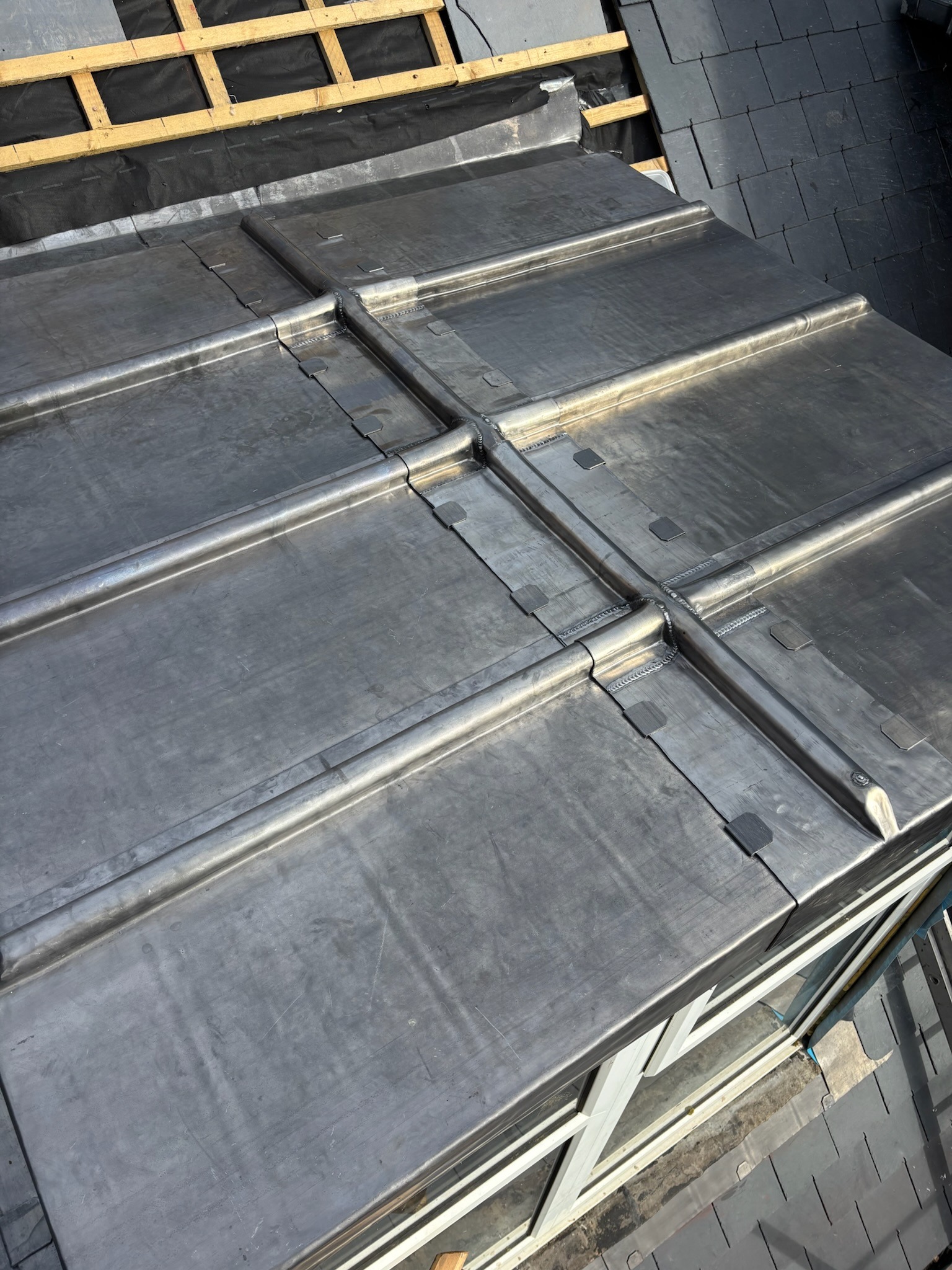
Lead roof details should be checked before summer heat and heavy rain expose movement issues.

Lead flashings, aprons and interfaces should remain secure while still allowing thermal movement.
1) Why summer lead roof maintenance matters in May
May is a useful inspection point because winter damage has usually become visible, but the roof has not yet been through the strongest summer heat. This makes it a good time to clear outlets, check movement joints, inspect flashings and identify early fatigue before warmer weather adds more stress.
- Better visibility: staining, cracks and lifted details are often easier to identify in dry weather.
- Improved repair conditions: leadwork repairs are easier to plan in warmer, drier periods.
- Reduced risk: clearing gutters and outlets before summer storms helps prevent avoidable water backing up behind lead details.
2) How summer heat affects lead roofs
Lead expands as it warms and contracts as it cools. On a sunny day, lead sheet can heat up quickly, especially on exposed slopes, parapets, bay roofs and south-facing details. This is normal, but the roof must be detailed to accommodate that movement.
Heat-related lead roof risks
- Fatigue cracking at drips and corners
- Raised edges where clips are weak or missing
- Distortion across overlong sheets
- Movement at flashings and chases
- Stress around welded corners and patches
Common causes of summer lead roof defects
- Lead pieces installed too long
- Insufficient allowance for expansion
- Over-fixing through the sheet
- Poor bay setting-out
- Inadequate rolls, clips or drips
3) Thermal movement and lead roof fatigue warning signs
Movement is not a defect. Restricted movement is. A well-detailed lead roof allows expansion and contraction to occur without tearing, splitting or pulling against fixed points.
Lead roof expansion areas to inspect first
- Lead bays: look for rippling, distortion or cracks near rolls and drips.
- Roll ends: inspect bossed ends for thinning or stress fractures.
- Back gutters: check corners and welded patches for movement fatigue.
- Aprons: check long pieces for distortion or restraint.
- Cover flashings: check whether the flashing is trapping the detail below.
For replacement sections, match the material to the detail:
Code 4 Lead,
Code 5 Lead and
Code 6 Lead.
4) Lead gutter maintenance and summer drainage checks
Summer rain can be intense. If lead gutters, back gutters, sumps or outlets are partially blocked, water can back up rapidly. This is especially important behind parapets, chimneys and abutments where overflow routes may be limited.

Lead gutters, sumps and outlets should be cleared and checked before intense summer rainfall.
| Element | May check | Why it matters |
|---|---|---|
| Lead gutter | Clear debris, check falls, inspect laps and drips | Standing water increases stress and staining |
| Outlet or sump | Check for leaves, silt, moss and restricted flow | Blocked outlets cause water to back up quickly |
| Back gutter | Inspect corners, upstands and discharge route | Failures here often lead to internal leaks |
| Parapet gutter | Check for safe overflow and ponding | Hidden water build-up can be severe |
5) Lead flashing maintenance and abutment inspections
Flashings protect junctions where the roof meets masonry, chimneys, dormers and upstands. In summer, expansion can worsen details that are already too long, trapped or poorly chased.
Lead step flashing maintenance
- Check chase lines for cracking
- Look for lifted edges and loose pointing
- Inspect staining below the flashing
- Check laps remain properly seated
Lead apron and cover flashing checks
- Look for distortion across long aprons
- Check corners for fatigue cracking
- Ensure cover flashings are not trapping movement
- Inspect interfaces with tiles, slates and masonry
For replacement flashings, use the
Lead Flashing Chart.
For technical reading, see the
Lead Roofing Guides.
6) Lead roof clips, fixings and edge restraint checks
Clips restrain lead against wind uplift while still allowing movement. Poorly fixed edges often become more obvious in warmer weather because expansion causes the sheet to move repeatedly against weak points.
- Inspect free edges: check whether the lead can lift or chatter in wind.
- Check clip spacing: uneven or sparse clips often indicate weak workmanship.
- Look for corrosion: staining may suggest unsuitable or failing fixings.
- Review timber support: loose rolls or poor substrate support can undermine the whole detail.
Useful categories:
Leadwork Fixings and
Wood Rolls & Timber Cores.
7) Lead roof staining, patination and visual warning signs
Surface appearance is not always a defect, but it can provide clues. Fresh white staining, repeated run-off marks and dark wet-looking patches can all suggest drainage, patination or detailing issues.
Usually acceptable lead roof weathering
- Natural dull grey weathering
- Even patination across exposed areas
- Light variation around laps and joints
Lead roof staining to inspect more closely
- Heavy white staining below details
- Persistent wet-looking patches
- Staining beneath clips or flashings
- Algae concentration around standing water
For finishing and reducing early staining, use
Patination Oil.
8) Summer lead roof maintenance checklist
| Element | Check for | Action |
|---|---|---|
| Lead bays | Rippling, splits, ponding, stressed roll ends | Check bay sizing and movement allowance |
| Flashings | Lifted edges, cracked pointing, open laps | Repair or replace failed sections |
| Gutters | Debris, ponding, restricted outlets | Clear and test water flow |
| Clips and fixings | Loose edges, missing clips, staining | Upgrade restraint where required |
| Wood rolls | Movement, decay, loose fixing | Review timber core and lead cover detail |
| Patination | Uneven staining or run-off marks | Clean and apply patination oil where appropriate |
9) When lead roof repairs become lead roof replacement
Not every defect requires replacement. Some issues can be monitored or repaired locally. Others show that the original detail was wrong and should be redesigned rather than patched again.
- Monitor: minor staining, normal weathering and no evidence of movement or water ingress.
- Repair: isolated cracked pointing, localised lifted edges or small failed sections where the main detail is sound.
- Replace: repeated cracking, overlong sheets, poor bay design, trapped movement or widespread fatigue.
10) Summer lead roof maintenance products and guides
