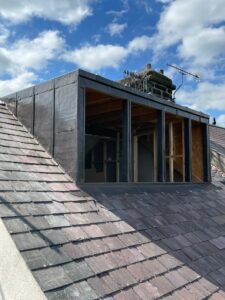

This small window dormer project was completed as part of a specialist lead roofing package.

Small lead-covered dormer window with traditional lead cheeks, roof covering and flashings.

The Lead Lads provide specialist leadwork services for dormers, bays, flashings, gutters and roof details.
This project involved the installation of leadwork to a small window dormer. Smaller dormers are often compact, but they still require careful detailing because they include multiple vulnerable junctions around the roof covering, cheeks, front apron, window frame and adjoining roof slope.
Lead is particularly well suited to small dormer windows because it can be formed neatly around complex shapes, dressed into tight junctions and detailed to provide long-lasting weather protection.
The aim of this project was to provide a durable and traditional lead dormer finish using suitable materials, correct substrate preparation and recognised leadworking techniques.
Small dormers can be deceptively complex. Although the roof area is limited, the number of corners, abutments, flashings and edge details means the workmanship must be accurate.
Poor detailing around a dormer window can quickly lead to water ingress, staining, timber decay and damage to the roof structure. Correct leadwork helps protect the dormer while maintaining a traditional appearance.
This dormer was detailed using recognised leadwork principles, with careful attention to fixing, weathering, movement and neat integration with the surrounding roof.
The key principle was to provide weather protection while allowing the lead to move naturally. This required suitable support, correct underlay, appropriate clips and carefully formed flashings.
Contact us about leadwork More leadwork resources and guides The leadwork Link
Small dormers require careful leadwork because their compact size often includes several junctions in a small area. Cheeks, front aprons, flashings and window abutments all need to be detailed correctly to prevent water ingress.
This project shows why traditional leadwork remains an effective solution for dormer windows. Lead can be shaped, dressed and formed neatly around complex geometry while providing durable weather protection.
Yes. Lead is ideal for small dormers because it can be formed around tight details and complex junctions.
Lead can be used to cover the dormer roof, cheeks, apron, flashings and surrounding weathering details.
Leaks are often caused by failed flashings, poor detailing around window junctions or defective side cheek coverings.
Yes. Suitable underlay helps separate the lead from the substrate and reduces abrasion.
Clips secure exposed edges while still allowing the lead to move naturally.
When installed correctly to recognised standards, lead dormer details can provide many decades of reliable service.