

The Lead Lads®
Lead Welding: A Practical Guide
An introduction to lead welding, where it is used, why it matters and how welded details form part of proper lead roofing.
From outlets and sumps to corners, chutes and expansion-joint assemblies, competent lead welding allows complex details to be formed without unnecessarily thinning or distorting the surrounding sheet.
What Is Lead Welding?
Joining Rolled Lead Sheet
Lead welding is a specialist method of joining sections of rolled lead sheet using controlled heat and additional lead material to create a continuous joint.
It is used throughout traditional and architectural leadwork where a detail cannot reasonably be formed from a single piece of sheet or where excessive bossing could stretch, thin or distort the material.
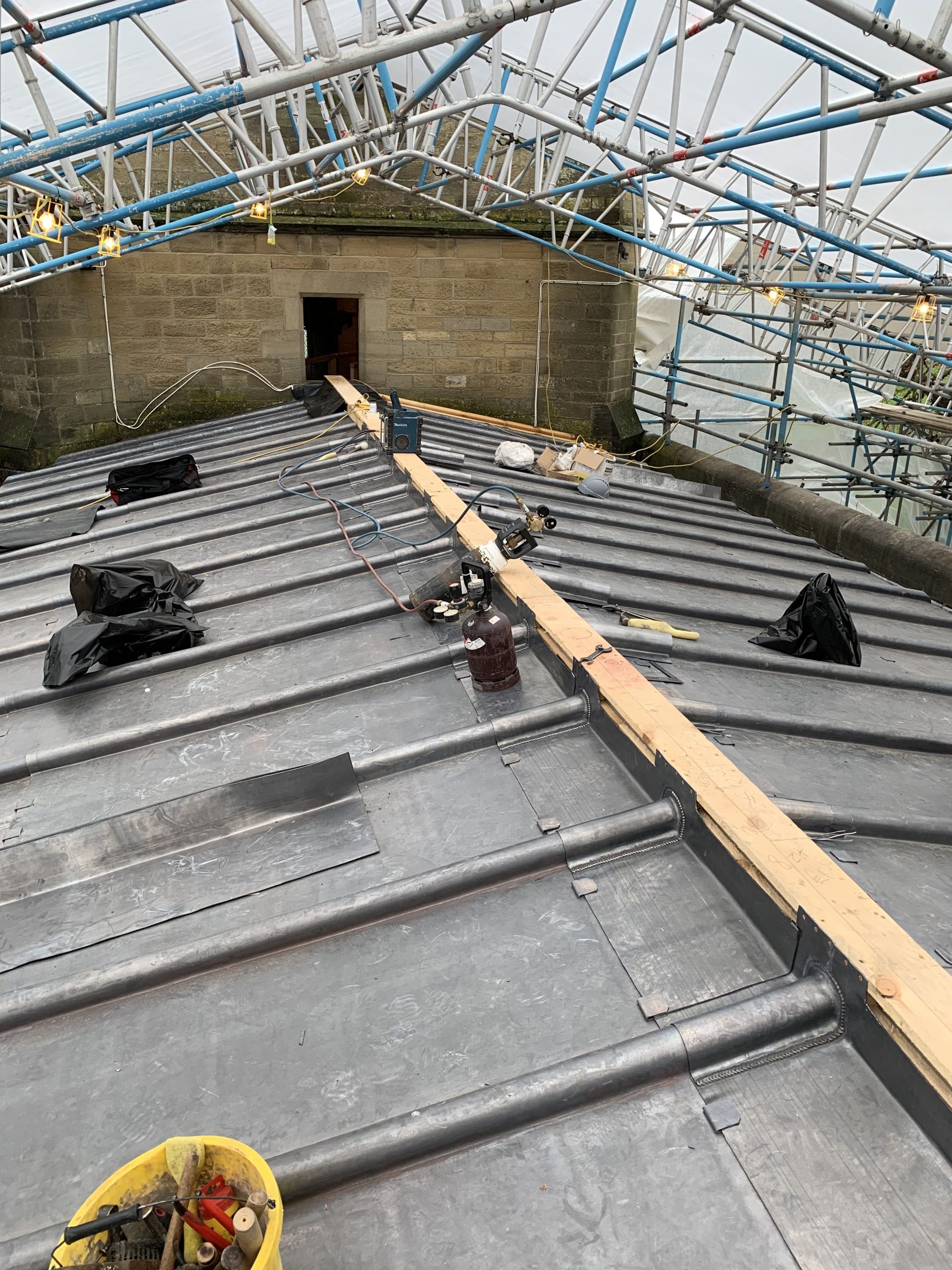
Typical applications include welded corners, outlets, sumps, hopper or chute details, ridge and hip interfaces, fabricated weatherings and some expansion-joint assemblies.
Lead welding should form part of a wider understanding of lead roofing. Correct lead sheet specification, bay sizing, support, fixing and allowance for thermal movement remain fundamental to long-term performance.
Explore Leadwork Standards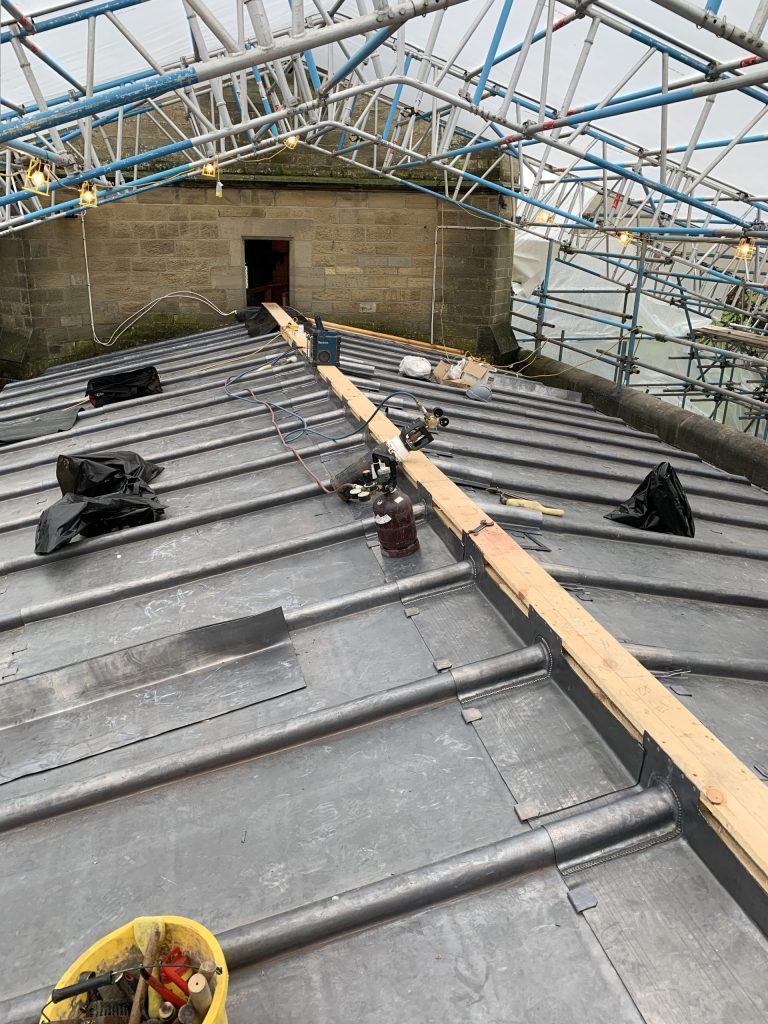
Why Is Lead Welding Used?
Traditional bossing allows lead sheet to be dressed and formed into complex shapes without creating a joint. It remains an important leadworking skill and, where appropriate, can preserve continuity of the original sheet.
There are, however, details where excessive forming would place unnecessary strain on the lead or where the required geometry makes fabrication more practical.
Lead welding allows separate sections to be joined while retaining the full thickness of the surrounding sheet, making it particularly useful for complex architectural and rainwater details.
Welding Does Not Replace Good Detailing
A welded joint is only one part of a successful lead detail. The surrounding leadwork must still be designed to accommodate thermal movement and properly supported by the substrate beneath it.
For this reason, welding should not be treated as a universal solution to cracks, fatigue or poor design. The cause of a defect must be understood before deciding whether welding, partial replacement or complete renewal is appropriate.
Read About Lead Roof RepairApplications
Where Is Lead Welding Used?
Welding is used throughout specialist leadwork to create durable junctions and fabricated details that would otherwise be difficult to form from a single sheet.
Outlets & Spigots
Welded outlets and spigots can be fabricated to discharge rainwater from lead-lined gutters into adjoining pipework or rainwater systems.
Sumps & Chutes
Complex rainwater details may require fabricated sumps, overflow weirs and chute outlets formed from several sections of lead sheet.
Corners & Junctions
Internal and external corners, changes in direction and difficult interfaces can often be formed cleanly using carefully executed welded joints.
Hips & Ridges
Complex interfaces at lead hips, ridges and apex details can require a combination of traditional forming and welding.
Architectural Leadwork
Decorative and bespoke leadwork may involve fabricated sections that rely upon welding to create a continuous weather-resistant detail.
Expansion-Joint Assemblies
Proprietary expansion joints used in gutters or constrained roof areas may incorporate lead sections that are welded into the surrounding lining.
Tools & Competence
Lead Welding Equipment
Traditional lead welding commonly uses specialist gas-welding equipment capable of delivering a finely controlled flame suitable for working with lead sheet.
The equipment itself is only part of the process. Successful welding depends upon preparation, heat control, cleanliness, manipulation of the molten lead and an understanding of how the finished detail will behave as the roof expands and contracts.
Because fuel gases, hot work and lead exposure involve significant hazards, welding should be undertaken by trained and competent personnel using appropriate equipment, ventilation, protective measures and site controls.
For most clients, the important question is therefore not simply whether a contractor owns welding equipment, but whether they understand when welding is appropriate and can integrate the detail correctly into the surrounding leadwork.
Lead Welding or Bossing?
Traditional leadworking uses both forming and welding. The correct method depends upon the geometry of the detail, the lead code, movement requirements and the amount of deformation required.
Traditional Bossing
Bossing involves carefully dressing and stretching lead sheet into a required shape, allowing many weathering details to be formed without cutting the sheet.
When executed correctly it can produce clean, durable details while maintaining continuity of the original sheet.
Lead Welding
Welding allows independently formed sections of lead to be joined where the geometry is too complex, where excessive bossing could thin the material, or where fabrication provides the more appropriate solution.
Experienced leadworkers will often use both techniques within the same project.
Lead Expansion Joints
Lead expands and contracts continuously as its temperature changes. Traditional roofs deal with this movement by dividing lead sheet into appropriately sized bays using details such as drips, steps and rolls.
In some constrained locations, particularly gutters, there may be insufficient height or space to accommodate a conventional stepped joint.
A proprietary expansion joint can then provide a practical means of introducing movement into the lining while maintaining a weather-resistant detail.
Why Movement Matters
Where long runs of lead are installed without adequate movement provision, repeated thermal cycling can create stress, distortion and ultimately fatigue cracking.
Expansion-joint details therefore need to be considered as part of the overall bay arrangement rather than simply added as a repair to an already overstressed lining.
The manufacturer’s installation requirements and recognised leadwork guidance should always inform the finished detail.


Movement Details
Where Are Lead Expansion Joints Used?
Expansion joints are most commonly encountered where a long lead lining cannot conveniently be divided using a conventional step, drip or roll.
Lead-lined gutters are a typical example. Restricted upstand heights, adjoining roof slopes or drainage requirements can make a traditional stepped joint impractical, particularly where long gutter runs need to be divided to accommodate thermal movement.
They can also be incorporated into certain constrained roof or bay details where sufficient height for a conventional mechanical joint is unavailable.
The permitted dimensions of individual lead bays depend upon the application, lead code, support and detailing. For this reason, joint positions should be determined by reference to recognised leadwork guidance rather than by adopting a single standard dimension for every project.
For more information about bay sizing and movement, see our lead bay roofing guide and wider leadwork standards.
Rainwater Details
Lead Welding Outlets, Chutes & Spigots
Rainwater outlets are one of the clearest examples of why fabrication and welding are important leadworking skills.
Complex gutter outlets may require several sections of lead to form the chute, overflow, base, side walls and outlet connection. Welding allows these components to be brought together as a coherent weathering detail.


Repair Work
Can Existing Lead Be Welded?
Existing lead can sometimes be repaired using welding, but the surrounding sheet must first be assessed.
Old lead may be oxidised, contaminated, thinned or fatigued, and repeated thermal movement may have weakened a much larger area than the visible crack suggests.
If a split has developed because a bay is oversized or movement has been restricted, welding the crack alone may not solve the underlying problem. Further failure can simply occur adjacent to the repaired area.
For this reason, our approach to lead roof repair is to understand the cause of the defect before deciding whether welding, partial renewal or complete replacement is appropriate.
Read the Lead Roof Repair Guide
The Craft of Lead Welding
Like many traditional trades, lead welding combines technical understanding with a high degree of manual skill.
Experienced leadworkers often develop a recognisable rhythm and appearance to their welding. Torch movement, working position and individual technique can all influence the visual character of the finished weld.
The appearance may vary, but the objective remains the same: to produce a sound joint without unnecessarily overheating, thinning or damaging the surrounding lead.
That craftsmanship is particularly important on visible architectural details where the finished weld forms part of the appearance of the completed roof.
#ProperLeadwork
Lead Welding by The Lead Lads®
Lead welding forms part of many of the specialist roofing details undertaken across The Lead Lads® project portfolio.
From relatively small corners and outlets to substantial gutter systems and architectural details, the technique allows complex pieces of leadwork to be fabricated while integrating them into the wider roof construction.
Explore our lead roofing projects to see completed work, or visit our leadwork video library to see specialist leadworking in practice.
View Leadwork Projects
Explore Related Leadwork
Lead welding is only one element of specialist lead roofing. Explore related services, projects and technical guidance across The Lead Lads® platform.
Lead Flat Roofs
Lead roof bays, movement detailing, rolls, drips, outlets and traditional flat-roof construction.
Lead Bays
Traditional bay window roofs with correctly sized sheets, rolls, drips, welts and welded junctions.
Heritage Leadwork
Specialist traditional leadwork for historic, ecclesiastical and architecturally significant buildings.
Lead Roof Repairs
Assessment and repair of split lead, fatigue, failed joints, outlets and defective historic details.
Lead Valleys
Repair, renewal and detailing of traditional lead-lined valleys and gutters.
Chimney Leadwork
Aprons, soakers, stepped flashings, back gutters, saddles and specialist chimney weatherings.
Watch Specialist Leadwork
Our leadwork video library includes practical examples of roofing details, welding, forming and completed lead projects.
It provides a useful visual companion to this guide and shows how specialist leadworking techniques are applied on real roofs.
View Leadwork VideosLead Sheet & Materials
Buying Rolled Lead Sheet?
Rolled lead sheet and associated roofing materials are available separately through The Lead Lads® Shop.
Our online lead flashing chart can also be used to compare common roll widths and lead codes when selecting material for roofing and flashing work.
Visit The Lead Lads® Shop Shop the Lead Flashing Chart
Lead Welding FAQs
Lead welding is used to join sections of rolled lead sheet when forming details such as outlets, sumps, chutes, corners, fabricated weatherings and other complex junctions that cannot reasonably be formed from a single sheet.
No. In traditional lead roofing, lead welding involves locally melting and joining the lead itself with compatible lead material. Soldering normally relies upon a separate lower-melting-point alloy to create the joint.
Sometimes. Existing lead must be assessed for oxidation, contamination, thinning, fatigue and general condition before a welded repair is considered. In some cases replacement of the affected section will provide the more reliable solution.
Not always. If the crack has been caused by restricted thermal movement, oversized bays or widespread fatigue, welding the visible split may not address the underlying cause. See our lead roof repair guide for further information.
Bossing is commonly used where a detail can be formed from a continuous sheet without excessive stretching or thinning. Welding becomes useful where geometry, fabrication or the amount of forming required makes joining separate sections more appropriate.
Some proprietary expansion-joint systems incorporate lead edges that are welded into the surrounding leadwork. The precise installation method should follow the manufacturer’s requirements and recognised leadwork guidance.
The Lead Lads®
Need Specialist Leadwork?
From welded outlets and complex junctions to complete lead roofs, gutters, bays and heritage leadwork, our projects are built around proper detailing and specialist leadworking skills.
Explore our current services and pricing, view completed projects or contact The Lead Lads® to discuss your requirements.
Leadwork Services & Prices Contact The Lead Lads®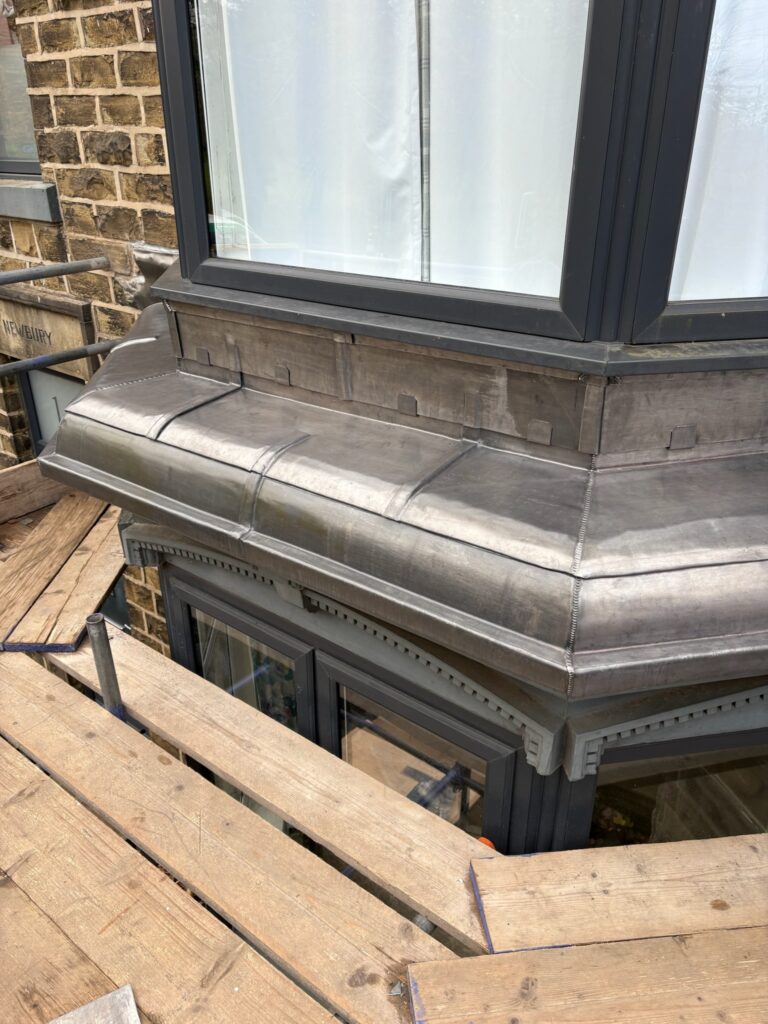
Latest Leadwork Advice & Projects
Explore technical guidance, lead roofing projects, standards and practical advice from The Lead Lads®.

Summer Lead Roof Maintenance Guide | Heat, Expansion & Flashing Checks
The Lead Lads ® Lead Roof Guide Summer Maintenance Summer Lead Roof Maintenance Guide Summer [...]
May
The Lead Lads ® Launch UK Franchise Model to Raise Standards in Specialist Leadwork
Latest News The Lead Lads® Launch UK Franchise Model A controlled expansion designed to professionalise [...]
Apr
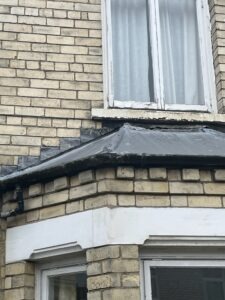
#Proper Leadwork: Spring Lead Roof Inspections—How to Spot Movement, Fatigue & Failure After Winter
The Lead Lads ® Lead Roof Guide Spring Inspection Spring Lead Roof Inspections — How [...]
Mar
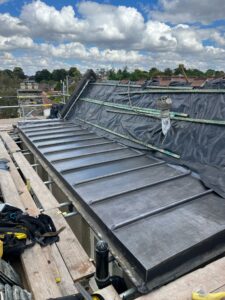
Lead Roof Ventilation & Condensation: Warm vs Cold
#Proper Leadwork: Lead Ventilation & Condensation—Warm vs Cold Roof Strategies Interstitial condensation is one of [...]
Jan
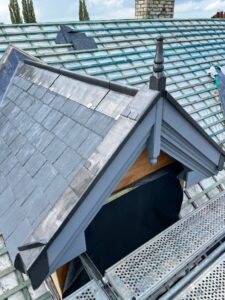
Lead Ridge & Verge Detailing: Ridges, Verges & Abutments
#Proper Leadwork: Edge-to-Edge Detailing—Ridges, Verges & Abutments without Stress Ridges and verges frame the roofline. [...]
Jan
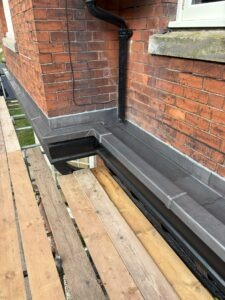
Lead Upstands & Drips: Heights & Edge Geometry
#Proper Leadwork (2026): Upstands & Drips—Heights, Throatings & Edge Geometry Welcome to the New Year [...]
Dec

Lead Soakers: Sizing, Gauges & Interfaces
#Proper Leadwork: Lead Soakers—Sizing, Gauges & Interfaces with Slate and Tile Discreet but essential, lead [...]
Dec
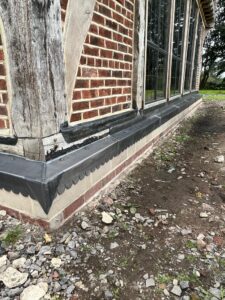
Lead Cappings to Masonry: Cornices & Cills
#Proper Leadwork: Cornices, Cappings & Cills—Fixing to Masonry without Cracks Beautiful façades deserve durable lead [...]
Dec
