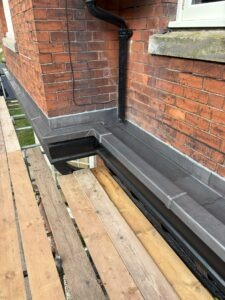
leadwork link
The Lead Lads | Leadwork Training UK

Leadwork Training

A practical guide to leadwork training, LSTA courses, lead welding, bossing, hard metal roofing and the skills needed to become a competent leadwork professional.

Leadwork Guide About The Lead Lads
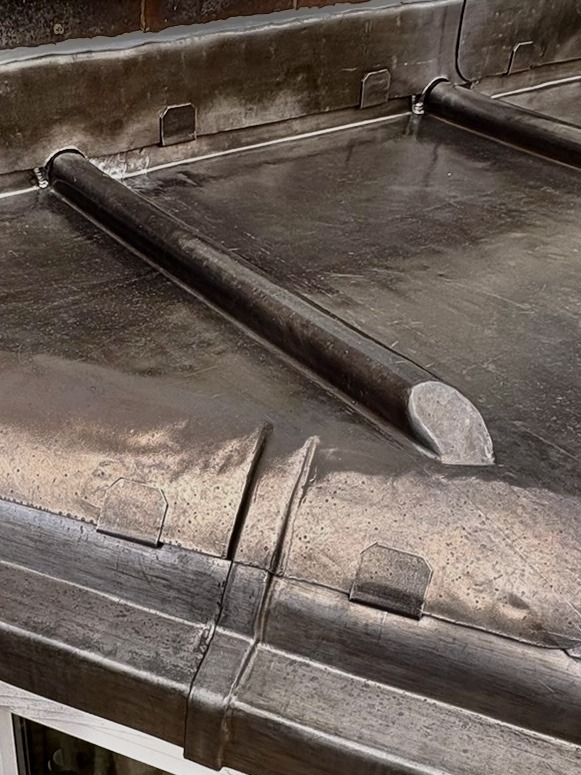
Leadwork Training UK

A practical guide to LSTA training, lead roofing skills and professional development

The Lead Sheet Training Academy, commonly known as the LSTA, is one of the best-known UK training routes for people who want to develop practical skills in leadwork and hard metal roofing. For roofers, apprentices, heritage contractors and specialist installers, formal leadwork training can help build confidence in lead welding, bossing, sheet lead detailing, substrate preparation, flashings, gutters, valleys and complex roof junctions.

This guide explains what leadwork training normally involves, who it is suitable for, why practical site experience remains essential, and how LSTA-style training can support a career in specialist roofing.

Contact The Lead Lads

1. About the Lead Sheet Training Academy

The Lead Sheet Training Academy provides specialist training for leadwork and hard metal roofing. Training of this type is valuable because leadwork is not simply a material installation process; it is a skilled craft that requires an understanding of thermal movement, bay sizing, substrate design, fixings, laps, bossing, welding and water management.

For anyone working with rolled lead sheet, training can help reinforce proper technique and reduce the risk of common defects such as split leadwork, poorly formed junctions, inadequate clipping, incorrect code selection and premature failure.

2. Why Leadwork Training Matters

Leadwork is used at some of the most vulnerable parts of a building envelope, including chimneys, abutments, valleys, dormers, gutters, parapets and roof junctions. Poor detailing at these locations can quickly result in leaks, staining, movement failure and expensive remedial work.

  • Better technical understanding of sheet lead, hard metals and roof interfaces.
  • Improved practical workmanship through workshop-based training.
  • Greater confidence when forming flashings, gutters, valleys and bespoke details.
  • Useful career development for apprentices, roofers and heritage contractors.
  • Stronger specification awareness for surveyors, architects and project managers.

3. Accreditation and Skills Recognition

Formal training can help demonstrate that a roofer or leadworker has invested in recognised practical skills. This can be useful when working on heritage roofing projects, high-value residential properties, commercial roofs and specialist leadwork packages.

However, a certificate alone does not make someone a complete leadworker. The best results usually come from combining formal training with supervised site experience, mentoring and repeated practice on real projects.

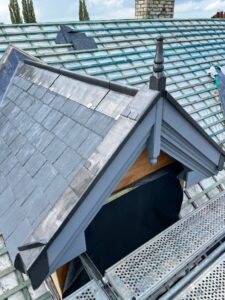
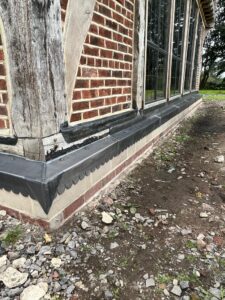
lead detailing for heritage restoration

4. Who Should Consider Leadwork Training?

  • Apprentices looking to develop a specialist roofing skill.
  • Roofers who want to improve their lead welding, bossing and detailing.
  • Heritage contractors working on traditional buildings, churches, listed properties and conservation projects.
  • Building surveyors and architects who need to better understand lead roofing defects and specification.
  • Specialist contractors who want to offer higher-value leadwork services.

5. Site Experience Still Matters

Training is valuable, but leadwork is ultimately learned through repetition, problem solving and working alongside experienced tradespeople. Every roof is different. Real projects involve awkward junctions, existing defects, weather exposure, access constraints and historic detailing that cannot always be fully replicated in a training environment.

The best leadworkers combine technical knowledge with practical judgement. They understand when to weld, when to boss, when to introduce movement joints, when to redesign a detail and when a substrate is unsuitable.

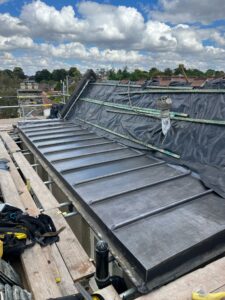
wood rolls for leadwork

6. Leadwork and Hard Metal Roofing

Leadwork and hard metal roofing are closely connected disciplines. Many specialist contractors work with lead, copper, zinc and stainless steel because the underlying principles of forming fully supported metal roof coverings often overlap.

Leadworkers also need to understand clips, fixings, welted edges, outlets, gutters and supporting details, many of which involve compatible metals and careful detailing.

7. Booking Leadwork Training

If you are considering formal training, review the latest course information directly with the training provider. Course availability, duration and entry requirements may change, so it is always sensible to confirm current details before booking.

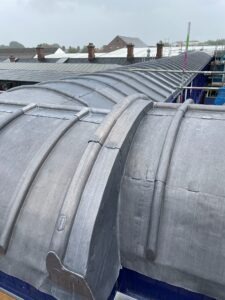
lead ridge detail

Lead Roofing

Professional lead roofing requires suitable substrates, correct falls, movement allowance, perimeter detailing and careful selection of rolled lead sheet codes.

code 4 lead

Lead Bay Windows

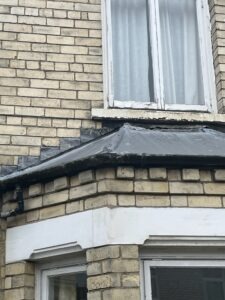
Lead bay windows are a common specialist detail. Correct welts, clips, drips, gutters and perimeter details help create a durable and visually strong finish.

lead welding

Lead Welding

Lead welding is a core skill for any aspiring leadwork professional. Good welding requires preparation, heat control, torch control and consistent technique.

lead welding

Lead Gutters, Channels and Outlets

Lead is ideal for forming complex gutters, channels and outlets. When properly designed and installed, a lead gutter lining can provide a highly durable rainwater management detail.

Careers in Leadwork

Leadwork Courses and Practical Skill Development

Leadwork training normally combines theory with workshop practice. It can introduce the tools, techniques and principles needed to work with lead safely and competently. However, the strongest leadworkers are usually those who continue learning on site under an experienced mentor.

Leadwork is both technical and creative. It requires physical skill, attention to detail and the ability to solve problems in real building conditions. It is also one of the most important roofing disciplines because lead is commonly used at interfaces where roof coverings are most likely to fail.

01.

Basic Leadwork

Introductory leadwork training

  • Overview: Suitable for those with limited experience who want to understand the basics of sheet lead roofing.
  • Key skills: Lead handling, basic bossing, simple flashings, tools, safety and introductory welding principles.
  • Best for: Apprentices, general roofers and those starting a leadwork pathway.

02.

Lead Welding

The principles of lead welding

  • Overview: Focused training in preparing, forming and welding lead sheet for roofing applications.
  • Key skills: Material preparation, safe working, torch technique, weld consistency and joint formation.
  • Best for: Roofers who want to improve one of the most important specialist leadwork skills.

03.

Intermediate and Advanced Leadwork

Developing more complex detailing skills

  • Overview: Training for those progressing beyond basic flashings into more complex roof details.
  • Key skills: Dormers, chimneys, gutters, outlets, bossed details, welded details and restoration work.
  • Best for: Experienced roofers, heritage contractors and specialist leadworkers.

Advanced Leadwork and Heritage Roofing

Advanced leadwork is particularly relevant to heritage and conservation roofing, where existing buildings often require traditional detailing, careful material selection and respect for original construction.

Complex leadwork may involve curved surfaces, ornate features, church roofs, parapet gutters, cornices, dormers, valleys and bespoke fabricated details. These areas require both training and experience.

Hard Metals and Specialist Roofing Skills

Hard metal roofing matters because leadworkers often need to understand compatible metals, clips, fixings and fully supported roof systems. The principles of setting out, forming, seaming and detailing can be transferred across lead, copper, zinc and stainless steel.

Basic Hard Metal Roofing

  • Overview: An introduction to working with hard metals such as copper and zinc.
  • Key skills: Setting out, forming, seaming, fixing and understanding hard metal roof build-ups.
  • Best for: Roofers looking to broaden their specialist metal roofing knowledge.

Advanced Hard Metal Roofing

  • Overview: More complex metal roofing techniques for high-end roofing, restoration and architectural work.
  • Key skills: Advanced detailing, long-strip roofing, curved surfaces and complex junctions.
  • Best for: Specialist contractors working across lead, zinc, copper and stainless steel roofing.

From Lead Sheet to Professional Leadwork

Leadwork training is about learning how raw material becomes durable, weatherproof and carefully detailed roofing work.

Speak to The Lead Lads

Leadwork Advice, Projects and Training Guidance

Whether you are researching leadwork training, planning a lead roofing project or trying to understand what proper leadwork should look like, The Lead Lads can help. Explore our guides, view our projects or contact us to discuss specialist leadwork.

hello@theleadlads.co.uk

More Leadwork Projects
Summer Lead Roof Maintenance Guide | Heat, Expansion & Flashing Checks

The Lead Lads ® Lead Roof Guide Summer Maintenance Summer Lead Roof Maintenance Guide Summer [...]

The Lead Lads ® Launch UK Franchise Model to Raise Standards in Specialist Leadwork

Latest News The Lead Lads® Launch UK Franchise Model A controlled expansion designed to professionalise [...]

#Proper Leadwork: Spring Lead Roof Inspections—How to Spot Movement, Fatigue & Failure After Winter

The Lead Lads ® Lead Roof Guide Spring Inspection Spring Lead Roof Inspections — How [...]

Lead Roof Ventilation & Condensation: Warm vs Cold

#Proper Leadwork: Lead Ventilation & Condensation—Warm vs Cold Roof Strategies Interstitial condensation is one of [...]

Lead Ridge & Verge Detailing: Ridges, Verges & Abutments

#Proper Leadwork: Edge-to-Edge Detailing—Ridges, Verges & Abutments without Stress Ridges and verges frame the roofline. [...]

Lead Upstands & Drips: Heights & Edge Geometry

#Proper Leadwork (2026): Upstands & Drips—Heights, Throatings & Edge Geometry Welcome to the New Year [...]

Lead Soakers: Sizing, Gauges & Interfaces

#Proper Leadwork: Lead Soakers—Sizing, Gauges & Interfaces with Slate and Tile Discreet but essential, lead [...]

Lead Cappings to Masonry: Cornices & Cills

#Proper Leadwork: Cornices, Cappings & Cills—Fixing to Masonry without Cracks Beautiful façades deserve durable lead [...]