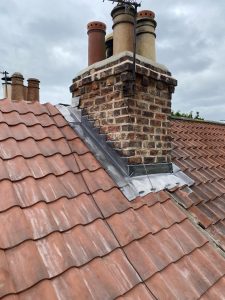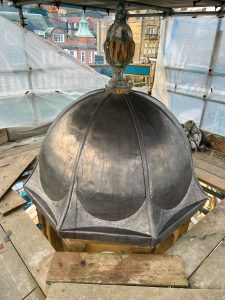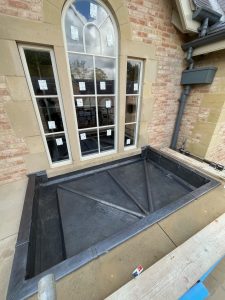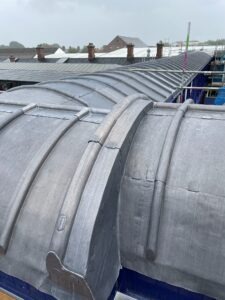
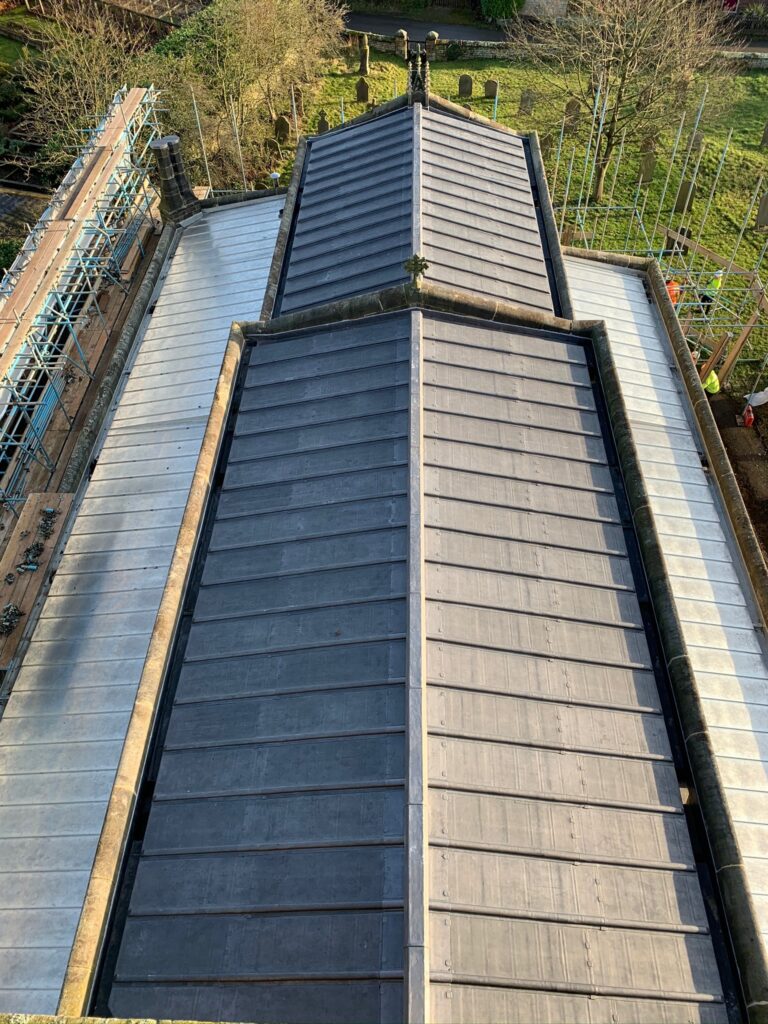
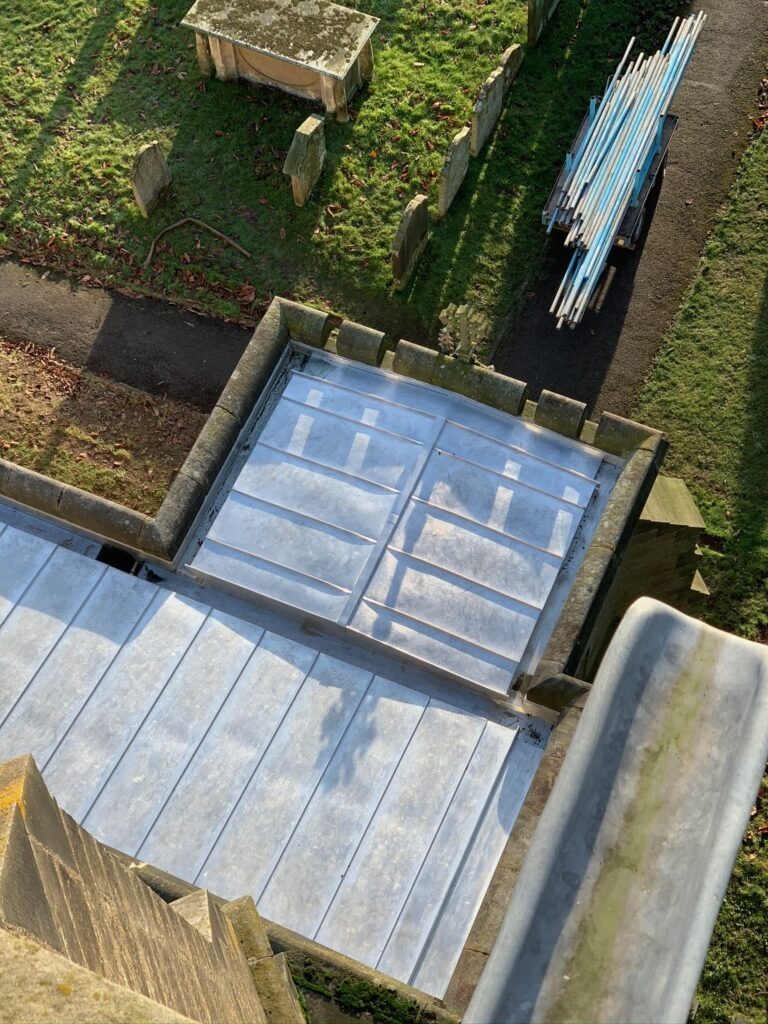
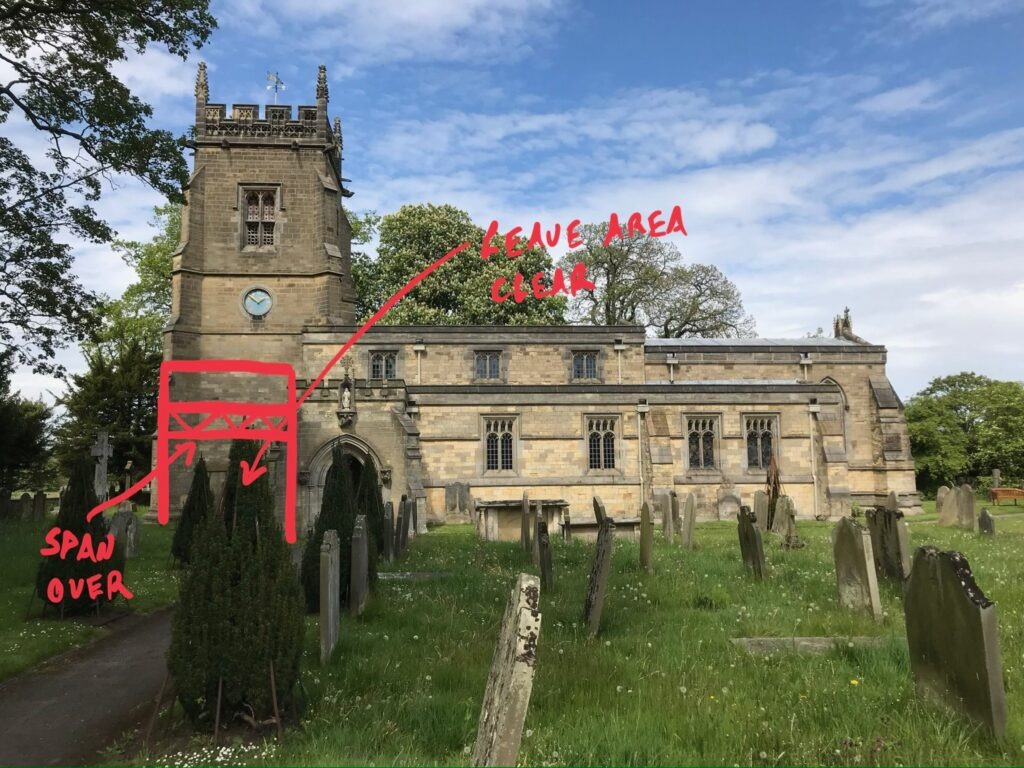
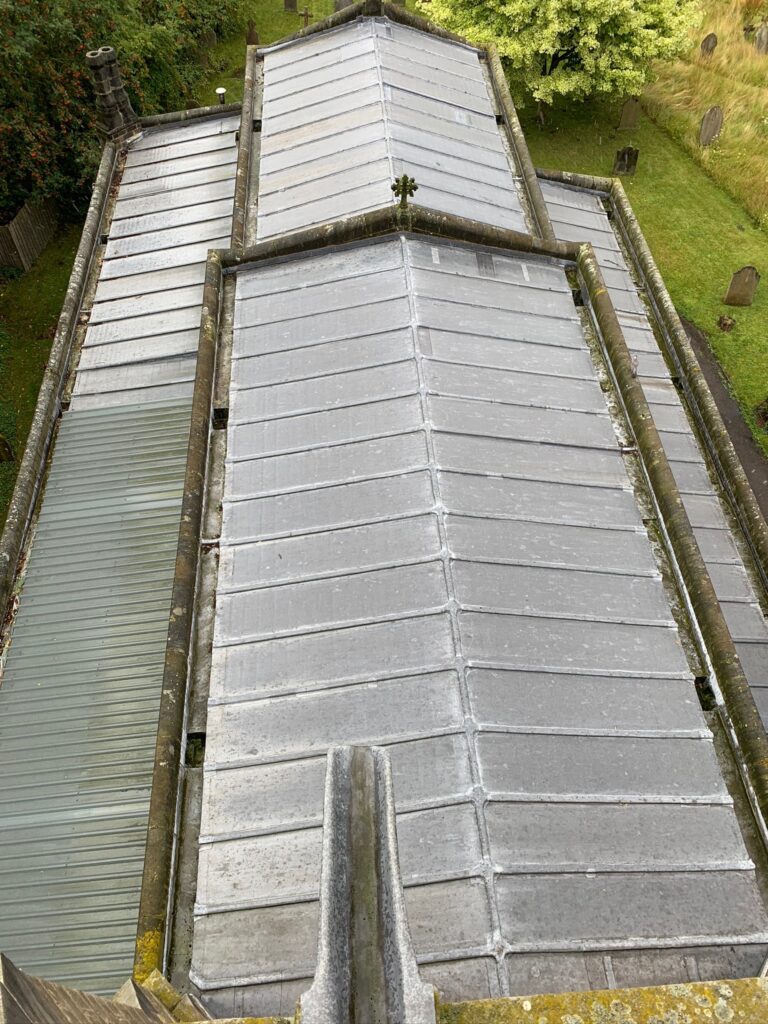
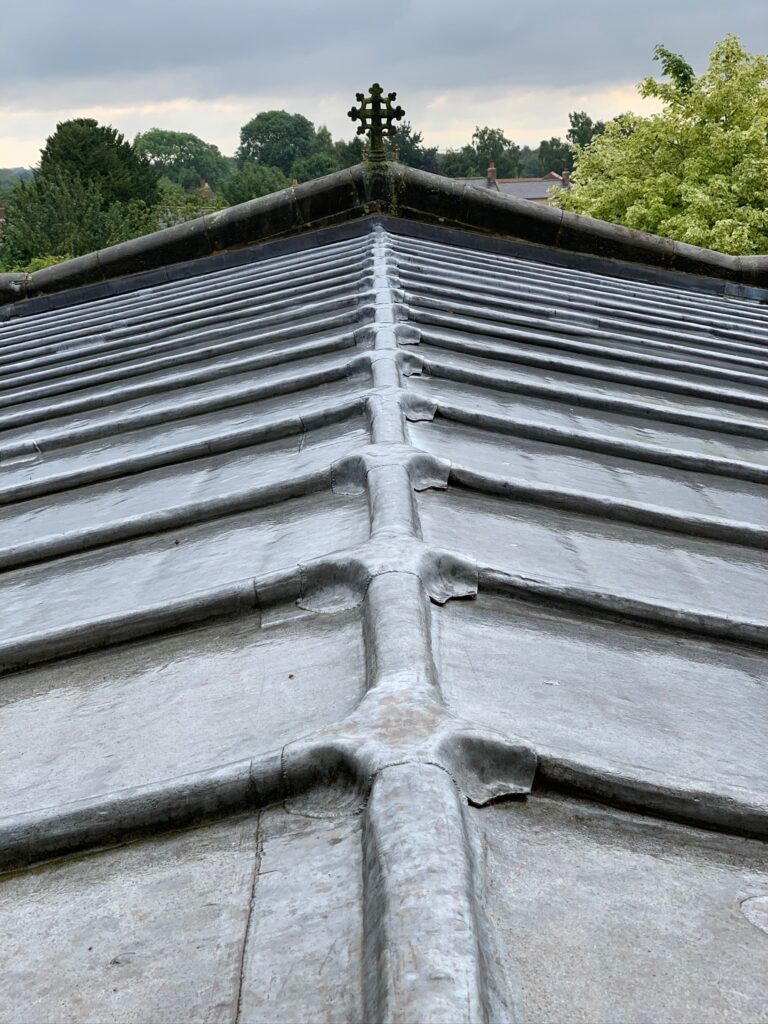

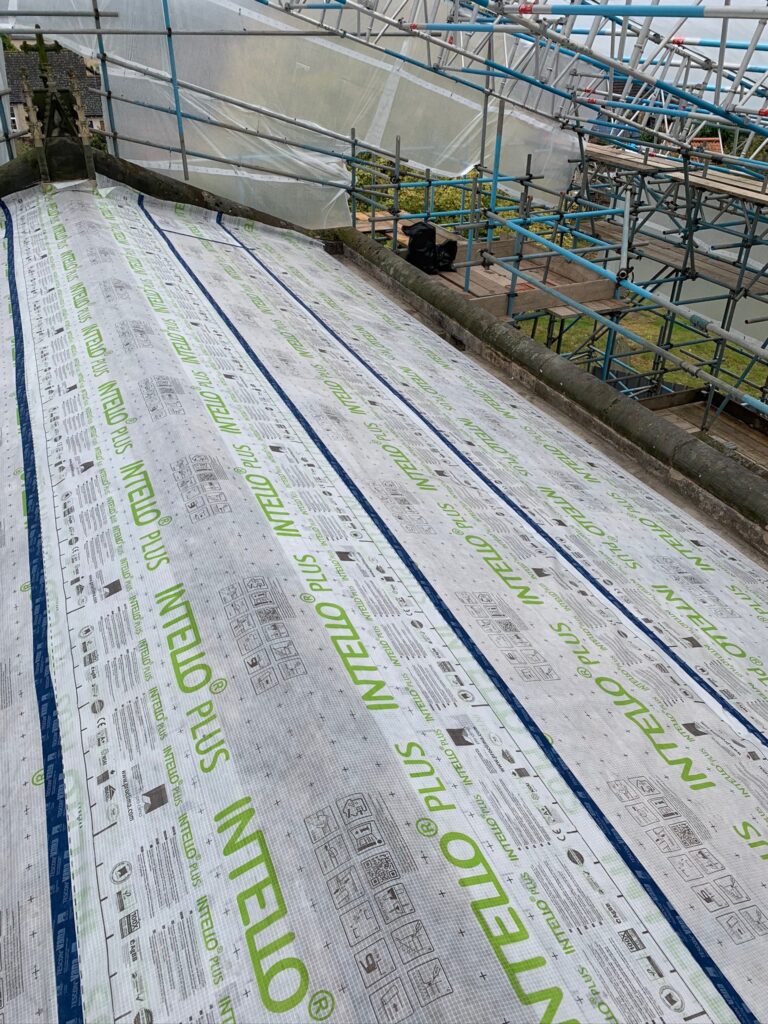
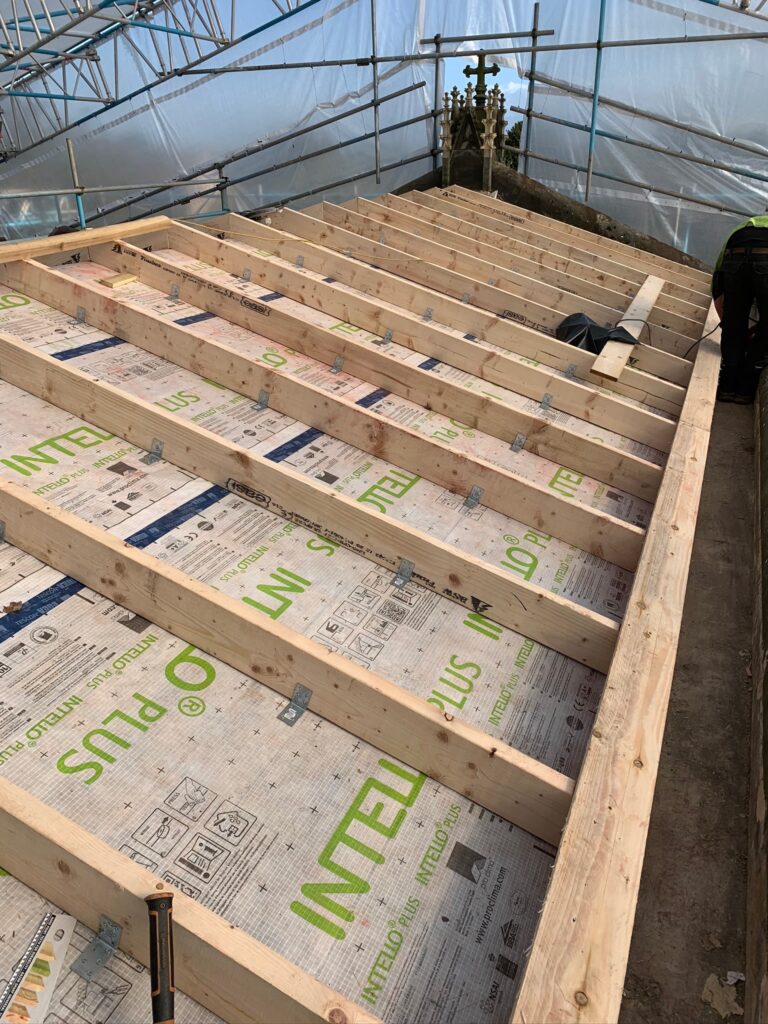
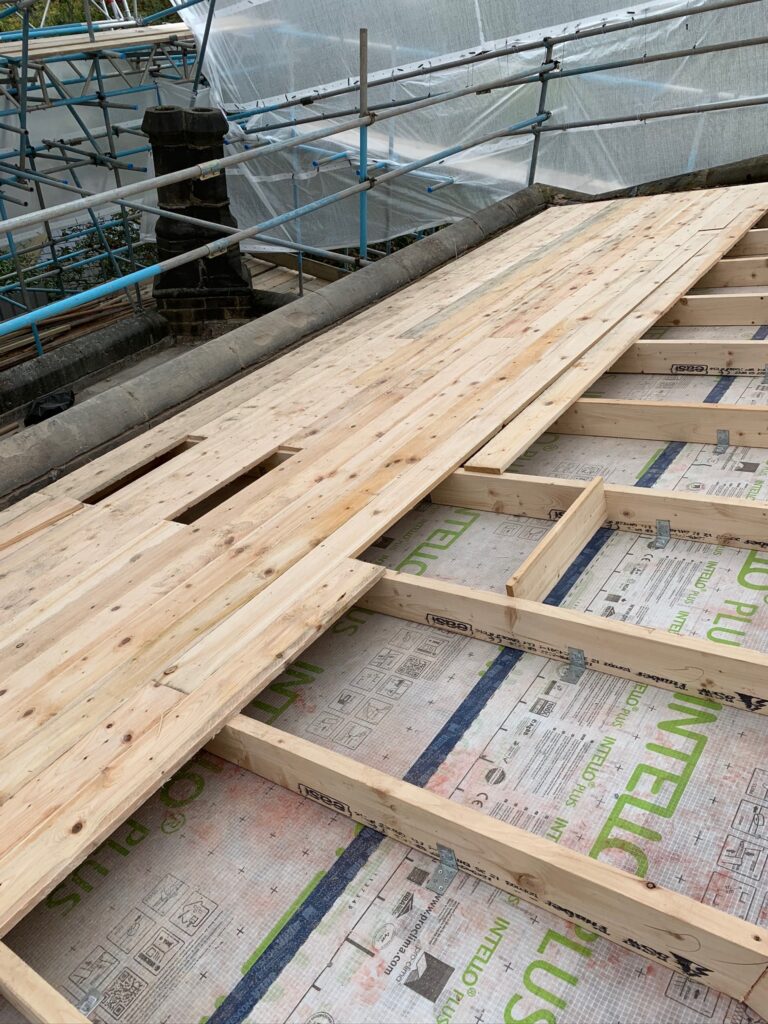

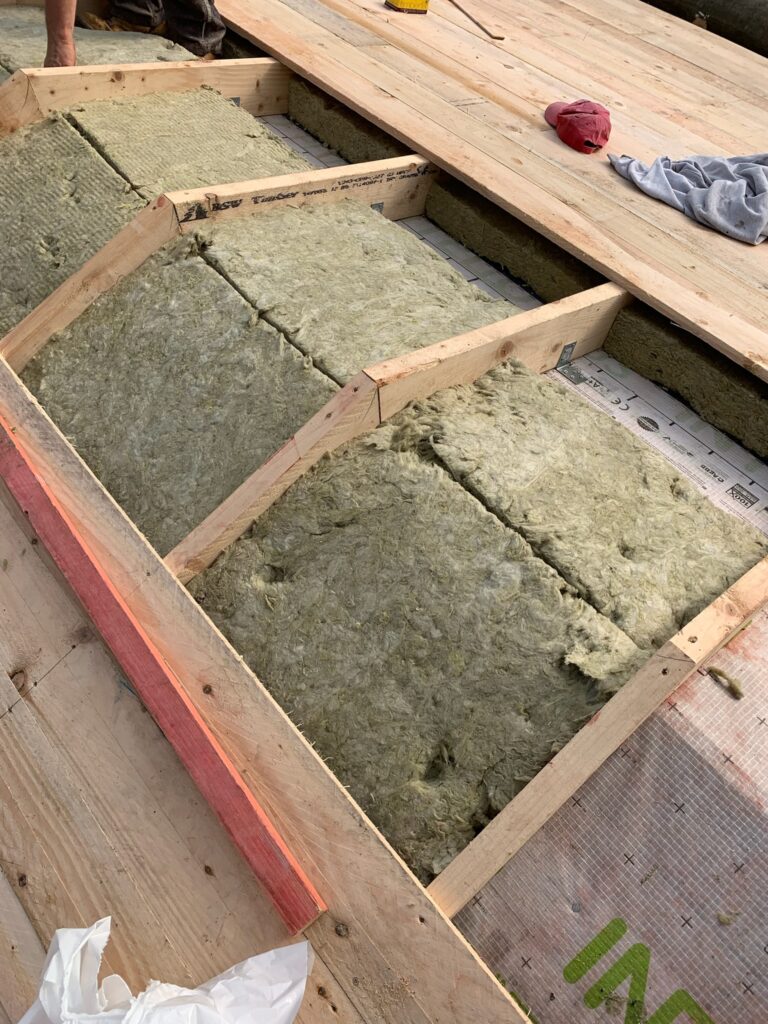
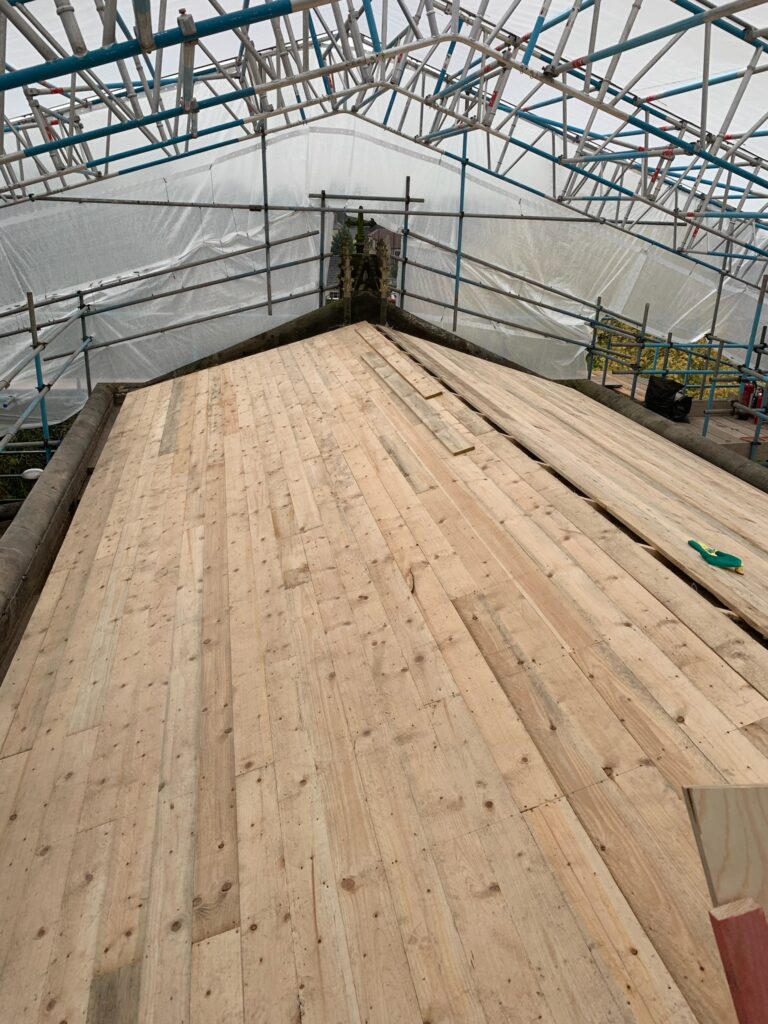
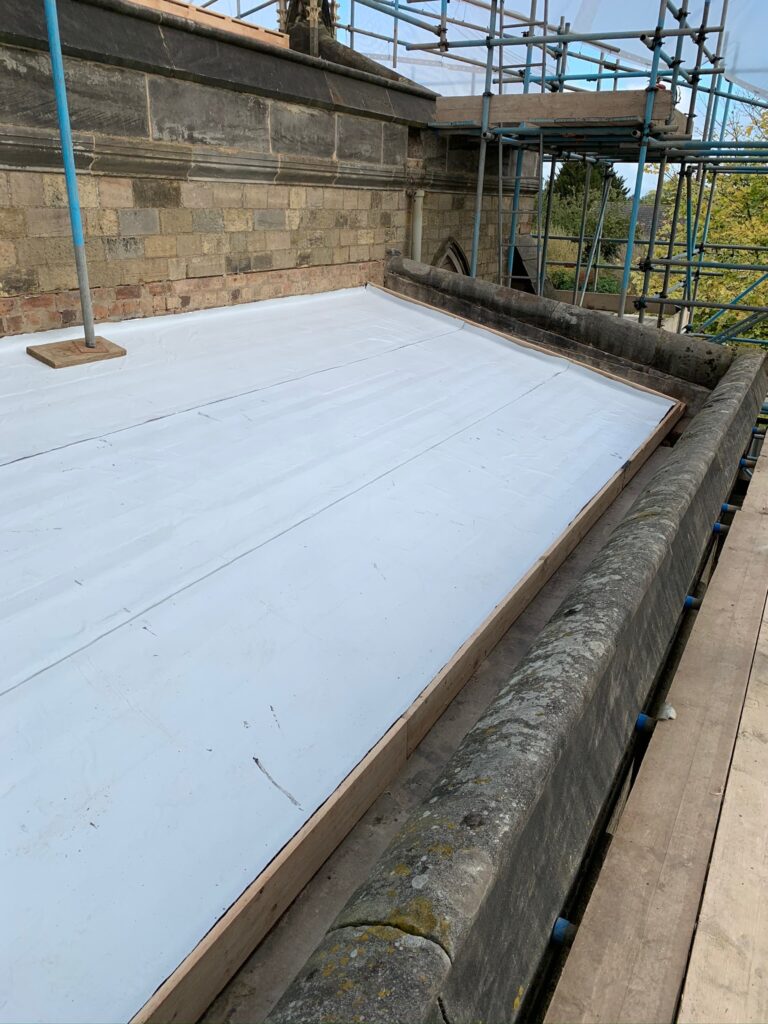


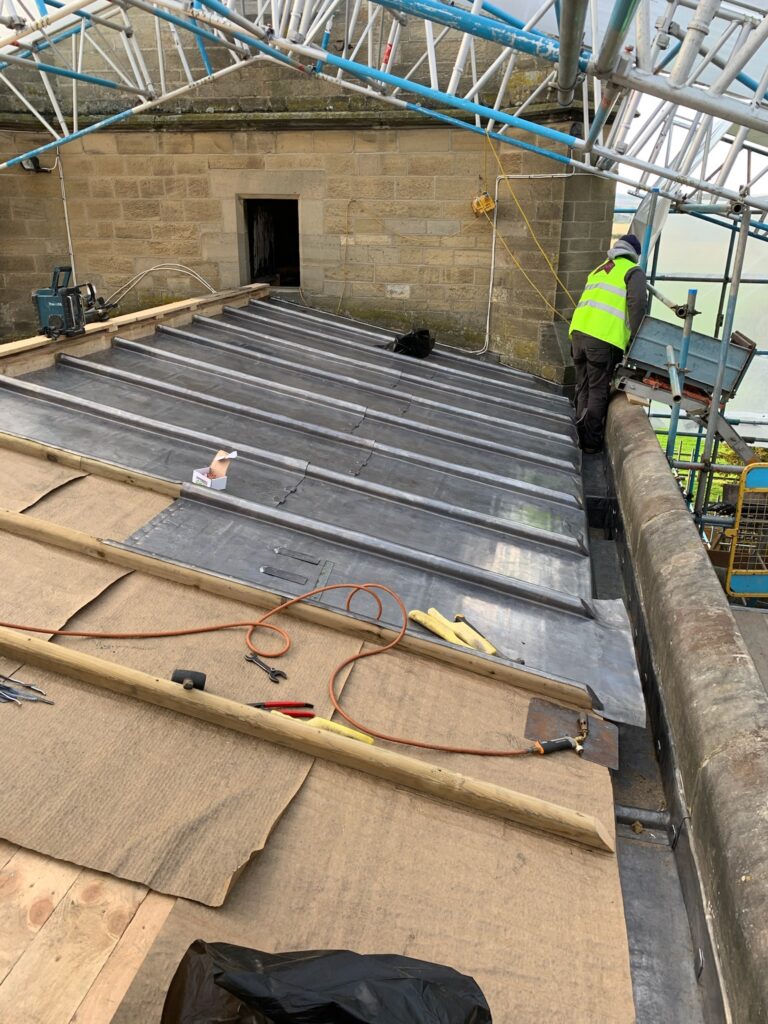
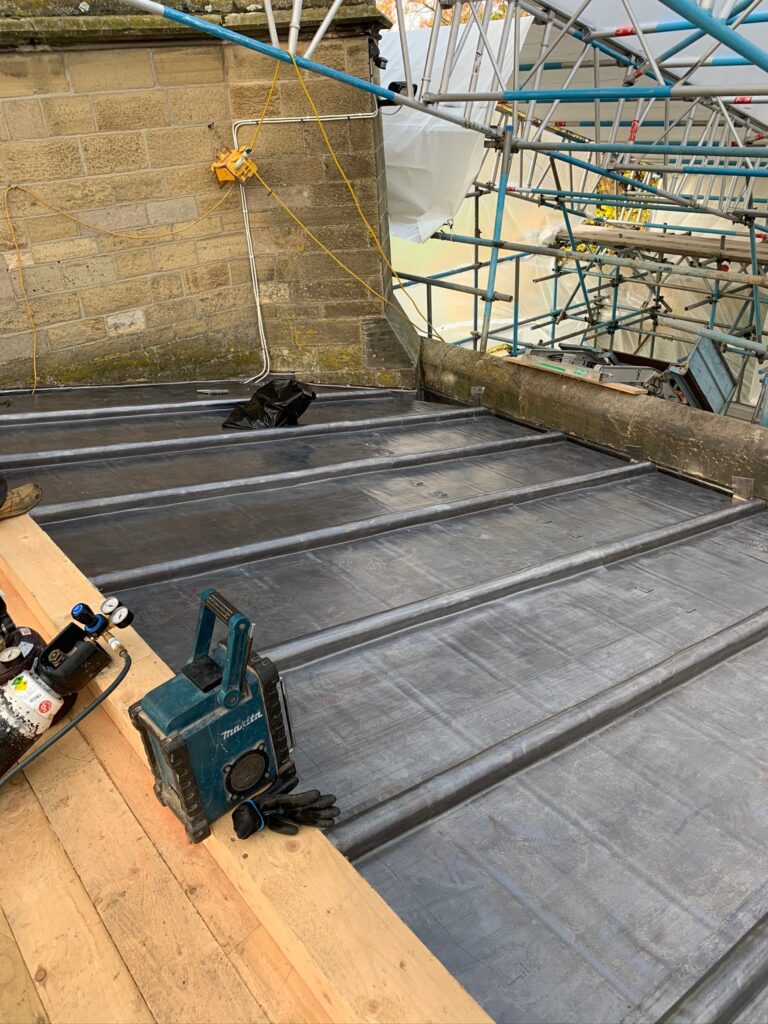
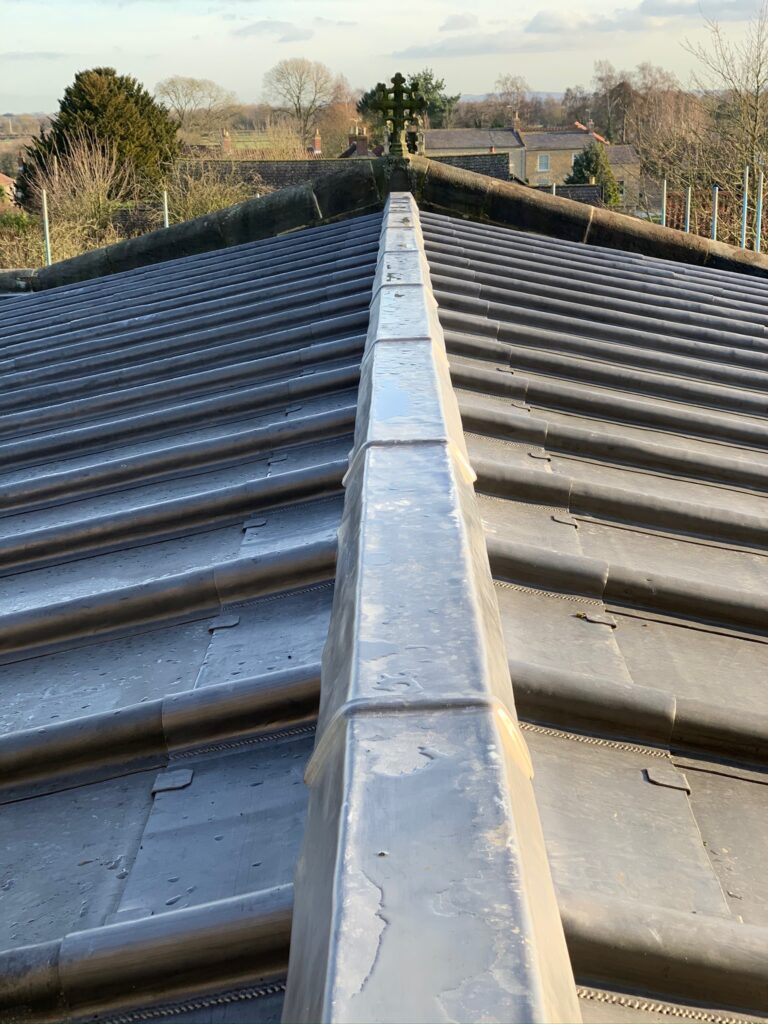
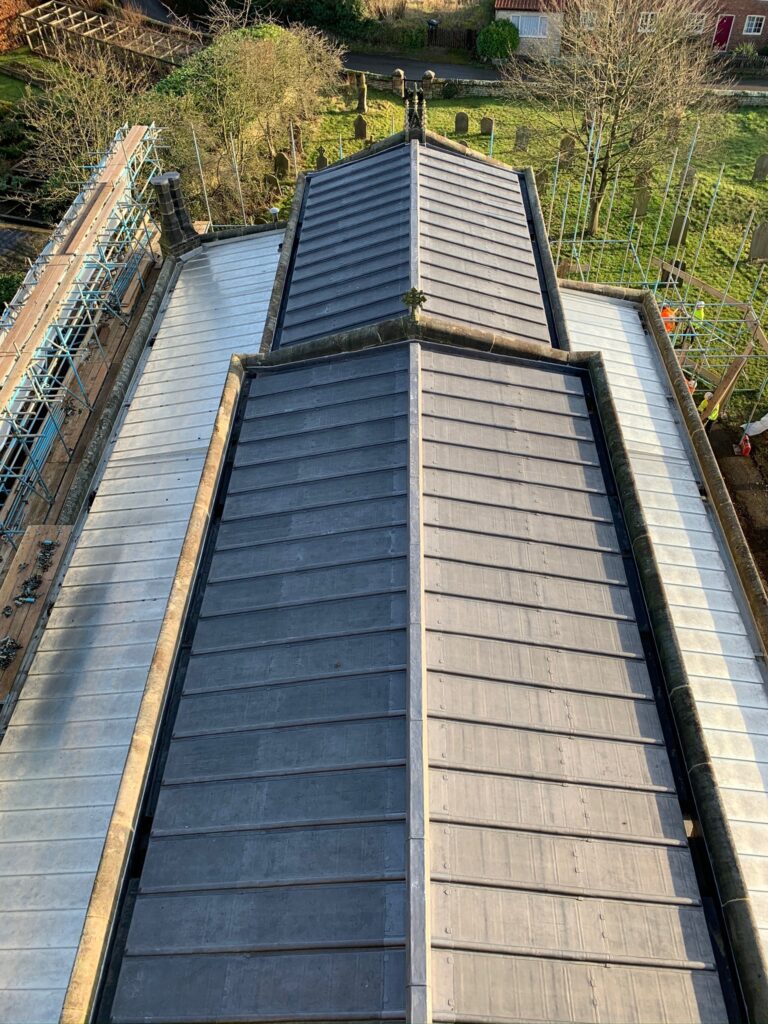
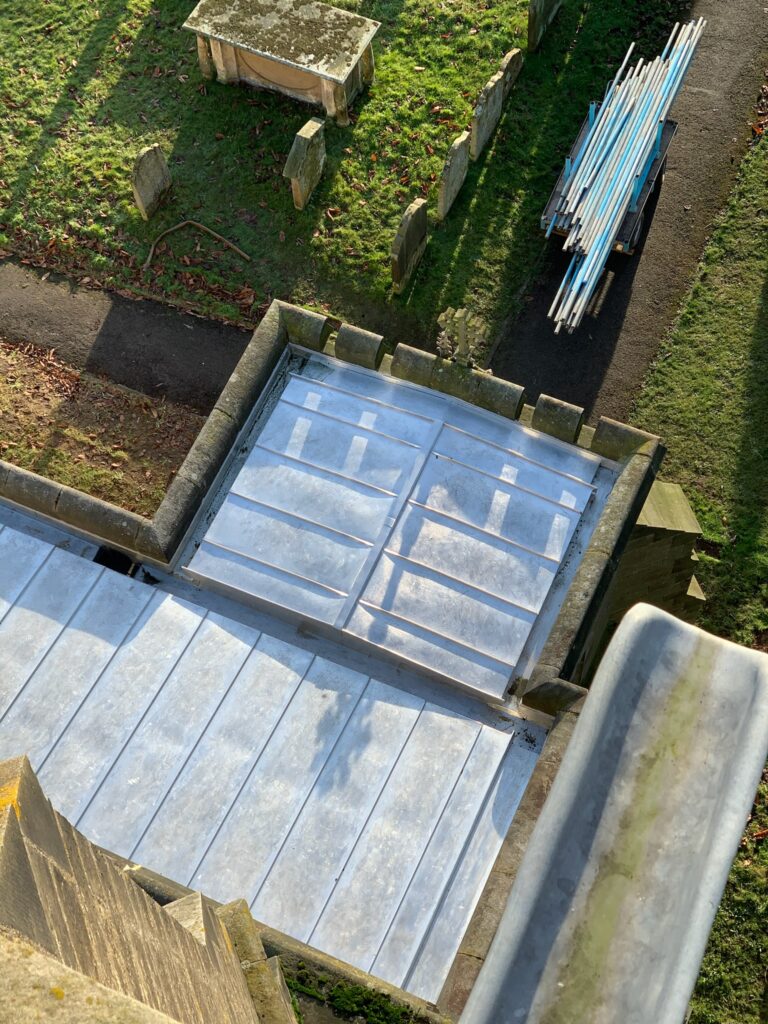
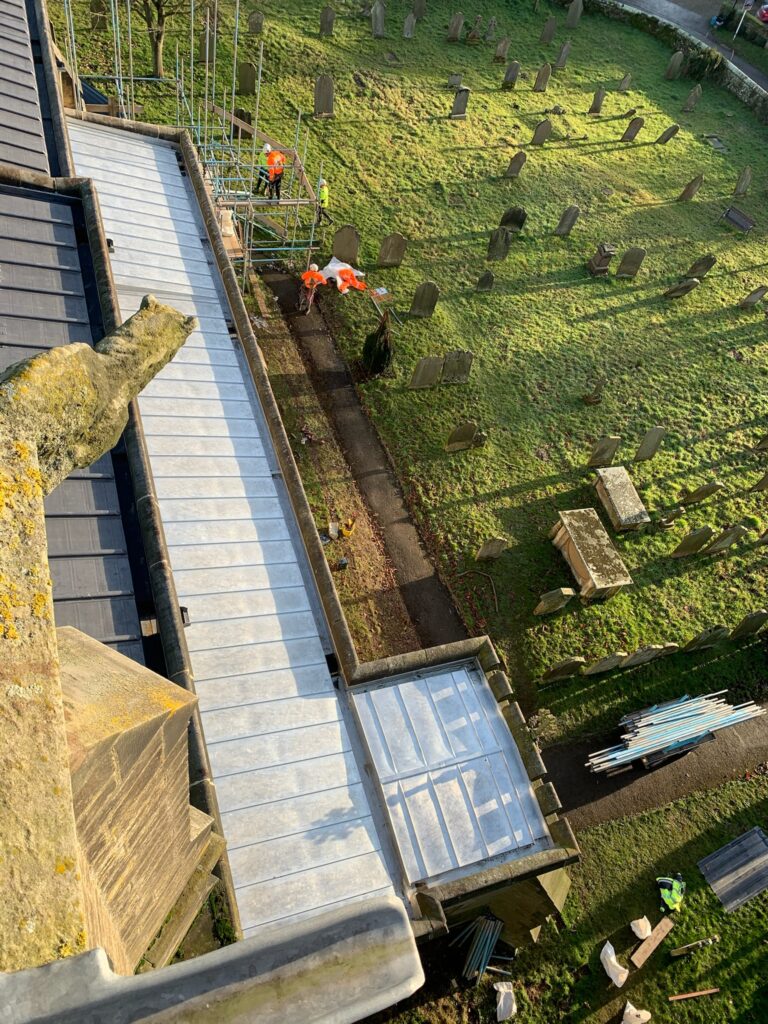

This church lead roofing project was completed by our team in around 25 days.


The Lead Lads provide specialist leadwork services for church roofs, gutter linings, flashings, outlets, sumps and heritage roof details.
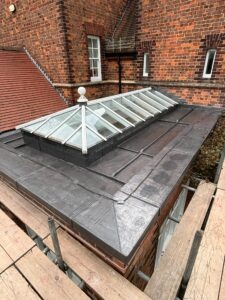
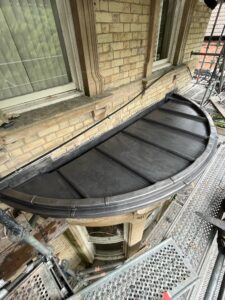
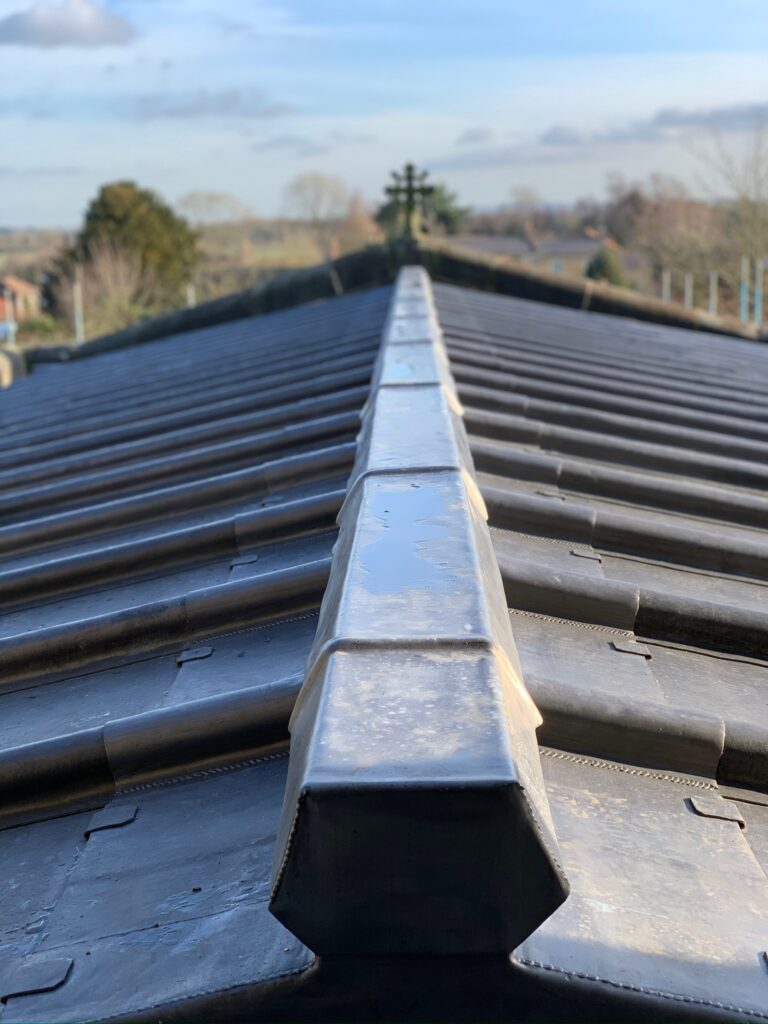
This project involved specialist lead roofing work to All Saints Church in Slingsby, North Yorkshire. The Lead Lads were subcontracted to a larger specialist roofing company, Neal Roofing, to assist with the installation of the lead roof, gutter linings, flashings, ridge detail and associated drainage components.
All Saints Church is a traditional North Yorkshire church with complex roof geometry, stone masonry and important heritage detailing. Roofing work on a building of this type requires careful planning and experienced leadworking methods to ensure the roof remains watertight while preserving the character of the structure.
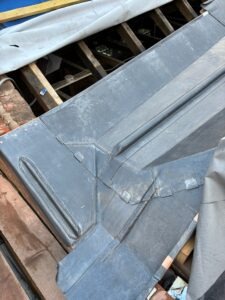
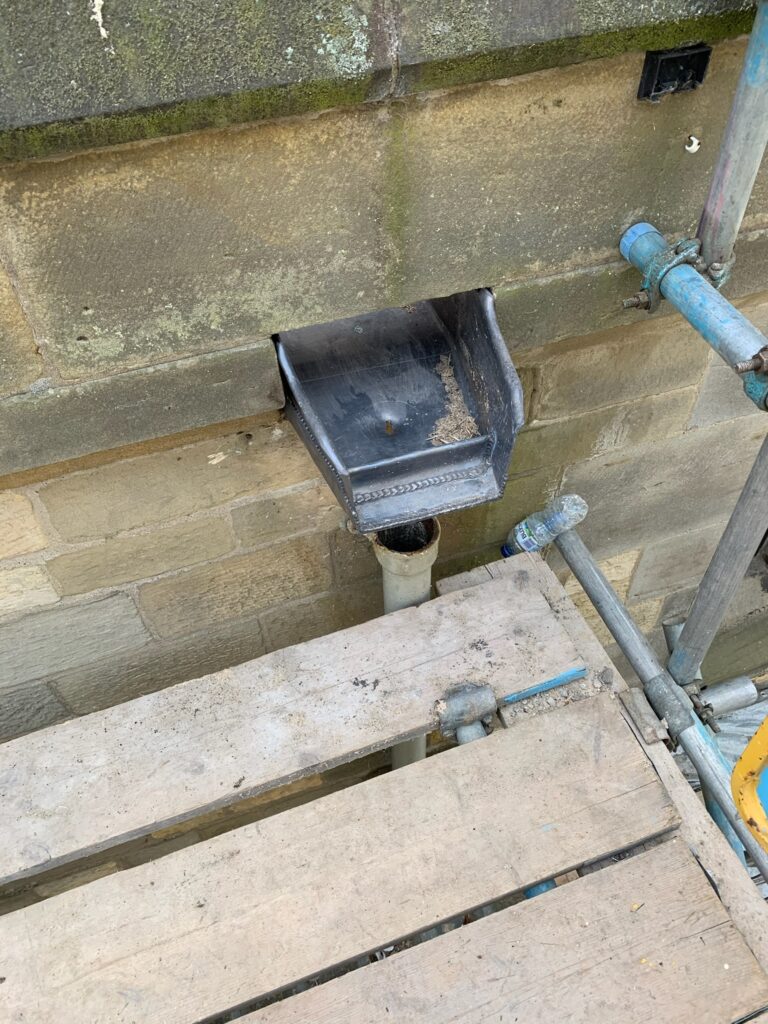
The Lead Lads assisted with several important areas of the roof system, including lead coverings, gutter linings, ridge details, flashings, spitters and fully welded sumps. These details were critical to ensuring reliable rainwater drainage across the church roof.
Historic church roofs are exposed to severe weather conditions over long periods of time. Lead coverings, gutters and outlets can eventually deteriorate through age, movement, weathering and fatigue. Once water begins to penetrate vulnerable details, the roof timbers and internal structure below can quickly become affected.
On a church roof, rainwater management is especially important. Gutters, sumps and spitters often collect large volumes of water from multiple roof slopes, meaning even a small failure can create significant problems. This project focused on forming durable lead details capable of performing reliably over the long term.
This project was completed using a standards-led approach focused on traditional church leadwork, durable detailing and long-term weathering performance.
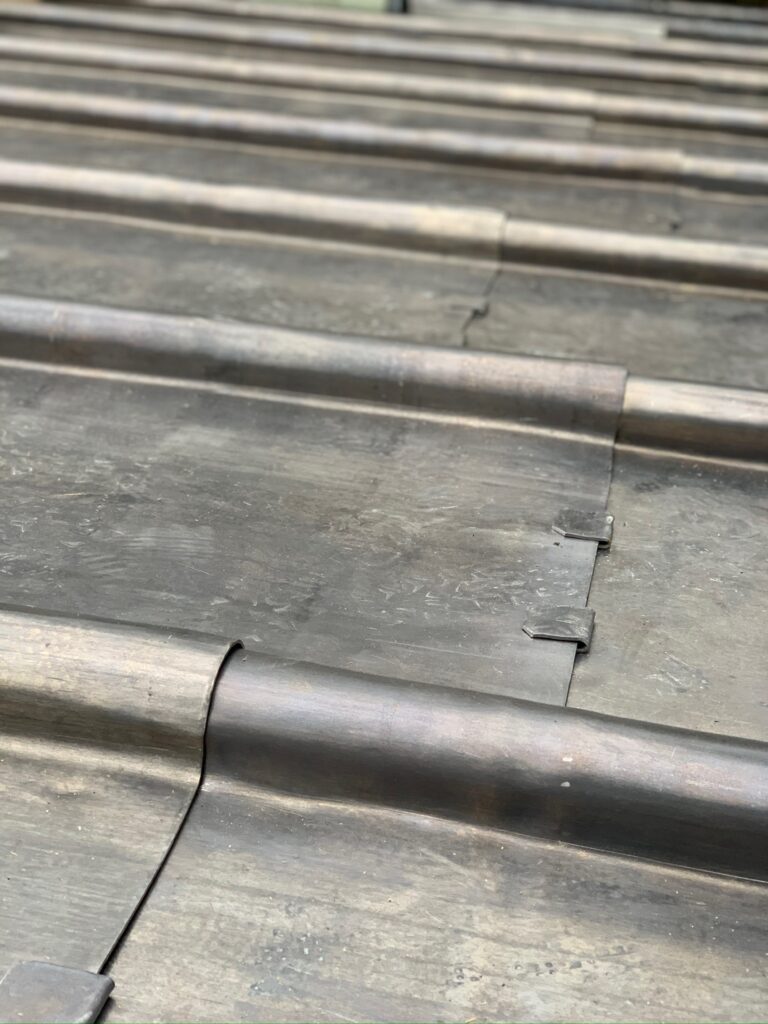
The key principle on church leadwork is durability. Code 5 and Code 6 lead were used where appropriate, with stainless steel clips and insect mesh integrated into the roof details to provide secure fixing and robust weather protection across the various roof sections.
Contact us about leadwork More leadwork resources and guides The leadwork LinkThis church roofing project used a combination of traditional leadworking materials selected to suit the heritage nature and exposure of the building.
More details are available through the main contractor’s project page here: Ecclesiastical roofing project – North Yorkshire church lead roofing.
If you are trying to understand which code of lead is right for a similar detail, our shoppable lead chart is a useful starting point. For broader product learning, see The Lead Handbook and our lead roofing guides.
The Lead & Materials Used By Us 🛒 Lead Weight Calculator
Lead roofing on historic churches requires a balance between traditional craftsmanship and modern standards-led detailing. Roof coverings, gutter linings, flashings and drainage details all need to work together to protect the building from water ingress while respecting the original structure.
This project at All Saints Church shows the importance of properly formed drainage details such as sumps and spitters. These areas are often the most vulnerable points on a church roof and require skilled welding, careful setting out and durable installation methods.
Code 5 and Code 6 lead are commonly used depending on the roof design, exposure and detailing requirements.
Lead spitters are formed outlet details designed to discharge water safely from gutters or roof areas.
Sumps collect water and direct it into outlets, making them key parts of the roof drainage system.
Stainless steel clips help secure lead details while still allowing natural thermal movement.
Historic churches often contain complex drainage details, high-level roofs and heritage-sensitive construction methods.
You can explore lead roll, fixings and leadwork guides through the Lead Lads Shop.