The Lead Lads
Lead Roof Cracking
Technical guidance on cracked lead roofs, split lead sheet, fatigue failure, thermal movement, oversized bays and restrained leadwork.


Technical guidance on cracked lead roofs, split lead sheet, fatigue failure, thermal movement, oversized bays and restrained leadwork.
A cracked lead roof is usually a symptom of fatigue, stress or poor detailing. Lead expands and contracts as temperatures change. If it cannot move naturally, the material can buckle, ripple, split or crack at stress points.
This guide explains common causes of lead roof cracking, including oversized bays, thermal movement, incorrect code selection, poor fixings, restrained edges, weak substrates, failed joints and poor previous repairs.
The aim is to help homeowners, contractors, surveyors, architects and professional advisers understand why lead roofs crack, when cracking indicates poor workmanship and when independent inspection or reporting may be appropriate.
Where independent diagnosis, defect reporting or remedial specification is required, clients may also wish to contact Strut Building Surveyors for professional inspection and reporting support.
Request Independent Review

Split lead sheet, fatigue cracking, tears, stress lines and leaking roof coverings.

Leadwork can fail where fixings, edges, corners or substrates prevent natural movement.

Independent inspection, defect reports and remedial specification support where needed.
This page explains why lead roofs crack, how split lead sheet should be assessed and how cracking relates to thermal movement, oversized bays, poor fixings, substrate support, workmanship and standards-led detailing.
If the issue involves cracking, water ingress, poor workmanship, repeated repairs or a contractor dispute, independent reporting may be appropriate.
Contact Strut Surveyors View Leadwork FailuresLead roof cracking usually develops because the sheet has been forced to move in a way the detail does not allow. Lead is durable, flexible and long-lasting when it is correctly supported and detailed, but it still expands and contracts with temperature change.
Where lead is oversized, tightly fixed, poorly jointed or restrained at edges and corners, repeated thermal movement can fatigue the material. Over time, that fatigue can appear as cracks, splits, ripples, buckles or tears.
Common causes of lead roof cracking include:
Thermal movement is one of the most common reasons lead roofs crack. Each cycle of heating and cooling causes the lead to move. If the movement is not allowed for, stress builds up in the sheet.
Fatigue cracking may occur at corners, laps, welds, fixings, drips, rolls, outlets and any area where the lead has been trapped or forced to flex repeatedly.
Lead roof bays need to be kept within practical size limits. If bays are too large, the sheet has to absorb too much movement. This can cause rippling, buckling, pulled fixings and eventual cracking.
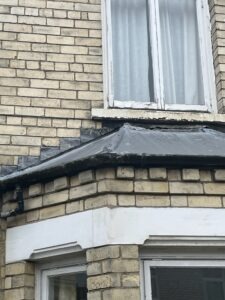
Oversized bays are often seen on flat roofs, bay windows, dormers, gutters and replacement works where the installer has tried to cover a large area with fewer joints than the material can tolerate.
The code of lead should suit the application, exposure, bay size and detail. Lighter codes may be unsuitable for larger or more exposed roof areas, while heavier codes still need proper joints and movement allowance.
Material selection should be considered alongside BS EN 12588, practical guidance and the specific geometry of the roof.
Lead roof cracking can occur where edges are fixed too tightly, where clips do not allow movement, or where the lead is trapped beneath rigid materials. Lead must be held securely, but it should not be restrained in a way that prevents natural movement.
Restrained edges are particularly common around abutments, upstands, corners, outlets, timber rolls and poorly formed cover details.
The substrate beneath the lead matters. If the support is uneven, damp, weak, sagging or incompatible, the lead can be forced to deform. Over time, this can increase stress and contribute to cracking.
BS 6229 substrate principles are relevant where flat roof build-ups, moisture risk, drainage falls and support conditions need proper coordination.
Lead roof cracking should be considered in relation to relevant technical guidance and workmanship principles. Useful references include:
Where lead roof cracking is disputed, recurring, linked to recent installation or associated with water ingress, independent inspection may be sensible before remedial work is agreed.
Strut Building Surveyors can assist with roofing defect inspections, lead roof cracking reports, moisture investigations and remedial specification support where professional reporting is required.
Request Independent Inspection
Repeated movement can cause cracking where lead has been restrained or overstressed.

Large unsupported or poorly divided lead bays often crack before they should.

Independent reporting can identify cause, workmanship issues and remedial options.
Use the guide links below as a technical index. Some pages may be developed as the failure library expands.
Lead roof cracking may require different levels of investigation depending on severity, access, water ingress, dispute status and whether the crack is caused by workmanship, design, substrate condition or thermal movement.
A lead roof may crack because the sheet has been oversized, restrained, incorrectly fixed, poorly supported or detailed without proper allowance for thermal movement.
Lead fatigue cracking is usually caused by repeated thermal movement where the lead cannot expand and contract freely. Stress builds up over time until the sheet splits or cracks.
Some cracks can be repaired, but if the cause is oversized bays, restrained leadwork, poor substrate condition or bad original detailing, patch repair may only provide a short-term solution.
Not always, but cracking can indicate poor workmanship where the lead has been incorrectly sized, fixed, detailed or supported. Age, movement and previous repairs also need to be considered.
Relevant guidance includes BS 6915 for leadwork design and installation, BS EN 12588 for rolled lead sheet material quality, BS 6229 for substrate principles and LSTA guidance for practical detailing.
A specialist leadwork contractor can advise on repair or replacement. Where independence, dispute support or formal reporting is required, a building surveyor or roofing defect specialist such as Strut Building Surveyors may be appropriate.

The Lead Lads ® Lead Roof Guide Summer Maintenance Summer Lead Roof Maintenance Guide Summer [...]
Latest News The Lead Lads® Launch UK Franchise Model A controlled expansion designed to professionalise [...]
The Lead Lads ® Lead Roof Guide Spring Inspection Spring Lead Roof Inspections — How [...]
#Proper Leadwork: Lead Ventilation & Condensation—Warm vs Cold Roof Strategies Interstitial condensation is one of [...]
#Proper Leadwork: Edge-to-Edge Detailing—Ridges, Verges & Abutments without Stress Ridges and verges frame the roofline. [...]
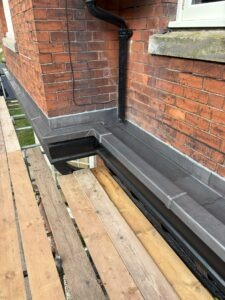
#Proper Leadwork (2026): Upstands & Drips—Heights, Throatings & Edge Geometry Welcome to the New Year [...]

#Proper Leadwork: Lead Soakers—Sizing, Gauges & Interfaces with Slate and Tile Discreet but essential, lead [...]
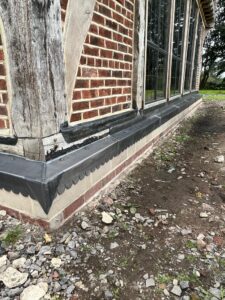
#Proper Leadwork: Cornices, Cappings & Cills—Fixing to Masonry without Cracks Beautiful façades deserve durable lead [...]
Understanding lead roof cracking is part of understanding proper leadwork. Cracks and splits often reveal where movement, bay sizing, substrate design, fixing or workmanship has not been properly considered.
The Lead Lads provide specialist leadwork services. Where an independent report, defect diagnosis or remedial specification is required before works are instructed, clients may also wish to contact Strut Building Surveyors.
Contact The Lead Lads Contact Strut Surveyors