
THE LEAD LADS® / PROJECT ARCHIVE
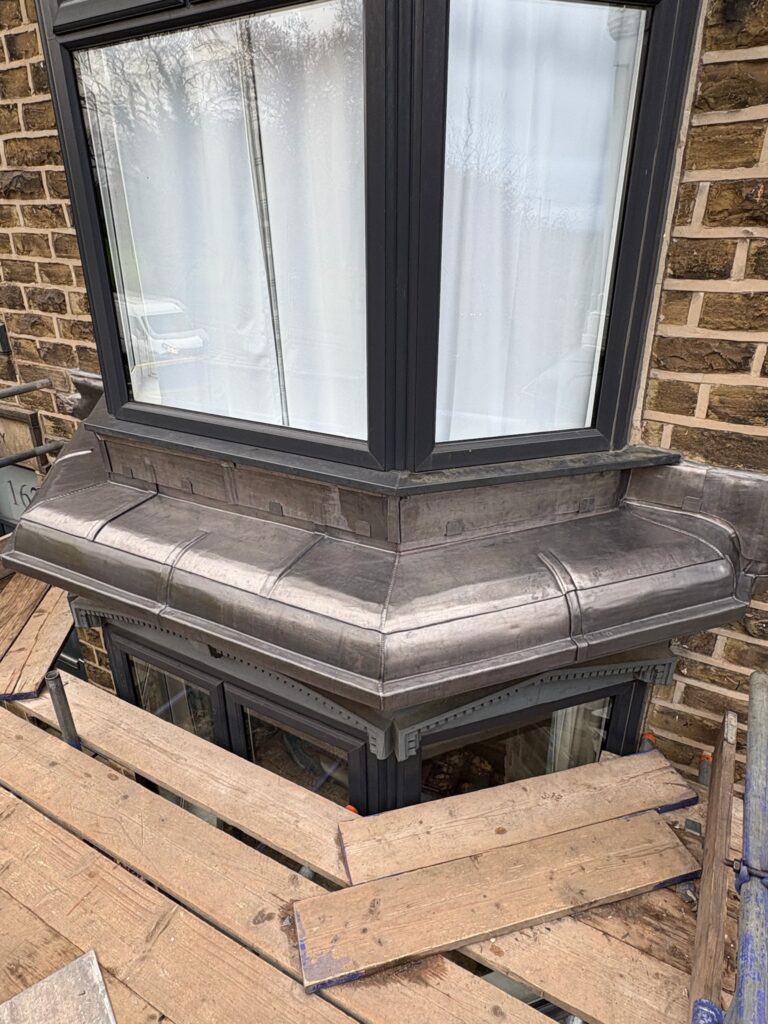
Replacement of a failed traditional lead bay roof in Meadowhead, Sheffield, including new timber decking, Code 5 rolled lead sheet, formed drips, welted joints and carefully integrated abutment detailing.
MEADOWHEAD · SHEFFIELD · CODE 5 LEAD · BAY ROOFING
Explore the Project01 — THE PROJECT
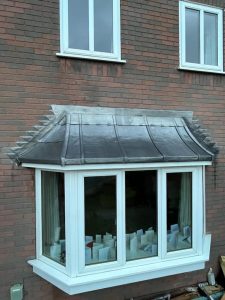
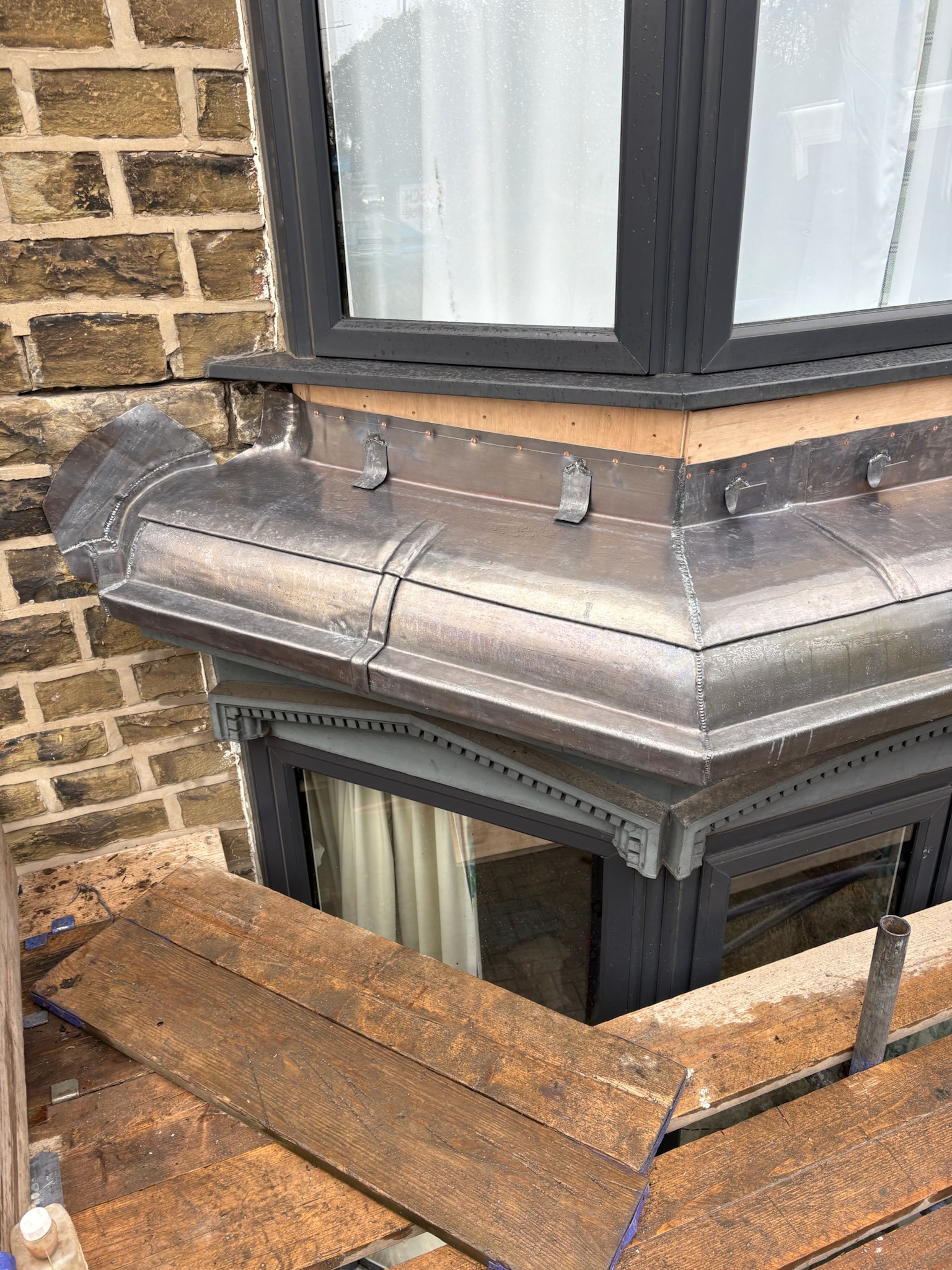
The Lead Lads® were appointed to remove and replace a failed lead bay roof to a traditional residential property in Meadowhead, Sheffield.
The works formed part of a series of similar bay restorations completed on the same street, with each bay requiring careful setting out, sound substrate preparation and traditionally formed leadwork detailing.
Rather than undertaking a localised patch repair, the roof was stripped back, the defective supporting deck replaced and the complete bay re-covered using Code 5 rolled lead sheet.
LEADWORK SERVICES →
LEADWORK STANDARDS →
ROLLED LEAD SHEET →
LOCATION
PROGRAMME
LEAD CODE
WORK TYPE
02 — EXISTING CONDITION
The existing lead covering had reached the point where local repair was no longer considered the most appropriate long-term solution.
The lead showed signs of fatigue and declining performance, while deterioration was also evident within the supporting timber deck.
Once the substrate beneath a fully supported lead covering begins to fail, the lead itself can become increasingly vulnerable to deformation, ponding and fatigue caused by repeated thermal movement.
03 — TECHNICAL APPROACH
A successful lead bay roof relies on more than forming a visually neat covering. The lead sheet must be detailed so that it can respond naturally to changes in temperature throughout its service life.
This means selecting an appropriate lead code, controlling sheet sizes, providing suitable joints and drips, fixing with compatible materials and avoiding unnecessary restraint.
The works were informed by established industry standards and recognised lead sheet guidance.
BS 6915 Leadwork →
The Lead Handbook →
Lead Roofing Guides →
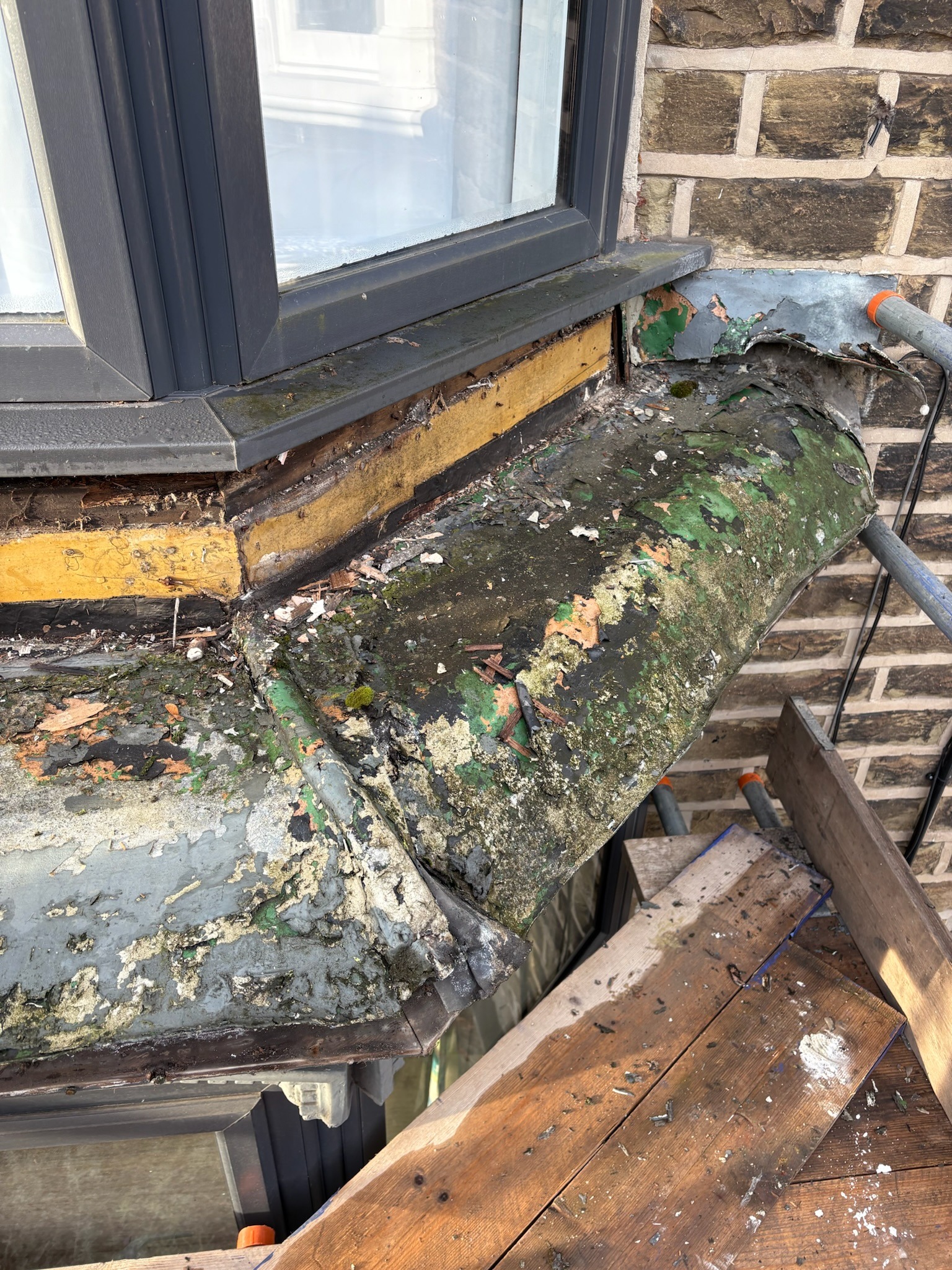
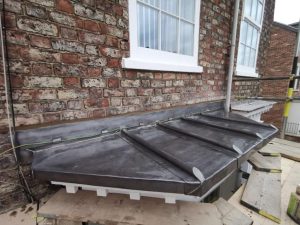
The existing covering and supporting substrate had reached the end of their effective service life.
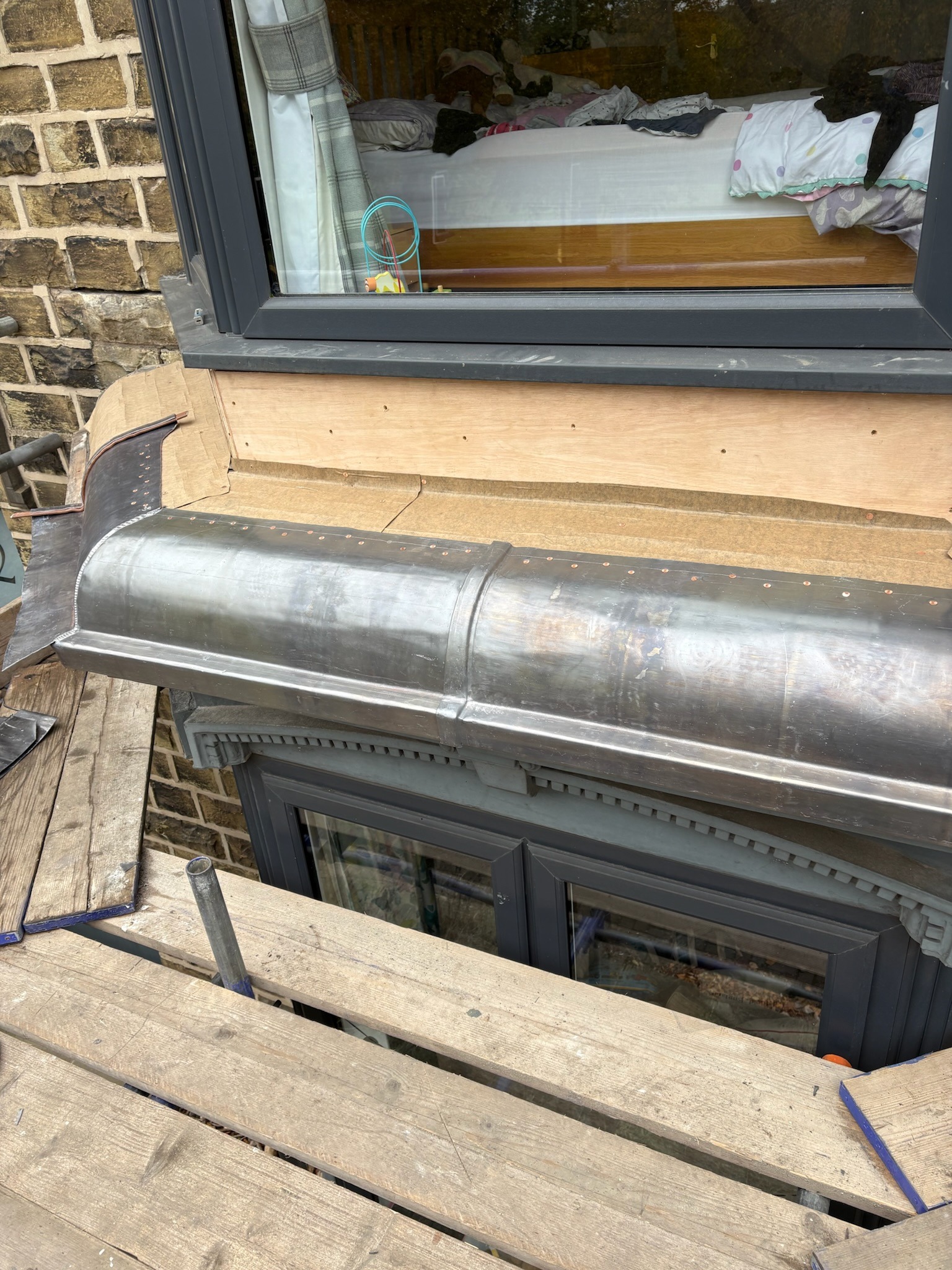
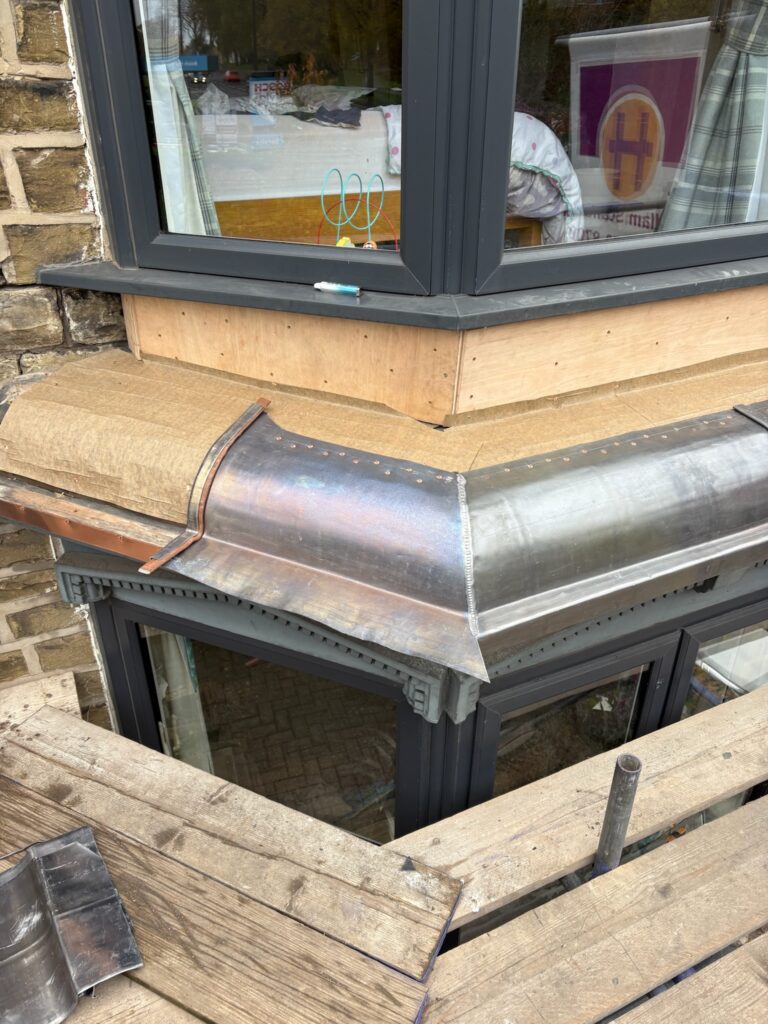
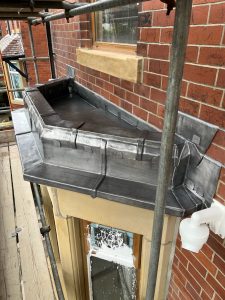
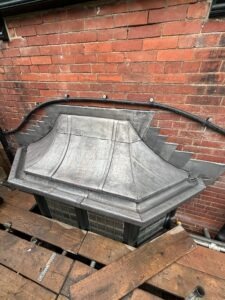
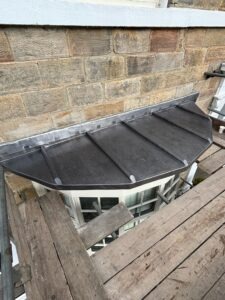
New decking and accurately formed lead panels establish the geometry of the replacement roof.
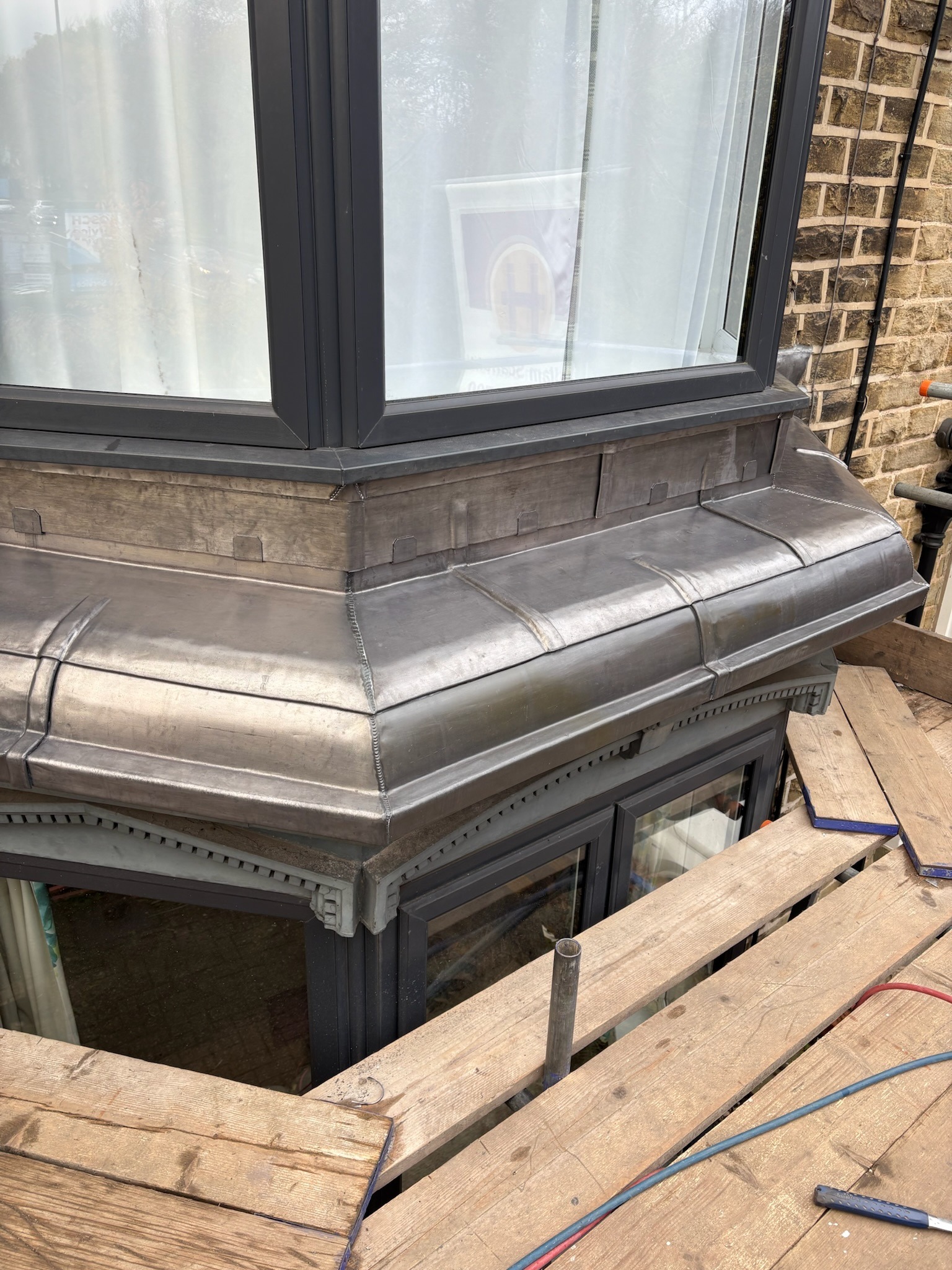
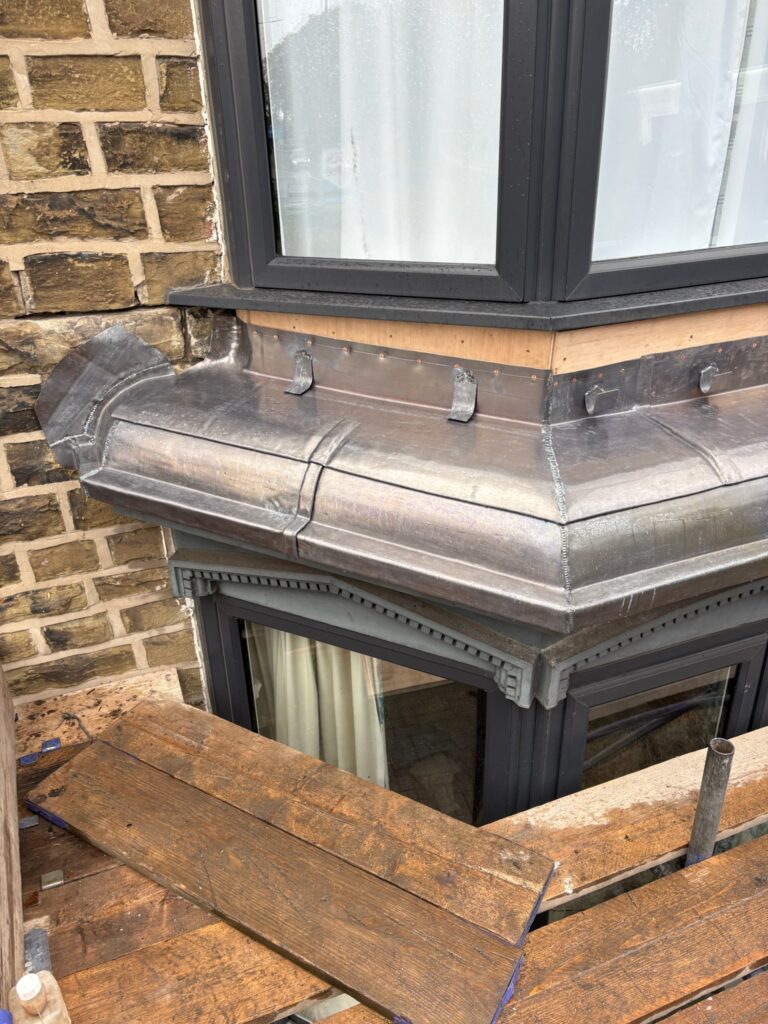
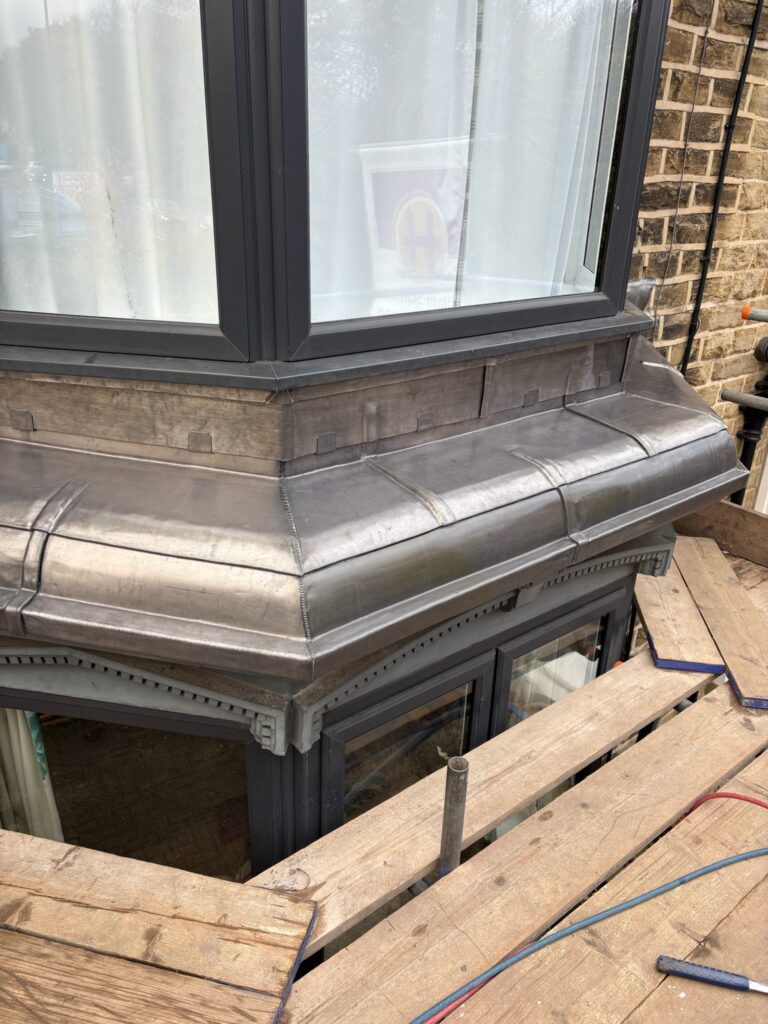
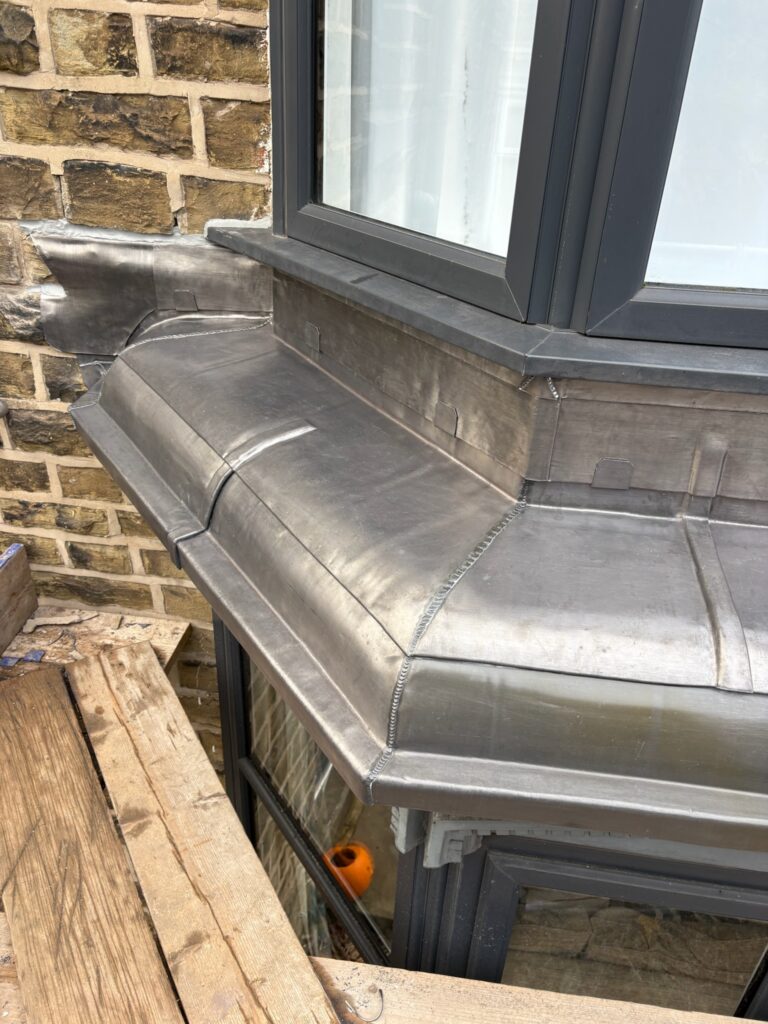
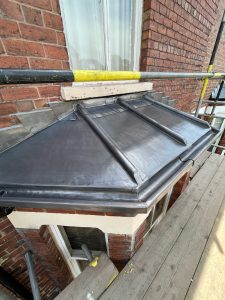
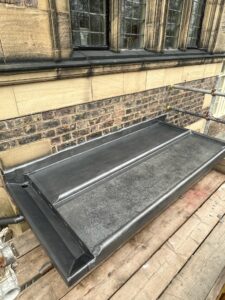
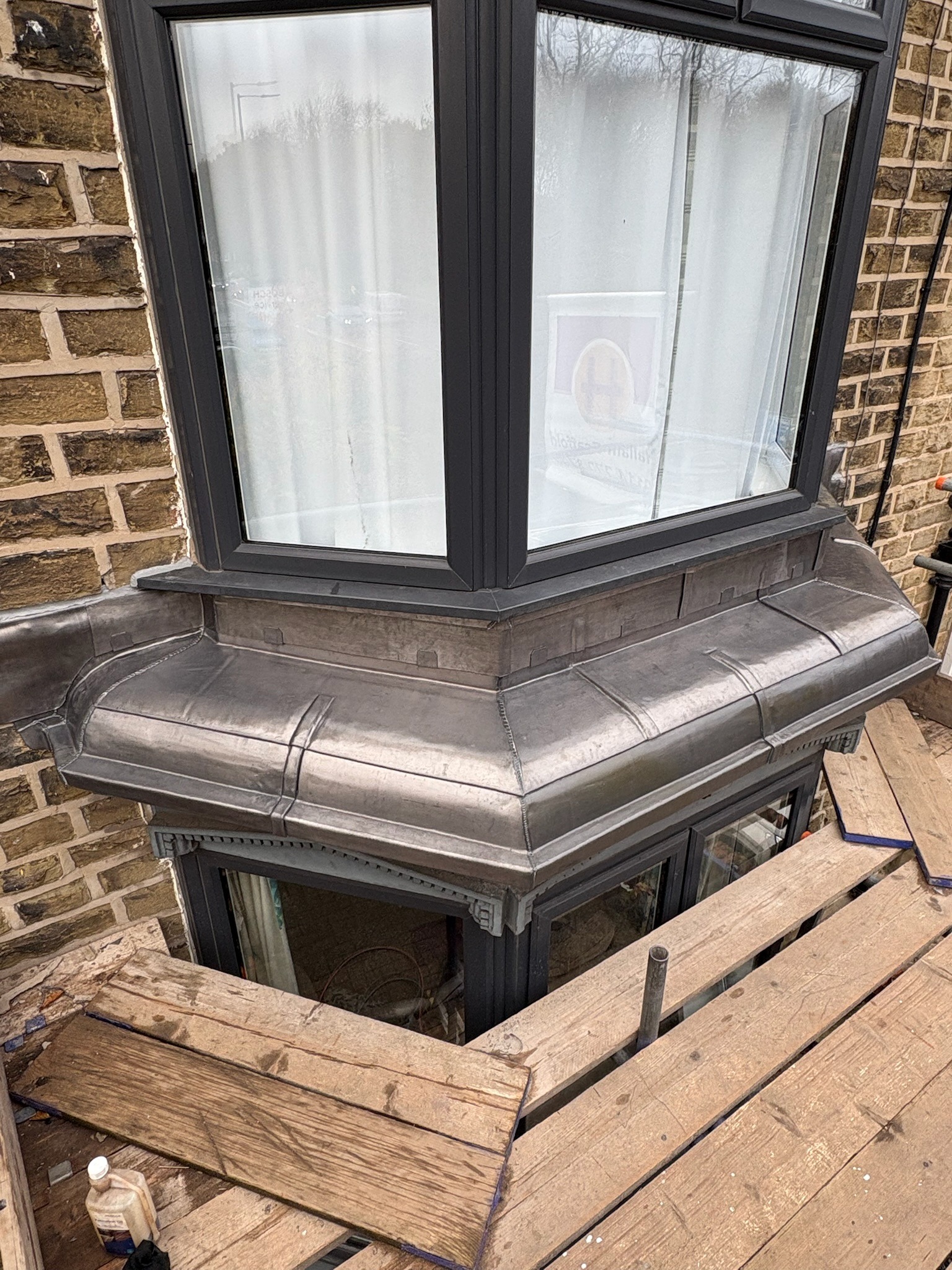
Code 5 leadwork finished with defined drips, clean abutments and a traditional architectural appearance.
04 — PREPARATION + SUBSTRATE
05 — LEADWORK INSTALLATION
06 — MATERIALS
Small lead roofs are technically unforgiving. Each component within the build-up performs a specific role in supporting the sheet, permitting movement and maintaining weather resistance.
07 — PROJECT RECORD
The project record shows the complete sequence from the deteriorated original bay roof through substrate preparation and leadwork formation to the finished covering.
The photographs are also a useful technical record of how a traditional fully supported lead bay roof is constructed and detailed.
08 — LEADWORK SKILLS
A small lead bay combines several core leadworking disciplines within a relatively confined area.
09 — TECHNICAL KNOWLEDGE
The Lead Lads® technical resource library connects real project examples with standards, guidance, products and practical information for contractors and property owners.
The Lead Handbook →
Lead Roofing Guides →
Leadwork Standards →
Lead Flashing →
Rolled Lead Sheet →
10 — PROJECT LESSONS
A durable lead bay depends on the relationship between the covering, its substrate and the surrounding construction.
Correct lead code selection, sound decking, appropriate underlay, well-formed drips, controlled sheet sizes and compatible fixing methods all contribute to long-term performance.
Where one of these components is defective, the finished covering can be compromised regardless of how neatly the visible lead has been installed.
PROPERTY OWNER TAKEAWAYS
11 — FREQUENTLY ASKED
Many traditional lead bay roofs are formed using Code 5 lead, although the correct specification depends on the dimensions, exposure, detailing and method of construction.
Common causes include age, over-fixing, inadequate movement allowance, poor corner formation, defective substrate materials and weak detailing around abutments and windows.
A suitable separating layer such as purpose-made lead underlay or appropriate building paper should normally be incorporated between the lead and supporting deck.
12 — MATERIALS + SUPPLY
Copper clips and suitable non-ferrous fixings are commonly used so that the lead can be secured without introducing incompatible materials or unnecessarily restricting movement.
Yes. The materials used throughout our own leadwork projects are also available through the Lead Lads Shop, including rolled lead sheet, underlay, fixings, sealants and leadworking accessories.
Explore lead roll, lead flashing, fixings, underlay and technical guides through the Lead Lads Shop.
13 — RELATED RESOURCES
THE LEAD LADS® / PROJECT ARCHIVE
This Sheffield bay roof forms part of The Lead Lads® project archive documenting real lead roofing, gutters, valleys, flashings, dormers and traditional architectural details.
The archive records the materials, construction methods, detailing and technical decisions involved in specialist leadwork — connecting completed projects with practical guidance and the materials used to construct them.