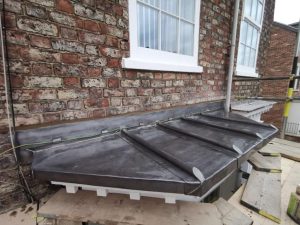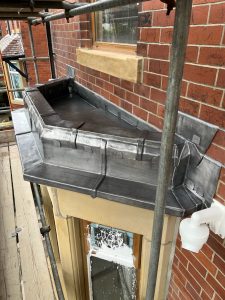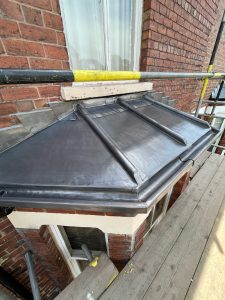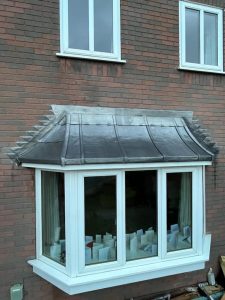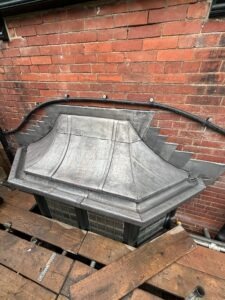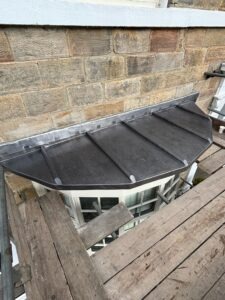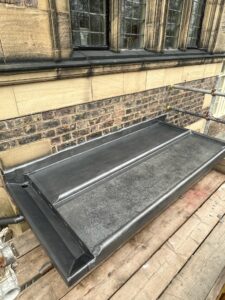



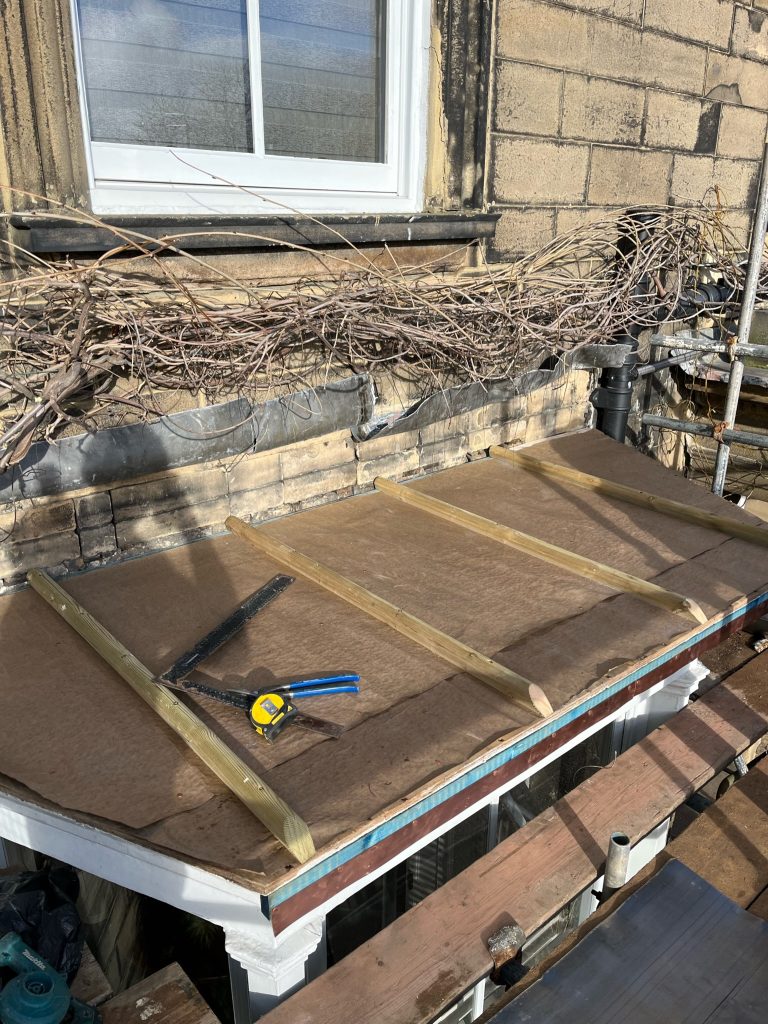

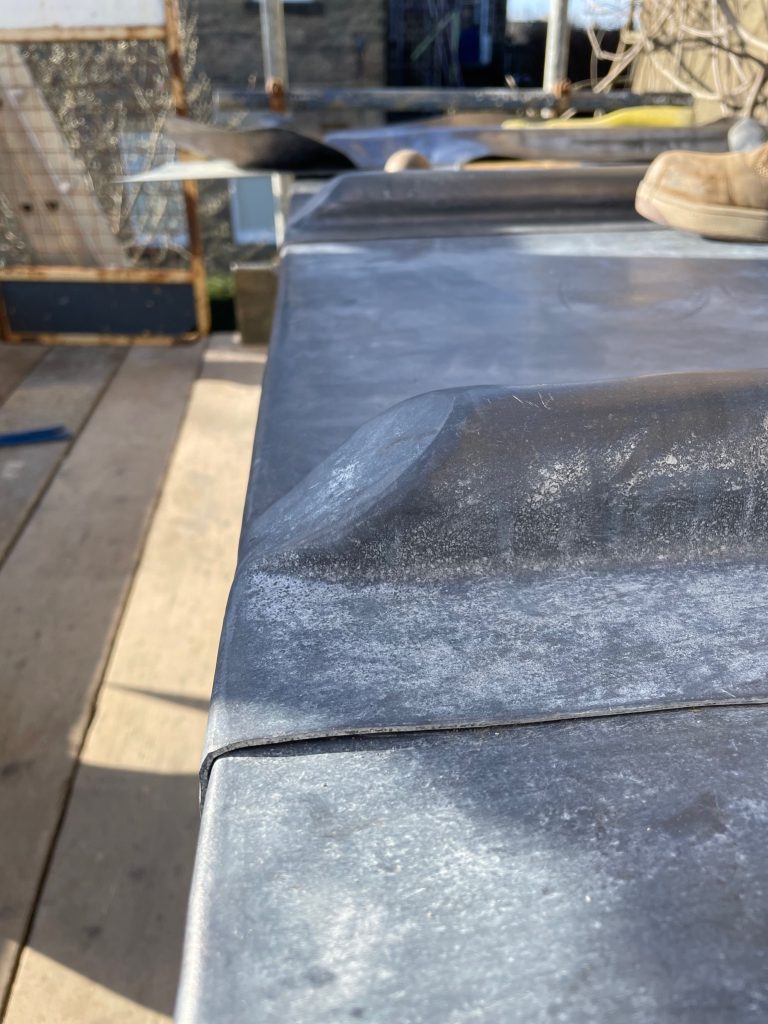

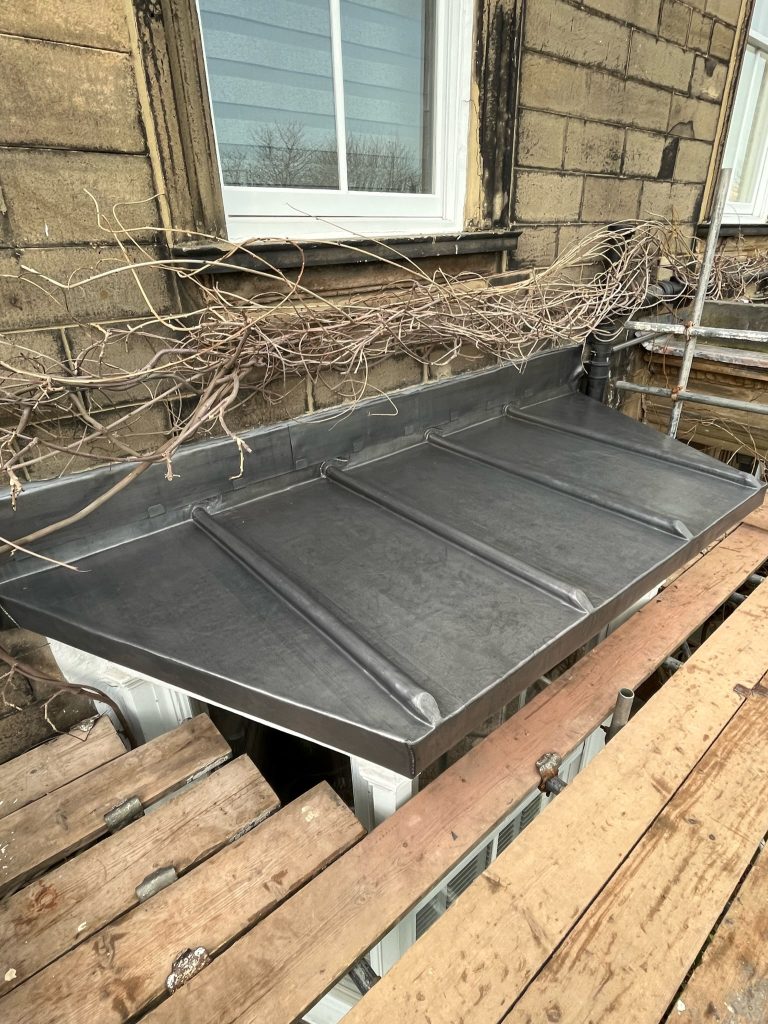
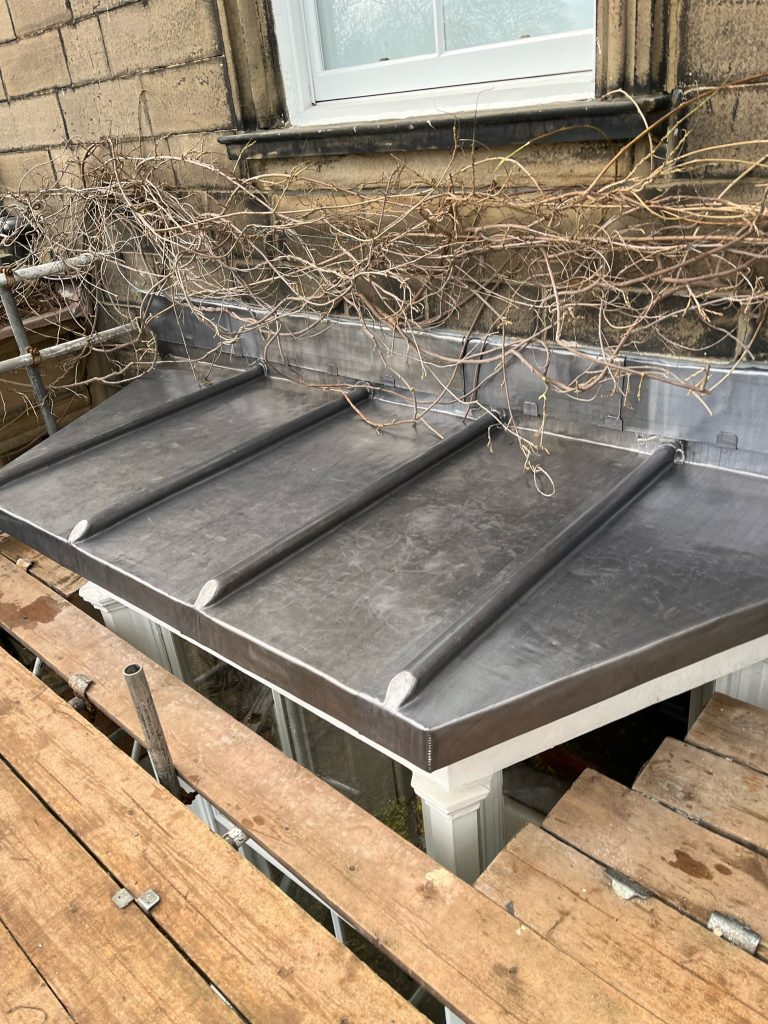

This lead bay window replacement was completed by our team in around 4 days.


The Lead Lads provide specialist leadwork services for bay windows, flashings, gutters, valleys and traditional roof details.
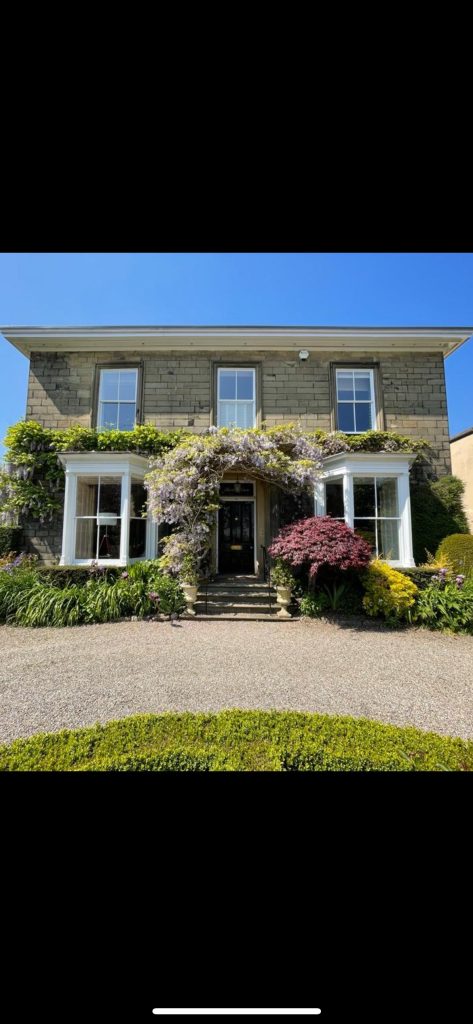
This project involved the like-for-like replacement of lead bay window roof coverings to a large double-fronted property overlooking The Stray in Harrogate. The bay windows form a key part of the principal elevation, sitting either side of the central entrance and adding important character to the front of the house.
Lead bay windows are highly visible architectural details, so care needs to be taken when replacing the roof coverings. The new leadwork needed to protect the bay structures, improve the appearance of the frontage and sit neatly with the existing stonework, window frames and masonry abutments.
The timber substrate beneath the new lead sheets had already been replaced, allowing The Lead Lads to focus on forming the new Code 5 lead bay coverings, timber roll details, abutment flashings and sealed masonry chases.
The original bay roof coverings had reached the end of their useful service life and were removed before the new leadwork was installed. Older bay roofs can fail through age, fatigue, movement stress, weak abutment details, poor fixing methods or deterioration of the support beneath the lead.
On prominent front elevations like this, replacement is not only about stopping water ingress. It also protects kerb appeal, preserves the symmetry of the property and ensures the lead details remain visually appropriate for a traditional Harrogate home.
This project was completed using a standards-led approach focused on correct lead bay sizing, timber roll formation, secure clipping and proper abutment weathering.
The key principle was to divide each roof into correctly detailed bays so that the lead could move naturally. New timber rolls were installed to create five distinct bays to each roof area, with the Code 5 lead bossed around the rolls and secured using suitable clips.
Contact us about leadwork More leadwork resources and guides The leadwork LinkThis project used a focused set of traditional leadwork materials selected to provide durable and visually sympathetic bay window coverings.
If you are trying to understand which code of lead is right for a similar detail, our shoppable lead chart is a useful starting point. For broader product learning, see The Lead Handbook and our lead roofing guides.
The Lead & Materials Used By Us 🛒 Lead Weight Calculator
Lead bay window roofs are small roof areas, but they play a major role in both weather protection and appearance. On a double-fronted property like this, the two bays need to be detailed consistently so that the finished elevation looks balanced and well maintained.
This project shows why timber rolls, correct bay sizing, suitable clips and properly sealed abutment flashings all matter. The leadwork must be secure, but it must also be free to move naturally as temperatures change. That balance is what gives traditional lead bay roofs their durability.
Code 5 lead is commonly used for many lead bay window roof coverings, depending on the size and detailing.
Timber rolls divide the roof into bays, help manage movement and create a traditional raised joint detail.
Building paper separates the lead from the substrate and helps reduce abrasion as the lead moves.
Common causes include age, poor fixing, weak abutments, failed substrate, restricted movement and poor detailing.
Yes. Removed lead can usually be recycled, as was done by the client on this project.
You can explore lead roll, building paper, fixings and leadwork guides through the Lead Lads Shop.