The Lead Lads® | Specialist Lead Welding & Lead Burning
Lead Welding
Specialist lead welding and lead burning for chimney details, outlets, gutters, valleys, flat roofs and bespoke lead sheet fabrication, with practical guidance on where welded leadwork is required.
Lead welding, also known as lead burning, is the skilled process of joining lead sheet by carefully fusing the adjoining material using controlled heat.
It is a specialist leadworking technique used to form watertight corners, seams, outlets, saddles, sumps, chutes and fabricated roof details. Unlike soldering, lead welding joins the parent lead itself, with compatible lead filler added where the joint arrangement requires it.
A successful lead weld depends on clean material, accurate preparation, correct support, careful heat control and considerable practical experience. The finished weld often carries the individual leadworker’s signature, with its own rhythm, profile and character.
Lead welding is one of the most important specialist skills used in traditional and modern lead roofing, particularly where lead sheet must be fabricated into complex and durable weathering details.
What Is Lead Welding?
Lead welding is the process of joining lead sheet by heating the adjoining edges until the material fuses together. It is commonly carried out using specialist fine-flame welding equipment and is used where a strong, weatherproof and accurately formed joint is required.
The technique is particularly important in lead roofing, chimney details, gutters, outlets, valleys, saddles, dormers, parapets and complex roof junctions where bossing alone may not produce the required shape.
Why Lead Welding Matters
Weather protection: welded details can help protect vulnerable roof junctions from water ingress.
Durability: properly designed and formed welds can create long-lasting leadwork details.
Fabrication: lead can be cut, formed and welded into outlets, corners, sumps and bespoke components.
Appearance: a clean weld can provide a neat and controlled finish on visible leadwork.
Heritage applications: welding may be required where an approved repair or replacement detail includes fabricated corners, outlets or complex junctions.
Professional Lead Welding Equipment
Leadworkers use specialist fine-flame welding equipment selected to suit the lead code, joint position and working environment. The complete arrangement may include compatible fuel and oxygen equipment, correctly rated regulators and hoses, suitable torch tips, preparation tools, fire protection and appropriate personal protective equipment.
Gas equipment must be installed, inspected and used in accordance with the manufacturer’s instructions and the applicable hot-work procedures.
Successful lead welding depends on clean material, accurate joint preparation, suitable support, compatible equipment and precise control of heat and torch movement. The leadworker must achieve complete fusion without overheating, excessive thinning, contamination or pinholes.
The appropriate joint arrangement varies according to the lead code, position, access, surrounding construction and expected movement. Welding should therefore be undertaken only by trained and competent leadworkers using a suitable risk assessment, hot-work controls and appropriate protection against lead exposure.
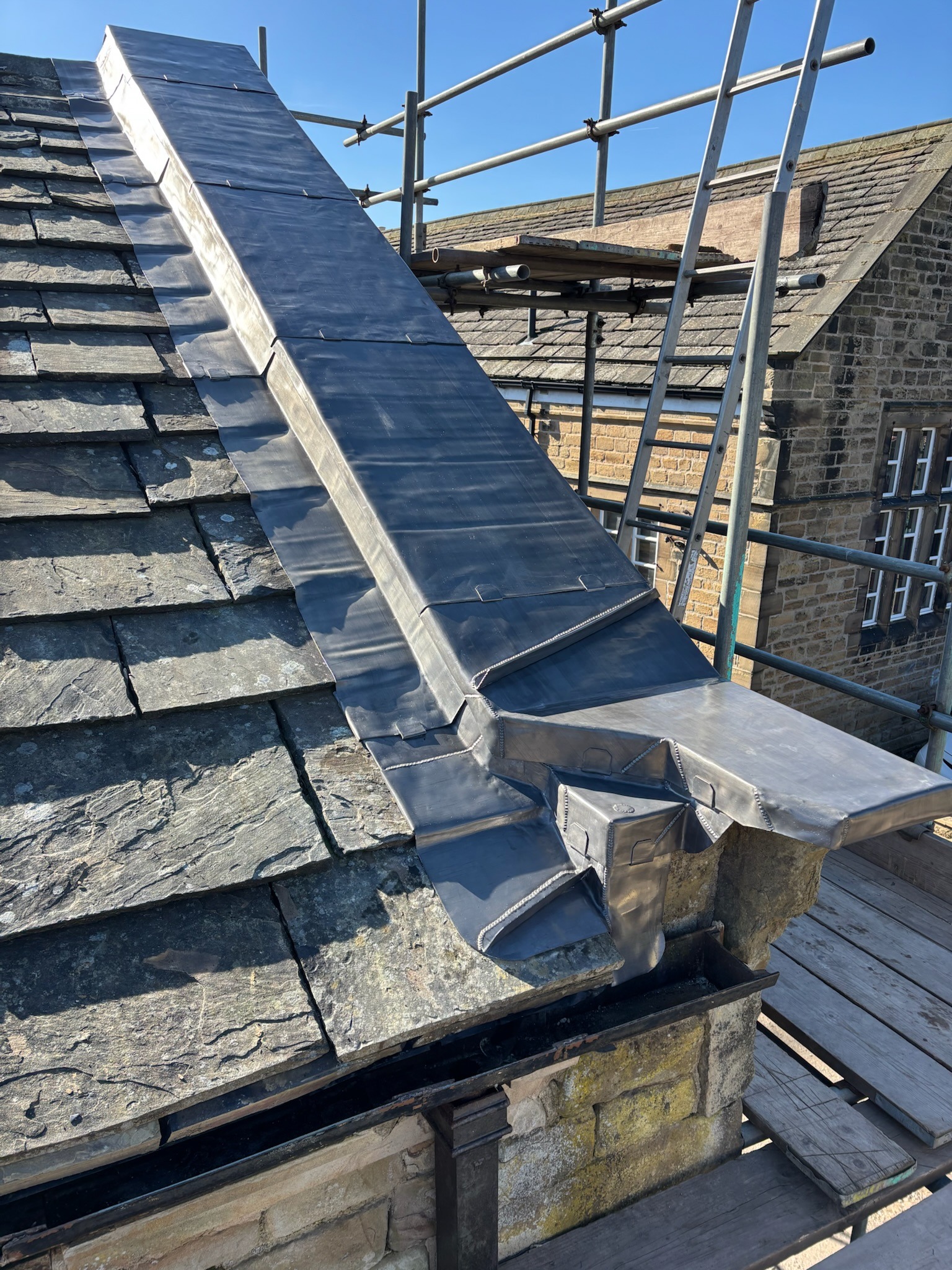
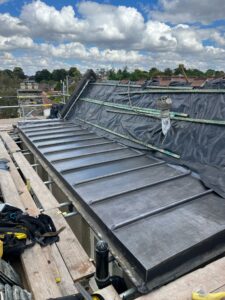
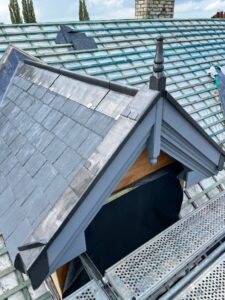
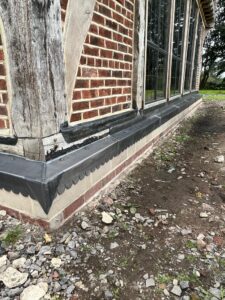
Lead welding can form clean, durable corner details where the geometry cannot be produced satisfactorily through bossing alone.
Lead Outlets
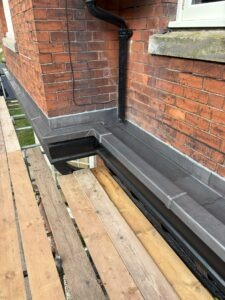
Custom outlets, pipes, sumps and rainwater details frequently require accurately fabricated and welded leadwork.
Specialist Detailing
Lead can be cut, formed and welded into complex roof junctions while the wider design separately accommodates thermal movement.
Welding Lead Sheet for Roofing
Lead welding is not simply a decorative skill. It is often essential where lead sheet must be joined, adapted or fabricated into a watertight roofing detail.
On roofs, lead is commonly used at some of the most vulnerable interfaces of a building, including chimneys, valleys, gutters, abutments, parapets, dormers, outlets and roof junctions. These areas require careful detailing because water, movement, exposure and changes in construction all place stress on the material.
When Is Welding Used Instead of Bossing?
Bossing allows lead to be shaped without cutting or joining the sheet. Welding may be appropriate where the geometry cannot be formed satisfactorily by bossing, where excessive stretching or thinning would result, or where the detail requires a separately fabricated component.
Chimney aprons: welded corners may be used where complex upstands cannot be formed without excessive thinning.
Lead outlets: pipes, sumps and outlets often require welded fabrication.
Valley junctions: saddles and gutter interfaces may include welded details.
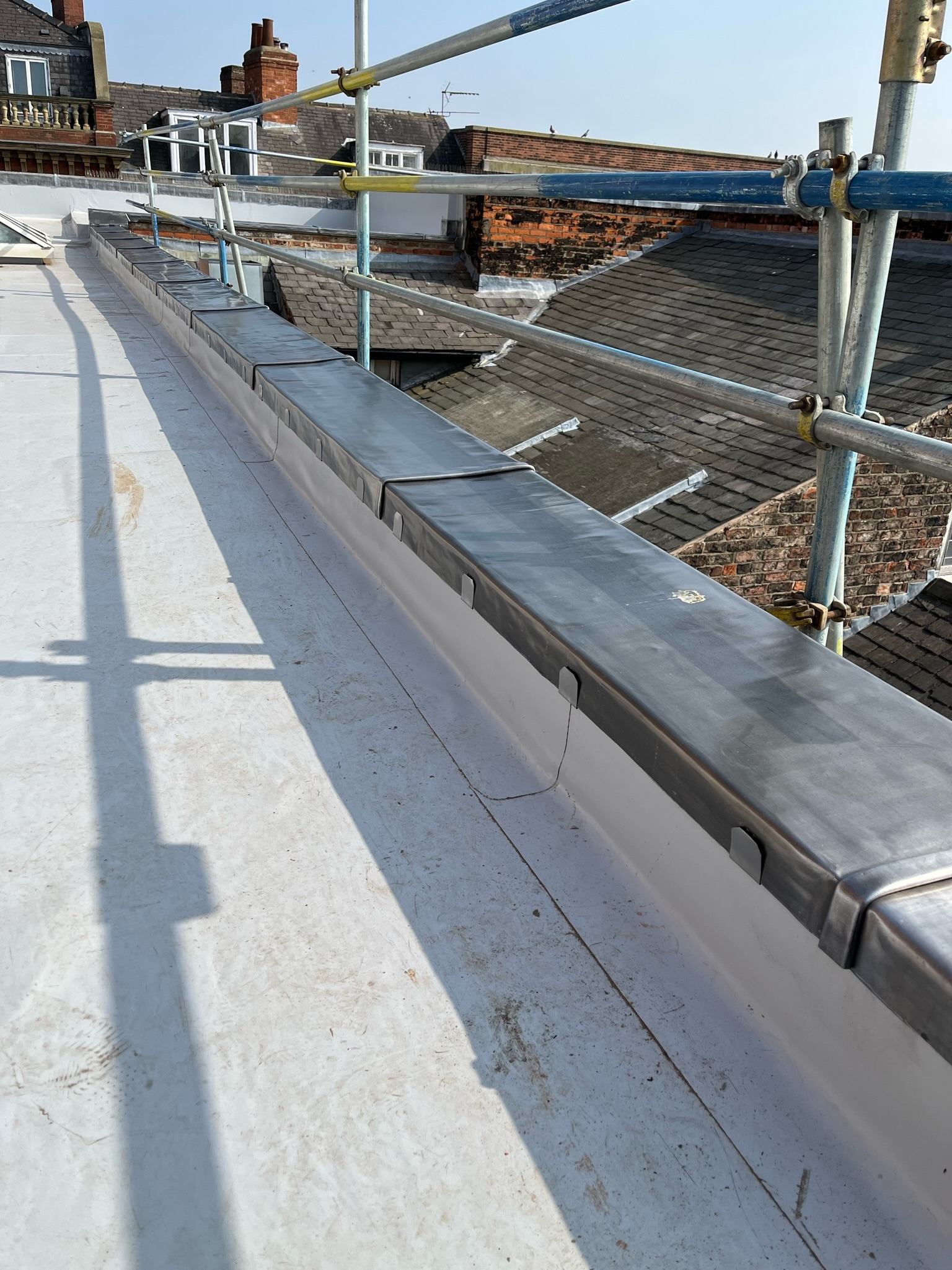
Lead gutters: unusual angles, stop ends and outlets may need fabricated joints.
Complex junctions: welding can form bespoke components while the wider leadwork design separately accommodates thermal movement.
Lead Welding Health and Safety
Lead welding is specialist hot work and must be supported by an appropriate risk assessment, COSHH assessment and fire-prevention arrangements. The risks can include lead exposure, welding fume, compressed gases, burns, fire, working at height and restricted ventilation.
Controls may include suitable local exhaust ventilation, respiratory protection where required, clean working practices, exclusion of combustible materials, fire-resistant protection, gas-equipment checks and an appropriate fire watch. Eating, drinking and smoking should be kept away from leadworking areas, with suitable washing and decontamination arrangements provided.
Lead welding should only be undertaken by trained, competent operatives familiar with lead exposure controls and hot-work procedures.
Lead Welding Products and Accessories
For professional contractors and competent tradespeople, The Lead Lads Shop supplies rolled lead sheet, specialist welding products, leadwork fixings, underlays, patination oil and other installation accessories.
The Lead Lads® undertake welded leadwork for roofing, chimney details, gutters, valleys, outlets, sumps, dormers and bespoke architectural applications. We can assist with new installations, replacement details and the assessment of failed or defective welded leadwork.
Yes. Lead burning is a traditional term commonly used for lead welding. Both describe the controlled fusion of lead sheet to form seams, corners, outlets and other fabricated details.
Not always. A split may result from excessive bay size, restricted thermal movement, poor support, unsuitable material code or defective detailing. Welding the visible crack without correcting the underlying cause may only provide a temporary repair, so the wider leadwork arrangement should first be assessed.
No. Bossing and welding are different leadworking techniques. Bossing may be preferable where a detail can be formed from one piece without excessive stretching, while welding may be required for complex geometry, fabricated components or details that cannot be formed satisfactorily without cutting.
A properly designed and competently formed welded lead detail can remain serviceable for many decades. Its performance still depends on the surrounding bay sizes, movement allowance, fixings, support, drainage and overall roof design.
Yes. We assess and repair defective welded leadwork where a local repair is technically appropriate. Where failure is caused by poor design, fatigue or widespread movement, partial or complete replacement may provide the more reliable solution.
Take a Look at Our Leadwork Projects #ProperLeadwork
The Lead Lads® provides specialist leadwork services for homeowners, contractors, roofing businesses, architects, surveyors and property professionals.
Our mission is simple: to deliver high-quality leadwork at a fair and reasonable price that reflects the skill, time and care required to complete the work properly.
Why Choose The Lead Lads?
Specialist leadwork knowledge across roofing, flashings, gutters, valleys and heritage details.
Practical experience forming, bossing and welding rolled lead sheet.
Focus on durability, correct detailing and long-term performance.
Clear communication for clients, contractors and specifiers.